

Magnesium glycinate supplements vary most in the amount of elemental magnesium per serving, how many capsules that serving requires, and how clearly the label identifies the form. My best overall pick is Nature Made Magnesium Glycinate 200 mg, 60 Capsules for a straightforward serving, while Nutricost stands out for its larger bottle and Sports Research for its lower stated amount per serving. The main tradeoff is between a simpler, lower-dose routine and a higher labeled serving that may require more capsules or closer label checks. Brand, capsule count, and serving size also make some options better suited to routine use than trying the form for the first time. Read on for the full comparison and guidance on choosing a product that fits your needs.

Get health and wellness essentials delivered free with Prime
- Fast, free delivery on millions of items
- Prime Video, Amazon Music and more included
- Member-only deals all year
Key Takeaways
- Nature Made 200 mg, 60 Capsules leads as the straightforward all-rounder: it offers a clear stated amount without committing buyers to a large bottle or a multi-capsule serving.
- Nutricost’s 180-count bottle favors fewer restocks, but buyers should compare its 210 mg serving with the number of capsules that make up that serving.
- Sports Research’s 160 mg option is the lowest stated serving among the named amounts, giving dose-conscious buyers a different starting point from products labeled 400 or 500 mg.
- Several listings use 400 or 500 mg wording; that figure should not be treated as elemental magnesium unless the Supplement Facts panel confirms it.
- Pure Encapsulations appears in three capsule counts, while NatureBell appears in two larger formats, showing that some choices are about bottle size and routine fit rather than a different named magnesium form.




More Details on Our Top Picks
Nature Made Magnesium Glycinate 200 mg, 60 Capsules
This is a straightforward pick for someone who wants a 200 mg serving of chelated magnesium glycinate without extra formulation claims. Its two-capsule serving is easier to fit into a routine than Nature Made’s 300 mg, three-capsule version, though it provides less magnesium per serving. The listing describes the form as gentle on the stomach and notes gluten-free ingredients with no added color or artificial flavors. The tradeoff is that this bottle contains 60 capsules for a 30-day supply, so it offers less runway than the 180-capsule Nature Made option. I’d choose this smaller bottle for a modest daily serving; buyers who want a longer supply or USP verification should compare it with that larger Nature Made product.
Pros:- Provides 200 mg per two-capsule serving
- Chelated magnesium glycinate is described as gentle on the stomach
- Gluten-free, with no added color or artificial flavors
- Supports a simpler two-capsule routine than the 300 mg Nature Made version
Cons:- The 60-capsule bottle supplies only 30 days
- Requires two capsules per serving rather than a single capsule
Best for: Adults seeking a 200 mg daily serving in a smaller bottle and a two-capsule routine
Not ideal for: Buyers who want a longer-lasting bottle, USP verification, or a higher magnesium amount per serving
Our verdict“Choose this smaller Nature Made bottle if a 200 mg serving and a two-capsule routine matter more than a long supply or added verification.”
Nutricost Magnesium Glycinate Capsules, 180 Count, 210 mg per Serving
Nutricost stands out here for its stated third-party testing and production in an NSF-certified, GMP-compliant facility. Those manufacturing details give quality-focused shoppers more concrete information than the basic formulation details provided for Nature Made’s 200 mg, 60-capsule bottle. The serving delivers 210 mg of magnesium bisglycinate, close to that Nature Made option’s 200 mg, but takes three capsules rather than two. The 180-count bottle contains more capsules, yet the supplied product data does not specify the number of days per bottle, so I wouldn’t assume it lasts longer without checking the label. This is a fit for buyers who prioritize testing transparency over capsule convenience; skip it if keeping the daily pill count low is your main goal.
Pros:- Provides 210 mg of magnesium per serving
- Uses magnesium bisglycinate
- Third-party tested
- Made in an NSF-certified, GMP-compliant facility
Cons:- Requires three capsules per serving
- The supplied data does not state the bottle’s supply duration
Best for: Quality-conscious shoppers who prioritize third-party testing and documented manufacturing standards
Not ideal for: People who prefer a low capsule count or need a clearly stated supply duration
Our verdict“Pick Nutricost if third-party testing and manufacturing information outweigh the inconvenience of taking three capsules per serving.”
Pure Encapsulations Magnesium (Glycinate), 180 Capsules
Pure Encapsulations is the clearest match for shoppers who put ingredient exclusions ahead of a disclosed dose: the product is described as free from common allergens, GMOs, and artificial or unnecessary ingredients. That cleaner formulation profile sets it apart from Nutricost, which provides a specific 210 mg serving and describes its testing and facility standards. Here, the supplied data gives no magnesium amount per serving, making dose comparison difficult and daily use harder to plan. The 180-capsule count is substantial, but without serving-size or supply information, capsule count alone does not tell me how long the bottle lasts. I’d favor it for buyers screening out listed ingredients, while shoppers who need transparent dose details should choose one of the Nature Made or Nutricost options instead.
Pros:- Made without common allergens
- Made without GMOs
- Avoids artificial or unnecessary ingredients
- Capsule format with 180 capsules
Cons:- The supplied product data does not state magnesium per serving
- Serving size and supply duration are not specified
Best for: Adults who avoid common allergens, GMOs, and unnecessary additives and are comfortable checking the label for dose details
Not ideal for: Dose-focused shoppers who need a stated magnesium amount per serving or a clear supply duration
Our verdict“Choose Pure Encapsulations for its ingredient exclusions, but choose Nutricost or Nature Made if a clearly stated dose is a priority.”
Nature Made Magnesium Glycinate, 300 mg per 3 Capsules, 90 Capsules
This Nature Made option delivers the lineup’s highest stated serving among these five at 300 mg per three capsules, making it a better fit for shoppers seeking more magnesium per serving than the 200 mg Nature Made bottles. The tradeoff is a higher daily capsule count: it takes three capsules, compared with two for the brand’s 200 mg versions. Its 90-capsule bottle lasts 30 days, so the increased serving amount does not come with a longer supply. The chelated form is described as gentle on the stomach, and the product is gluten-free with no added colors or artificial flavors. I’d choose it for the larger stated serving, but buyers who want fewer capsules or a longer supply should compare it with Nature Made’s 180-capsule, 200 mg bottle.
Pros:- Provides 300 mg per serving
- Uses chelated magnesium glycinate described as gentle on the stomach
- Gluten-free
- No added colors or artificial flavors
Cons:- Requires three capsules per day
- The 90-capsule bottle supplies 30 days
Best for: Adults who prefer a 300 mg magnesium serving and are comfortable taking three capsules daily
Not ideal for: People who want a two-capsule routine, a lower serving amount, or more than a 30-day supply
Our verdict“Pick this Nature Made version if a 300 mg serving is your priority and three daily capsules are acceptable.”
Nature Made Magnesium Glycinate 200 mg per Serving, 180 Capsules
This bottle keeps the familiar 200 mg, two-capsule serving of Nature Made’s 60-count option but stretches it to a stated 90-day supply. That makes it the more practical choice for shoppers who already prefer this dose and want fewer restocks. It also adds USP verification, a quality marker not listed for the smaller Nature Made bottle or the 300 mg version. Compared with the higher-serving Nature Made option, this one uses fewer capsules per day but delivers less magnesium per serving. The product may cause mild gastrointestinal discomfort if taken without food, so its suggested routine should suit buyers willing to take it with a meal and water. I’d favor it for continuity and verification, not for shoppers seeking a higher stated dose.
Pros:- Provides 200 mg per two-capsule serving
- 180 capsules provide a stated 90-day supply
- USP verified for potency and manufacturing quality
- Gluten-free with no artificial colors or flavors
Cons:- Provides less magnesium per serving than Nature Made’s 300 mg option
- May cause mild gastrointestinal discomfort if taken on an empty stomach
Best for: Adults who want a 200 mg daily serving, a 90-day supply, and USP-verified quality
Not ideal for: Shoppers seeking a 300 mg serving or those unwilling to take capsules with food
Our verdict“Choose this bottle for a verified 200 mg routine with a longer supply, and choose the 300 mg Nature Made version if you want more per serving.”
Magnesium Glycinate 500 mg Capsules for Sleep and Relaxation Support
This pick pairs a stated 500 mg per serving with small, chelated capsules, making it a fit for buyers who dislike bulky pills. Its vegan, gluten-free, and non-GMO attributes cover several common dietary preferences, while third-party testing and production in a GMP-certified facility add quality-control details not supplied for Pure Encapsulations Magnesium Glycinate, 90 Capsules. The tradeoff is that the listing gives no capsule count per serving, so I can’t tell how many pills deliver the stated amount or compare daily use cleanly with Sports Research Magnesium Glycinate at 160 mg per serving. Choose it for its capsule format and stated testing, not for dosing transparency: the serving details are limited, and its broad support claims don’t establish a specific sleep outcome.
Pros:- Small capsules are described as easy to swallow
- Chelated magnesium glycinate formula
- Vegan, gluten-free, and non-GMO
- Third-party tested and made in a GMP-certified facility
Cons:- Serving details do not state how many capsules provide 500 mg
- No capsule count is provided in the supplied product data
Best for: Buyers seeking a vegan, small-capsule magnesium glycinate with third-party testing who are comfortable confirming serving instructions on the label.
Not ideal for: Shoppers who need a clearly stated capsule-per-serving count or want an easily comparable daily magnesium amount.
- Form:Capsules
- Serving amount:500 mg
- Magnesium form:Magnesium glycinate
- Dietary attributes:Vegan, gluten-free, non-GMO
- Testing:Third-party tested
- Manufacturing:GMP-certified facility
Our verdict“Choose this if small, vegan capsules and stated third-party testing matter more to you than detailed serving information.”
Sports Research Magnesium Glycinate 160 mg, 90 Veggie Capsules
At 160 mg per serving, Sports Research gives buyers a lower stated amount than the 400 mg listed for Magnesium Glycinate 400 mg, 180 Capsules. That distinction may suit someone comparing labels for a less concentrated serving, though the product information does not say whether the serving can be adjusted or how many capsules make it up. The formula is chelated, and its vegan, soy-free, and gluten-free capsule profile is a useful match for shoppers avoiding those ingredients. I also like the specificity of its IGEN non-GMO testing and cGMP-compliant U.S. manufacturing details. The 90-capsule count is more modest than the 180- and 480-capsule options in this group, so this is a better fit for someone prioritizing the stated serving and dietary details over a larger supply.
Pros:- 160 mg per serving is a lower stated amount than several options in this group
- Chelated magnesium glycinate
- Vegan, soy-free, and gluten-free capsules
- IGEN non-GMO tested and made in cGMP-compliant U.S. facilities
Cons:- 90 capsules provide a smaller stated supply than the 180- and 480-capsule options
- The supplied details do not specify the number of capsules per serving
Best for: Buyers who prefer a lower stated magnesium glycinate amount per serving and need vegan capsules without soy or gluten.
Not ideal for: Shoppers seeking a large capsule supply or a higher stated amount per serving, such as the 400 mg option from Magnesium Glycinate 400 mg, 180 Capsules.
- Form:Vegan capsules
- Amount per serving:160 mg
- Quantity:90 capsules
- Magnesium form:Chelated magnesium glycinate
- Dietary attributes:Soy-free, gluten-free, vegan
- Testing:IGEN non-GMO tested
- Manufacturing:Made in cGMP-compliant facilities in the USA
Our verdict“Pick Sports Research if a lower stated serving and clear dietary and manufacturing details matter more than a large capsule count.”
NatureBell Pure Magnesium Glycinate, 500 mg per Serving, 2-Pack, 480 Capsules
NatureBell’s defining advantage is the 480-capsule, two-pack supply, which stands apart from the 90-capsule Sports Research Magnesium Glycinate. Its stated 500 mg per serving is paired with 40 mg of fat-soluble vitamin C per capsule, so this is not a magnesium-only formula; buyers should check the full label if they prefer to keep supplements separate. The product also reports third-party lab testing and excludes several common allergens and fillers, giving ingredient-conscious shoppers useful specifics. The drawback is the added ingredient and the limited serving information supplied here: the 500 mg serving amount does not state how many capsules provide it. Compared with the simpler Pure Encapsulations Magnesium Glycinate, this option offers a much larger stated capsule supply but a less minimal formula.
Pros:- 480 veggie capsules across two packs
- Third-party lab tested for safety and potency
- Free of listed common allergens and fillers
- Non-GMO formula
Cons:- Includes 40 mg of vitamin C per capsule, so it is not a single-ingredient magnesium formula
- The supplied details do not state how many capsules provide the 500 mg serving
- The product claims have not been evaluated by the FDA
Best for: Regular supplement users who want a large two-pack supply and are comfortable with magnesium glycinate combined with vitamin C.
Not ideal for: Buyers seeking a magnesium-only formula, a precisely detailed capsule-per-serving instruction, or a smaller quantity before committing.
- Magnesium per serving:500 mg
- Vitamin C per capsule:40 mg
- Quantity:2 packs
- Total capsules:480 veggie capsules
- Form:Magnesium glycinate with ascorbyl palmitate
- Dietary attributes:Non-GMO; free of fillers, wheat, soy, dairy, gluten, eggs, and tree nuts
- Testing:Third-party lab tested
Our verdict“Choose NatureBell for a large capsule supply and added vitamin C, but skip it if you want a minimal or magnesium-only formula.”
Magnesium Glycinate 400 mg, 180 Capsules
This option states 400 mg of magnesium bisglycinate per capsule, a clearer per-capsule figure than the serving-only amounts listed for NatureBell Pure Magnesium Glycinate and the 500 mg capsules option. That makes label comparison more direct, though the supplied data does not clarify whether the stated amount refers to elemental magnesium, so I would check the package before comparing doses. Its 180-capsule supply is described as six months, and the product says it is tested for microbes and heavy metals and made and tested in the USA. The glycinate form is described as easier on the stomach than magnesium oxide, but that claim does not guarantee individual tolerance. Compared with Sports Research’s 90 capsules and lower stated serving, this is better suited to buyers seeking a longer supply and a higher per-capsule figure.
Pros:- Lists 400 mg of magnesium bisglycinate per capsule
- 180 capsules, described as a six-month supply
- Tested for microbes and heavy metals
- Non-GMO, gluten-free, and manufactured and tested in the USA
Cons:- Supplied information does not clarify whether 400 mg refers to elemental magnesium
- A six-month supply may be more than a new user wants to commit to
Best for: Buyers who want a 180-capsule supply and a clearly listed 400 mg amount per capsule, and who will verify the label’s dose details.
Not ideal for: People who need the product data to clarify elemental magnesium content or who prefer a smaller supply while deciding whether glycinate suits them.
- Serving form:Capsules
- Magnesium bisglycinate per capsule:400 mg
- Supply:Six months
- Quantity:180 capsules
- Manufacturing and testing:USA
- Ingredients:Globally sourced
- Dietary attributes:Non-GMO, gluten-free
Our verdict“Choose this for its stated per-capsule amount and larger supply if you are comfortable verifying the exact dose on the label.”
Pure Encapsulations Magnesium Glycinate, 90 Capsules
Pure Encapsulations makes the strongest case here for buyers who put a minimal-ingredient profile ahead of dose comparison: the product is described as free from common allergens, GMOs, and artificial or unnecessary ingredients. Its claims span neuromuscular and cardiac function, energy production, nutrient metabolism, relaxation, and sleep, but the supplied data does not give an amount per serving. That omission makes it harder to compare directly with Sports Research’s stated 160 mg or the 400 mg per capsule listed for Magnesium Glycinate 400 mg, 180 Capsules. The 90-capsule count also means less supply than the 180- and 480-capsule picks. I’d choose it for its restrained ingredient positioning, not for a disclosed dose or a specific sleep effect; those details need checking on the label.
Pros:- Magnesium glycinate capsule formula
- Made without common allergens
- Free from GMOs and artificial or unnecessary ingredients
- Described as supporting several functions, including neuromuscular function and relaxation
Cons:- No magnesium amount per serving is provided in the supplied product data
- 90 capsules is a smaller stated count than the 180- and 480-capsule options
- Relaxation and sleep are described as potential support, not a guaranteed outcome
Best for: Ingredient-conscious buyers who prioritize avoiding common allergens, GMOs, and artificial or unnecessary ingredients over a clearly stated magnesium amount.
Not ideal for: Shoppers comparing products by dose or seeking a larger supply, since the provided product details list neither an amount per serving nor more than 90 capsules.
- Form:Capsules
- Count:90 capsules
- Type:Magnesium glycinate
- Ingredient exclusions:Common allergens, GMOs, artificial and unnecessary ingredients
- Stated support:Neuromuscular and cardiac function
- Additional stated support:Energy production and nutrient metabolism
- Relaxation and sleep:Described as potential support
Our verdict“Pick Pure Encapsulations if a minimal-ingredient profile is your priority and you can confirm the dose from the label.”
VitBoost Magnesium Glycinate 500mg – Support Sleep, 120 Veggie Capsules
VitBoost pairs a chelated form with a modest 90 mg of elemental magnesium per capsule, making it a measured-dose option rather than a high-dose choice. The 120-capsule bottle gives a four-month supply at one capsule daily, while the vegan, non-GMO, gluten-free formula avoids artificial fillers. Those details may appeal to shoppers seeking a simpler capsule, though the description’s gentleness claims are not a guarantee for every person.
Compared with NatureBell Pure Magnesium Glycinate, which also supplies 90 mg elemental magnesium per capsule, VitBoost offers half as many capsules but specifies third-party testing. Its main tradeoff is dose: people seeking more elemental magnesium may need to discuss a different serving plan with a clinician. The product description also positions it for sleep, but provides no dose-specific evidence for that benefit.
Pros:- Provides 90 mg elemental magnesium per capsule, allowing a modest per-capsule amount
- Vegan, non-GMO, gluten-free, and described as free of artificial fillers
- Third-party testing and U.S. cGMP-facility manufacturing are specified
- 120 capsules represent a four-month supply at one capsule daily
Cons:- The 90 mg elemental amount may not match buyers seeking a higher amount per capsule
- Sleep support is described without dose-specific supporting details
- The listed product information does not provide a full price comparison or detailed testing results
Best for: Adults who prefer a vegan, filler-free capsule and want a lower elemental-magnesium amount per capsule.
Not ideal for: Shoppers seeking a clearly higher elemental-magnesium amount per capsule or wanting a sleep formula with supporting dose details.
- Magnesium glycinate chelate per capsule:500 mg
- Elemental magnesium per capsule:90 mg (21% DV)
- Capsule count:120
- Dosage form:Veggie capsules
- Dietary attributes:Vegan, non-GMO, gluten-free, sugar-free
- Testing:Third-party tested
- Manufacturing:Made in the USA in a cGMP-certified facility
Our verdict“Choose VitBoost if you want a tested, vegan glycinate capsule with a modest elemental-magnesium amount, and skip it if you need a higher amount per capsule.”
Pure Encapsulations Magnesium (Glycinate), 360 Capsules
The 360-capsule count is the defining advantage here: it suits buyers who want one bottle to cover an extended routine. Pure Encapsulations also emphasizes a formula without common allergens, GMOs, or artificial and unnecessary ingredients, a useful point for people who screen supplement labels closely. The description connects glycinate with neuromuscular and cardiac function, energy production, nutrient metabolism, relaxation, and sleep-cycle support, but does not give the magnesium amount per capsule or serving.
That missing dose information makes this harder to compare directly with VitBoost and NatureBell, both of which state 90 mg elemental magnesium per capsule or serving. The large count is appealing, but it does not tell buyers how many capsules make a serving or how long the bottle lasts. I’d put it on the shortlist for ingredient-focused shoppers who can verify serving details before buying, not for anyone choosing mainly by elemental-magnesium amount.
Pros:- Large 360-capsule bottle
- Described as free from common allergens and GMOs
- No artificial or unnecessary ingredients are specified
- The product description covers several intended support areas, including relaxation and sleep-cycle support
Cons:- Elemental magnesium per capsule or serving is not specified in the provided product information
- Serving size and supply duration are not stated
- The broad support claims do not include dose details
Best for: Supplement users who prioritize a large capsule count and a formula described as free from common allergens, GMOs, and unnecessary ingredients.
Not ideal for: Dose-focused shoppers who need elemental magnesium per serving stated clearly before comparing products.
- Form:Capsules
- Quantity:360 capsules
- Magnesium type:Magnesium glycinate
- Common allergens:Made without common allergens
- GMOs:Made without GMOs
- Artificial or unnecessary ingredients:Made without artificial or unnecessary ingredients
Our verdict“Consider this bottle if a large count and a screened ingredient profile matter most, but choose a product with stated elemental magnesium if dose comparison comes first.”
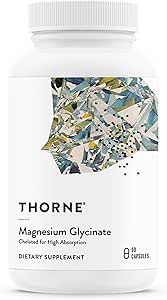
Thorne Magnesium Glycinate Chelated Magnesium Supplement, 90 Capsules
Thorne’s clearest differentiator is third-party testing for label accuracy and contaminants, which gives quality-focused buyers a concrete reason to compare it with less-detailed listings. The formula is magnesium glycinate, and the product description links it to relaxation, restful sleep, emotional well-being, focus, and mental clarity. Those are broad intended benefits, though the listing does not provide an elemental-magnesium amount or details that connect a specific dose to those claims.
Compared with Pure Encapsulations Magnesium (Glycinate), 360 Capsules, Thorne provides more explicit testing information but a much smaller bottle. The 90-capsule count may suit someone trying a product or preferring a shorter supply, yet serving size and duration are not stated, so the practical value is difficult to judge. I’d favor it for shoppers who put testing disclosure ahead of bottle size; dose-first buyers should look to products such as VitBoost, which lists elemental magnesium per capsule.
Pros:- Third-party tested for label accuracy and contaminants
- Uses magnesium glycinate
- 90-capsule count may suit shoppers who prefer a smaller bottle
- The product description includes relaxation and restful-sleep support among its intended uses
Cons:- Magnesium amount per serving is not specified in the provided product information
- Serving size and supply duration are not stated
- Benefits for sleep, stress, and focus are described without supporting dose details
Best for: Quality-focused shoppers who value third-party testing for label accuracy and contaminants and are comfortable checking the serving details.
Not ideal for: Buyers who need a stated elemental-magnesium amount, a known supply duration, or dose-specific support information.
- Form:Capsules
- Quantity:90 capsules
- Ingredient:Magnesium glycinate
- Testing:Third-party tested for label accuracy and contaminants
- Elemental magnesium per serving:Not specified in the provided product information
- Serving size:Not specified in the provided product information
Our verdict“Pick Thorne if testing transparency is your priority, but favor a listing with a stated elemental-magnesium amount if dose comparison matters more.”
NatureBell Pure Magnesium Glycinate, 500 mg per Serving, 240 Veggie Capsules
NatureBell stands out for combining 240 veggie capsules with a one-capsule-daily serving, a straightforward setup for buyers who want a long supply without a multi-capsule routine. The label distinguishes 500 mg of magnesium glycinate from 90 mg of elemental magnesium per serving, helping shoppers avoid confusing the compound amount with the amount of magnesium itself. Its chelated, purified formula is described as having no fillers.
Compared with VitBoost, which also lists 90 mg elemental magnesium per capsule, NatureBell provides twice the capsule count and explicitly states one capsule daily. VitBoost, by contrast, specifies third-party testing in the supplied details. NatureBell’s limitation is the same modest elemental amount: the larger 500 mg figure does not mean 500 mg of elemental magnesium. Its absorption and digestion descriptions are claims in the listing, not a substitute for dose information or individualized guidance.
Pros:- 240 veggie capsules provide a long supply at one capsule daily
- Lists both 500 mg magnesium glycinate and 90 mg elemental magnesium per serving
- Chelated and purified formula is described as having no fillers
- One-capsule daily serving keeps the routine simple
Cons:- Each serving provides 90 mg elemental magnesium despite the 500 mg glycinate figure
- Third-party testing is not specified in the provided product information
- Absorption and digestion benefits are described as claims without supporting details
Best for: Buyers who want a long-lasting supply of one-a-day veggie capsules and appreciate a label that separates glycinate weight from elemental magnesium.
Not ideal for: Shoppers who want a higher elemental-magnesium amount per capsule or prioritize listed third-party testing.
- Magnesium glycinate per serving:500 mg
- Elemental magnesium per serving:90 mg
- Capsule count:240
- Capsule type:Veggie capsules
- Serving frequency:One capsule daily
- Formula:Chelated and purified; no fillers
Our verdict“Choose NatureBell for a clearly labeled, long-supply one-a-day option, but not if you expect 500 mg of elemental magnesium per serving.”
Nature’s Bounty High Absorption Magnesium Glycinate, 240 mg, 120 Capsules
Nature’s Bounty lists 240 mg of magnesium per two-capsule serving, making its serving amount more explicit than Thorne’s listing, which does not state an amount. The bottle contains 120 capsules, or a two-month supply at the stated serving. Its vegetarian-friendly formula is also listed as non-GMO, gluten-free, and lactose-free, with no sugar, sodium, artificial colors, or artificial sweeteners.
The tradeoff is the two-capsule daily serving: compared with NatureBell’s one-a-day format, this asks for a larger daily capsule routine, though the provided information does not establish that either schedule is more effective. The description does not clarify whether 240 mg refers to elemental magnesium or the weight of the glycinate compound, so dose-minded buyers should verify that label detail. It offers broader dietary exclusions than the supplied details for Pure Encapsulations, but less detail about third-party testing than Thorne.
Pros:- States 240 mg of magnesium per two-capsule serving
- 120-capsule bottle is listed as a two-month supply
- Suitable for vegetarians, non-GMO, gluten-free, and lactose-free
- Free from sugar, sodium, artificial colors, and artificial sweeteners
Cons:- Requires two capsules per serving, unlike NatureBell’s one-a-day format
- The supplied product details do not clarify whether 240 mg is elemental magnesium
- Third-party testing is not specified in the provided product information
Best for: Vegetarian shoppers who prefer a clearly stated two-capsule serving and want a formula without several common additives.
Not ideal for: Buyers who want one capsule daily or need confirmation that the stated 240 mg is elemental magnesium.
- Magnesium per serving:240 mg
- Serving size:2 capsules
- Capsules per bottle:120
- Supply:2 months
- Form:Magnesium glycinate
- Dietary attributes:Suitable for vegetarians, non-GMO, gluten-free, lactose-free
- Free from:Sugar, sodium, artificial colors, artificial sweeteners
Our verdict“Choose Nature’s Bounty if its dietary exclusions and stated two-capsule serving fit your routine, but verify the elemental amount before comparing doses.”

How We Picked
I compared the 15 listings on factors that affect the day-to-day choice: the stated magnesium amount, whether the listing identifies the amount per serving, capsule count, serving size where provided, and how clearly the product is presented as glycinate. These details matter because a high number on the front label can describe the compound rather than elemental magnesium, and a large capsule count may still represent fewer servings than expected.
The ranking gives priority to products with clearer dose information, practical serving formats, and enough listing detail to make a fair comparison. Options with larger bottles rank well for routine buyers, but they do not automatically outrank a simpler formula or a lower stated serving that may suit someone starting cautiously. Brand and format help distinguish close options, while incomplete listing details limit how confidently I can judge products whose names advertise a high milligram amount without clarifying what that number represents. This is a product comparison, not a judgment about treatment or a substitute for individualized health advice.
Factors to Consider When Choosing Magnesium Glycinate Supplements
Before choosing among these bottles, I would separate the number printed in the product name from the amount you would actually take. The following checks help avoid mismatches between serving size, intended routine, and what the label confirms.
Check elemental magnesium, not just the headline number
The number in a listing title may refer to the weight of magnesium glycinate rather than elemental magnesium, which is the amount nutrition labels generally report as magnesium. Look at the Supplement Facts panel and find the magnesium amount per serving before comparing products. Then check the ingredient line to confirm the form is glycinate rather than a blend or a different magnesium compound. This distinction is especially relevant to listings labeled 400 or 500 mg, because a large headline number does not by itself establish a higher elemental dose. If a seller page does not show the panel clearly, avoid ranking that product by its headline figure alone.
Compare dose per serving with capsules per serving
A bottle’s capsule count cannot tell you how long it will last without the serving directions. One serving may involve multiple capsules, so a 90-count bottle could provide fewer daily servings than a 60-count product with a one-capsule serving. Calculate servings per container by dividing the capsule count by the number of capsules directed per serving. This helps make the 300 mg per three-capsule Nature Made listing easier to compare with listings that state an amount per serving but do not make the capsule count per serving obvious. Do not increase the number of capsules just to match another product’s headline dose.
Choose a starting amount with your clinician when needed
More magnesium is not automatically a better fit, and a supplement should be considered alongside magnesium from food and any other supplements or medicines. People with kidney problems, those taking prescription medicines, and anyone managing a medical condition should ask a qualified health professional before adding magnesium. If you are new to the supplement, a clearly labeled product makes it easier to discuss the actual dose rather than relying on a vague front-label claim. A lower stated serving, such as the 160 mg Sports Research listing, may appeal to people seeking a more modest labeled amount, but personal suitability depends on the full label and individual circumstances. Follow the product directions and professional advice rather than using the roundup to set a dose.
Treat capsule count as convenience, not proof of value
Larger bottles can reduce how often you need to reorder, but they also mean a longer commitment to one product and its serving format. This matters when you have not confirmed that the capsules are comfortable to take or that the formula suits your routine. The Pure Encapsulations listings span 90, 180, and 360 capsules, while NatureBell is listed in 240-capsule and two-pack formats. Compare the total number of servings, not just the total capsules, and check storage and expiration guidance before choosing a bulk format. A smaller bottle can be a sensible trial choice even when a larger one looks more convenient.
Review the full ingredient and quality information
Magnesium glycinate products can differ in capsule materials, added ingredients, and how much formulation detail the manufacturer provides. Check for allergens, fillers, colors, and other ingredients that matter to you instead of assuming that a familiar brand name means every version has the same formula. If independent quality testing, dietary suitability, or manufacturing standards matter to your decision, look for clear documentation from the brand rather than inferring it from the product title. A longer ingredient list is not automatically a problem, but unexplained blends can make dose comparisons harder. When label details are missing, that uncertainty is a real tradeoff.
Match the product to your routine, not a promised benefit
Some listings use sleep or relaxation language, but those phrases do not establish that a supplement will deliver a particular result. Decide whether your priority is a clearly stated magnesium amount, a manageable capsule routine, a larger supply, or a product from a particular manufacturer. If you want to avoid taking several capsules, check the directions before selecting a product with a higher amount per serving. If you want to try the form before committing, a smaller bottle can limit waste. The best choice is the one whose verified label and serving instructions fit your preferences and health guidance.
Frequently Asked Questions
Does a product labeled 500 mg provide 500 mg of elemental magnesium?
Not necessarily. The 500 mg may describe the weight of magnesium glycinate, while the elemental magnesium amount is listed separately on the Supplement Facts panel. Check both the magnesium line and serving size before comparing it with a product that states 160, 200, or 240 mg. If the panel is unavailable or unclear, the headline number is not enough to establish the dose. I would not choose a product based on the largest number in its name alone.
How do I compare a one-capsule serving with a three-capsule serving?
Compare the elemental magnesium per full serving, then note how many capsules that serving requires. A product offering a stated amount across three capsules may be less convenient than one requiring fewer capsules, even if the total amount looks similar. Divide the bottle’s capsule count by the capsules per serving to estimate the number of servings in the container. Follow each label’s directions rather than taking fewer or more capsules to imitate another product’s dose. If swallowing several capsules is difficult, serving format may matter more to you than bottle size.
Should I choose a 90-count bottle or a larger bottle?
Choose based on servings per container and how confident you are that the product fits your routine, not capsule count alone. A 90-count bottle may be a practical trial size, while a 180- or 360-count option may suit someone who already knows the product works with their preferences and label requirements. Check the serving directions first, since multiple capsules per serving shorten the bottle’s duration. Also follow storage and expiration instructions, particularly for a bulk purchase. If the label or your personal tolerance is still uncertain, a smaller format limits the commitment.
Can I take magnesium glycinate with prescription medicines or other supplements?
Interactions and appropriate timing can depend on the medicine, supplement, dose, and your health history. Ask a pharmacist or clinician to review your full list before starting magnesium glycinate, especially if you use prescription medication or have kidney disease. Bring the Supplement Facts panel, since the elemental magnesium amount is more useful than the product’s front-label number. Do not stop or change prescribed treatment to make room for a supplement. Follow professional guidance on whether to separate doses or avoid the product.
Is a supplement marketed for sleep automatically a better glycinate choice?
No. Sleep or relaxation wording is a marketing focus, not proof that the product is more effective or a better match for your needs. Compare the actual magnesium form, elemental amount, serving directions, and any added ingredients against your preferences. If you are seeking help for ongoing sleep problems, a supplement should not replace evaluation by a qualified health professional. A product with a clear label and suitable capsule routine may be a better fit than one chosen for a promised benefit alone.
Conclusion
For most readers comparing label clarity and a manageable starting format, I would begin with Nature Made Magnesium Glycinate 200 mg, 60 Capsules as the best overall pick. Nutricost Magnesium Glycinate, 180 Count is the best value-style choice for buyers who want a larger bottle and have confirmed the serving details; Pure Encapsulations is my premium-brand pick for shoppers who prioritize that brand and want multiple bottle-size options. For beginners, the smaller Nature Made bottle offers a more measured commitment than the 180-, 240-, or 360-count formats. For a lower stated serving, compare Sports Research 160 mg with the label and your clinician’s guidance; for a specific need such as fewer restocks, look at the larger NatureBell or Pure Encapsulations formats only after checking servings per container. Across every pick, let the Supplement Facts panel—not a large number in the product name—settle the dose comparison.
Halloween Picks
halloween
As an affiliate, we earn on qualifying purchases.