
TL;DR

Get health and wellness essentials delivered free with Prime
- Fast, free delivery on millions of items
- Prime Video, Amazon Music and more included
- Member-only deals all year
A Tiny Buddha personal essay outlines five habits its author says can make a stressful day feel harder: prolonged scrolling, ignoring emotions, treating stress as personal failure, pushing through without rest, and relying on distraction. The piece is personal guidance, not a clinical study, and it recommends simple alternatives such as acknowledging feelings and taking time to unwind.
Tiny Buddha has published a personal essay describing five habits that its author says can make a stressful day feel harder, including extended social-media scrolling, suppressing emotions and blaming oneself for feeling overwhelmed. The piece offers personal suggestions for unwinding, but it is not presented as a clinical study or evidence that these habits affect everyone in the same way.
The author frames the advice around a contrast between a childhood home governed by obligation and a grandmother’s home, which the writer remembers as warmer and more creative. The essay’s central idea is that rest and enjoyable activities can be part of recovery after a demanding day, rather than treating every free moment as another task to complete.
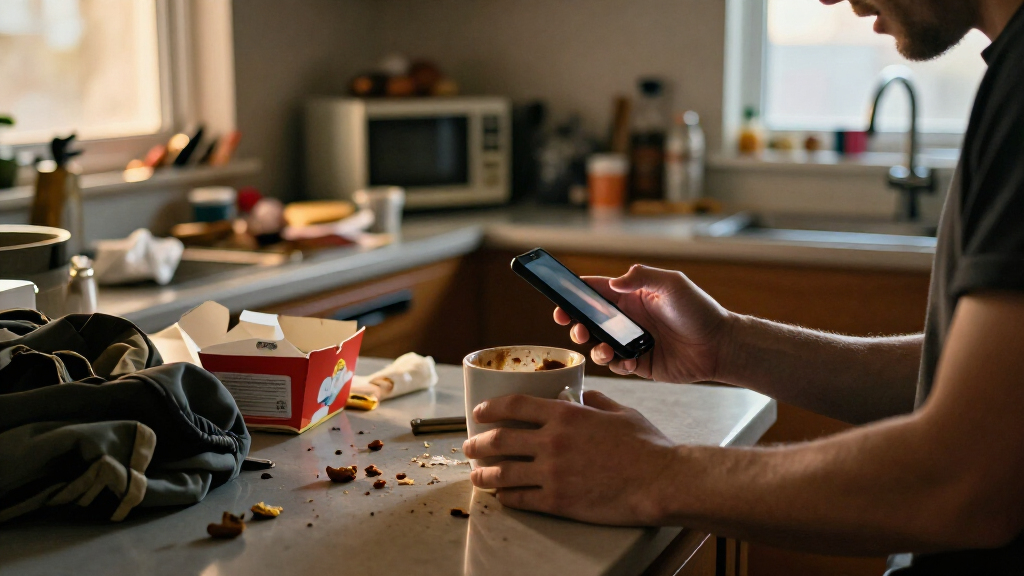
The first habit is scrolling for long stretches in search of distraction. The author says that brief phone use can turn into much longer sessions and leave them feeling more overwhelmed. Suggested alternatives include taking a few quiet minutes, making tea, watching the sky, sitting near an open window or spending time outdoors.
The second is ignoring or masking emotions, including repeatedly telling oneself that everything is fine. The third is interpreting stress as proof of personal weakness instead of asking what contributed to it. The essay also describes pushing through instead of allowing time to rest, and using distraction to defer difficult feelings. It recommends naming the experience—for example, acknowledging that the day was hard—and making room for basic comforts such as a bath, a favorite meal or an early night.
Small Choices After a Hard Day
The essay’s practical message is that the end of a stressful day can shape how a person feels afterward. Its suggestions are deliberately modest: pause before opening an app, notice an emotion, or set aside a little time to rest. Readers may find the list useful as a prompt to examine routines that feel unhelpful, without treating the advice as a guaranteed way to relieve stress.
The distinctions matter because stress can have many sources, and a personal account cannot establish that one habit causes a particular emotional or physical outcome. The article offers the author’s perspective and coping preferences; it does not report research testing the five habits or the alternatives.
Products Worth Considering

Theragun Relief Massage Gun – 3 Speed, Black

Therabody Theragun Relief Massage Gun, 3-Speed, Navy

Levoit Core 300S-P Smart WiFi Air Purifier
As an affiliate, we earn on qualifying purchases.
The Essay’s Personal Starting Point
The source is a first-person essay on Tiny Buddha. The writer connects their views about stress to memories of being expected to endure difficult days without complaint, alongside time spent with a grandmother who encouraged enjoyable, creative activities. That history supplies the essay’s personal lens; it is not independent evidence about stress or mental health.
Across the five habits, the author returns to a single theme: distraction and self-criticism may postpone reflection, while acknowledging a difficult experience can be a first step toward deciding what is needed. The proposed alternatives—quiet, nature, comfort and emotional honesty—are suggestions from the writer, not a prescribed treatment plan.
“If you keep them trapped inside, they’ll start nibbling at you from within.”
— The author, recalling their grandmother
Limits of the Personal Advice
The supplied source does not give a publication date, cite studies or describe an expert review. It is therefore unclear whether the five habits reflect findings beyond the author’s experience. The essay also does not establish that scrolling, emotional suppression or any other listed behavior will worsen stress for every reader.
It gives no clinical criteria for when stress may need professional attention and does not claim that its suggested rituals treat a health condition. Readers experiencing persistent or severe distress may need support beyond the self-care ideas described in the article.
How Readers Can Apply the Ideas
The source does not announce a follow-up report, research project or scheduled next development. Its immediate takeaway is to notice what happens after a demanding day and consider a small alternative to a familiar habit: put the phone aside briefly, name the feeling, or choose a calming activity that suits the individual.
Whether those steps help will vary by person and situation. The essay leaves readers with a personal reflection rather than a formal program, and provides no evidence-based timetable or measured outcome for the suggestions.
Key Questions
What five habits does the essay describe?
It discusses prolonged scrolling, ignoring emotions, treating stress as personal failure, pushing through without adequate rest, and using distraction to put off feelings. The essay presents these as the author’s personal observations.
What does the author suggest doing instead of scrolling?
The writer suggests trying a quiet pause, making tea, watching the sunset, sitting by an open window, spending time near water or taking a bath or shower. These are personal suggestions, not proven remedies.
Does the essay cite research supporting its claims?
No research is cited in the supplied text. The article is a first-person essay, so its observations should not be read as established clinical findings.
What does the writer say about difficult emotions?
The author argues that acknowledging an emotion—for example, saying “Today was hard”—is preferable to continually pretending to be fine. This reflects the writer’s view and experience.
Does the article offer medical or mental-health treatment advice?
No. It suggests everyday ways to unwind but does not present them as treatment. Anyone concerned about persistent or severe distress can seek guidance from a qualified health professional.
Source: rss