
TL;DR

Get health and wellness essentials delivered free with Prime
- Fast, free delivery on millions of items
- Prime Video, Amazon Music and more included
- Member-only deals all year
Sixty and Me published an article recommending five daily habits for pelvic health after 60: flexible flat footwear, floor sitting and squatting, ribcage and pelvis awareness, leg stretching, and walking. The article’s recommendations and claims about incontinence are not established here as clinical guidance; readers with symptoms should discuss them with a qualified health professional.
Sixty and Me has published a guide to five daily habits it says may support pelvic health after 60, including walking, stretching and changes to footwear and sitting. The article also discusses urinary incontinence, but its recommendations are the publication’s guidance and should not be treated as a medical diagnosis or individualized treatment plan.
The guide recommends wearing flat, flexible footwear, sitting on the floor and squatting more often, checking the alignment of the pelvis and ribcage, stretching the hamstrings and calves, and walking regularly. It presents these actions as ways to encourage movement and support pelvic-floor and core function. The source does not cite clinical studies or provide evidence that each step will prevent or reverse a specific condition.
For walking, the article suggests aiming for three to five miles a day, ideally split across the day. That is a recommendation made by the article, not a target established in the supplied material as suitable for every person over 60. Mobility, balance, pain, underlying health conditions and a person’s current activity level can affect what is appropriate.
The article describes urine leakage as a possible sign of pelvic-floor problems and says untreated symptoms can progress to pelvic organ prolapse. Those statements are presented in the source article; the supplied material does not include supporting research or clinical attribution for them. It also advises readers to consult a doctor for advice specific to their situation.
Daily Habits and Pelvic Health
The guide addresses symptoms that can affect comfort, mobility and daily activities, while offering low-equipment ideas readers may wish to discuss with a health professional. Its practical focus may make the subject easier to raise, but a list of general habits cannot establish why an individual is experiencing leakage or whether a particular exercise or footwear change is safe for them.
That distinction matters because urinary leakage can have different causes, and the article’s broad claims should not substitute for assessment. Readers experiencing new, worsening or disruptive symptoms can seek qualified medical advice rather than assuming the issue is an inevitable part of aging or relying on the five steps alone.
flexible flat walking shoes for women seniors
As an affiliate, we earn on qualifying purchases.
As an affiliate, we earn on qualifying purchases.
What the Five Steps Recommend
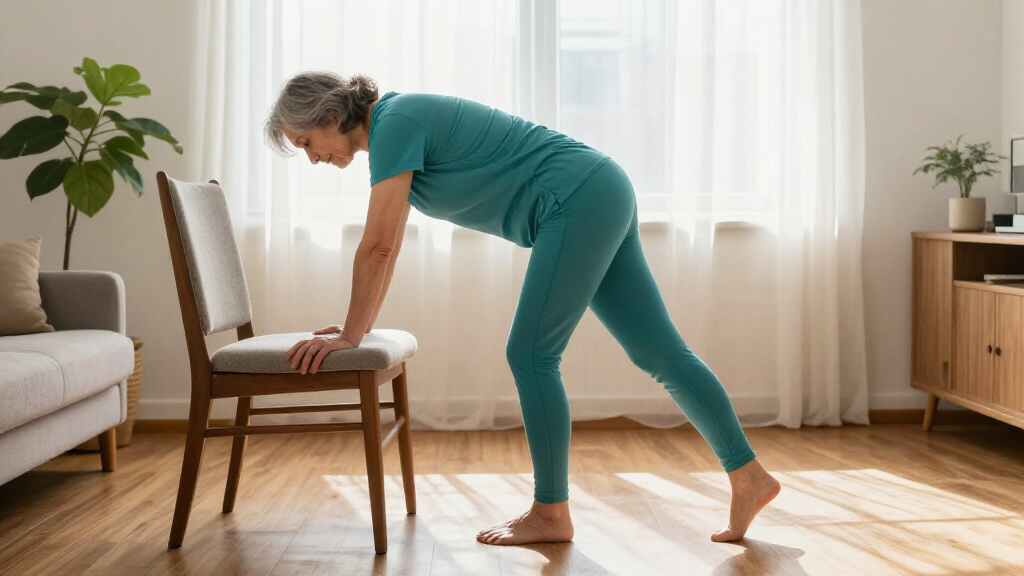
The article frames pelvic health around posture and everyday movement. It argues that footwear, habitual sitting and the positioning of the ribcage and pelvis may affect how the core and pelvic-floor muscles work. It recommends checking whether the lower ribs push forward, stretching the backs of the legs, and choosing more opportunities to walk or squat.
The source also makes broad claims about incontinence being treatable and reversible and links it to later-life risks. The material provided does not identify supporting studies, clinical guidelines or an expert source for those claims. The article itself includes a disclaimer that it is not medical advice and directs readers to consult a doctor.
““Wear Flat, Flexible Footwear””
— Sixty and Me article
non-slip yoga mat for stretching and floor exercises
As an affiliate, we earn on qualifying purchases.
As an affiliate, we earn on qualifying purchases.
Evidence and Individual Safety
The supplied source does not state when the article was published, cite studies for its five recommendations, or identify a medical reviewer. It is also unclear how its suggested three-to-five-mile daily target should be adapted for people with limited mobility, balance concerns, pain or other health conditions. The article does not explain how to distinguish different causes of incontinence or when its suggested habits may be unsuitable.
Its claims that incontinence can progress to prolapse and that the condition is reversible are not independently supported in the provided material. Readers should not infer from the guide that leakage necessarily signals pelvic-floor weakness or that these steps will resolve it.
stretching strap for hamstring and calf stretches
As an affiliate, we earn on qualifying purchases.
As an affiliate, we earn on qualifying purchases.
Discuss Symptoms With a Clinician
The article offers no announced follow-up, study or clinical review. Its next practical step for readers is to seek individual medical guidance before making changes that could affect balance, mobility or symptoms. A clinician can help assess persistent or new leakage and discuss appropriate options; readers can also ask whether walking, stretching, squatting or footwear changes fit their circumstances.
walking poles for seniors balance support
As an affiliate, we earn on qualifying purchases.
As an affiliate, we earn on qualifying purchases.
Key Questions
What five habits does the article recommend?
It recommends flat, flexible footwear; sitting on the floor and squatting more; checking ribcage and pelvic position; stretching the calves and hamstrings; and walking regularly.
Does the source establish that these steps treat incontinence?
No. The article makes claims about pelvic health, but the supplied material includes no cited studies or clinical guidance establishing that the five habits treat incontinence.
Should everyone over 60 walk three to five miles daily?
The distance is a suggestion from the article, not a universally established target in the source material. Appropriate activity can vary; readers can ask a qualified health professional what is suitable for them.
What should someone do about urine leakage?
The article advises consulting a doctor for individual medical advice. Persistent, new or disruptive symptoms are a reason to seek qualified assessment rather than relying on a general exercise list.
Source: rss
Fall Picks
fall essentials
As an affiliate, we earn on qualifying purchases.