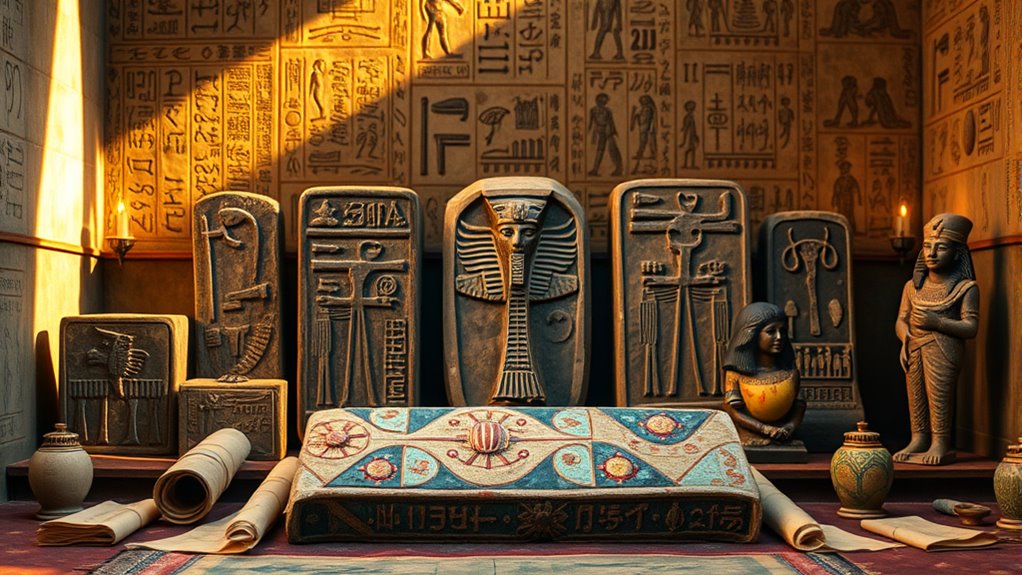

In ancient Egypt, they believed dreams were sacred channels for divine messages from gods, filled with symbols that revealed their will or future events. Each symbol, like a snake or animal, carried specific meanings that needed careful interpretation by priests or experts. These dreams played a crucial role in personal and societal rituals, guiding decisions, offering warnings, or ensuring harmony with divine forces. If you want to understand how they deciphered these messages, keep exploring these fascinating symbols.
Key Takeaways
- Ancient Egyptians viewed dreams as messages from gods, requiring careful interpretation of symbols to understand divine will.
- Symbols like snakes could signify protection, danger, or transformation, depending on context and religious texts.
- Dream interpretation was a sacred practice involving priests and religious texts to decode divine messages.
- Dreams influenced religious rituals and offerings, seen as vital for maintaining harmony and divine favor.
- They believed dreams provided spiritual guidance and helped individuals align with cosmic and divine order.
Dreams played a vital role in ancient Egyptian culture, serving as a bridge between the mortal world and the divine. You might think of dreams as mere nighttime fantasies, but for the Egyptians, they held profound spiritual meaning. They believed that dreams were a direct line to the gods and the divine domain, offering messages, warnings, or guidance from higher powers. When you experienced a dream, it wasn’t just a random occurrence; it was an opportunity for divine communication, often requiring careful interpretation.
Dreams were a sacred bridge to the divine, offering messages and guidance from higher powers in ancient Egypt.
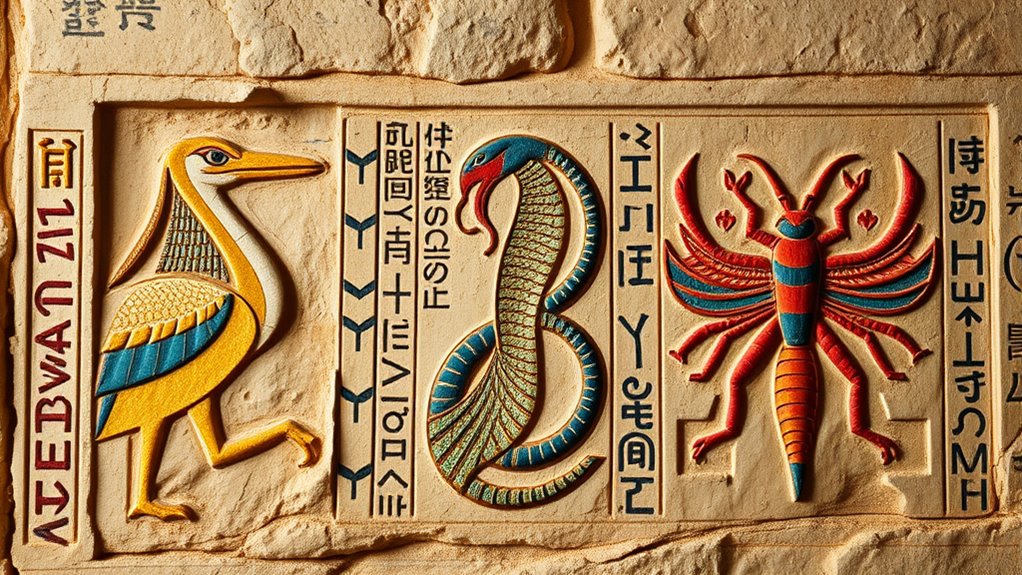
The Egyptians developed a detailed system of divine interpretations to understand these dream messages. They believed that symbols within dreams carried specific meanings, which could reveal the gods’ will or future events. For example, dreaming of a snake wasn’t seen as just a simple image; it could symbolize protection, danger, or transformation, depending on the context and how the snake appeared. These interpretations weren’t random guesses—they were rooted in a rich tradition of religious texts and expert dream interpreters who understood the divine language of symbols. You could consult these texts or priests to decipher what your dream might signify, especially if it involved significant symbols like animals, gods, or objects.
Beyond individual visions, dreams had ritual significance in ancient Egyptian society. They played an integral part in religious ceremonies and personal rituals. When you had a troubling or meaningful dream, you might perform specific rites or offerings to appease the gods or seek clarity. For instance, certain dreams were considered messages from Osiris or Isis, requiring you to act in accordance with divine instructions to guarantee harmony or protection. These rituals underscored the belief that dreams weren’t just private fantasies but sacred messages that needed reverence and understanding.
In essence, the divine interpretations of dreams weren’t just about decoding symbols—they were about recognizing the divine significance behind every vision. The Egyptians viewed dreams as sacred tools for spiritual growth, divine guidance, and maintaining cosmic order. They believed that through careful interpretation and ritual actions, you could align yourself with divine will and secure favor from the gods. This deep-seated belief made dreams an essential part of their religious life, emphasizing that what you saw in sleep wasn’t random but a meaningful dialogue with the divine domain.

Pamonrueer 19 Pcs Egyptian Figurines Set Resin Ancient Egypt Decor Hand-Painted Small Ancient Egyptian Pyramid Mummy Pharaoh Anubis Statue Egyptian Gods for Table Home Decoration
Resin material: Figurines are made of resin, with rich details that capture the essence of ancient Egyptian art…
As an affiliate, we earn on qualifying purchases.
As an affiliate, we earn on qualifying purchases.
Frequently Asked Questions
How Did Ancient Egyptians Interpret Dreams Differently From Other Cultures?
You notice that ancient Egyptians interpret dreams differently by relying on specific dream analysis techniques rooted in their spiritual beliefs. They saw dreams as messages from gods, emphasizing dream symbolism evolution over time. Unlike other cultures that might see dreams as random, Egyptians believed each symbol held divine significance, guiding their decisions and rituals. This unique approach reflects their deep connection between dreams, religion, and daily life.
Were Dream Symbols Considered Divine Messages or Personal Insights?
Did you know that over 90% of ancient Egyptians believed dreams conveyed divine messages? You’d see dream symbols as more than personal insights; they were direct communication from gods or the spiritual domain. They trusted these symbols to guide decisions, interpret omens, and understand their future. This belief made dreams a sacred link to the divine, shaping daily life and spiritual practices with the idea that messages came from beyond.
Did Social Status Influence Dream Interpretation in Ancient Egypt?
You’d find that social status profoundly influenced dream interpretation in ancient Egypt. The dream class, linked to your social hierarchy, determined how your dreams were understood and valued. Higher classes had access to more specialized interpreters, believing their dreams held greater divine insight. Lower classes, meanwhile, often saw dreams as personal messages with less formal interpretation. Your position in society shaped how seriously your dreams were taken and interpreted.
How Did Ancient Egyptian Priests Influence Dream Symbolism?
You might think dream priesthood shaped Egyptian dream symbolism profoundly. In reality, these priests influenced interpretations through ritual symbolism, guiding how dreams were understood. They believed their role was to interpret divine messages, using sacred symbols from rituals to decode dreams. Their authority helped standardize dream meanings, making them a key part of spiritual life. So, the dream priesthood played an essential role in shaping how dreams were seen as messages from the divine.
Are Any Ancient Egyptian Dream Symbols Still Relevant Today?
Yes, some ancient Egyptian dream symbols still influence modern dream analysis and contemporary symbolism. You might find that symbols like the scarab or the ibis carry similar meanings today, representing renewal or wisdom. By understanding these ancient symbols, you can gain deeper insights into your dreams, connecting past traditions with current interpretations. Their enduring relevance shows how timeless themes continue to resonate in modern subconscious exploration.

Ankh Cross Eye of Horus Gemstone Necklace Key of Life Scarab Pendant Egyptian Goddess Isis Necklace Ancient Egyptian Protection Amulet Religious Jewelry for Women Men (gold)
Goddess Isis Horus Ankh Necklace – The Eye of Horus is a symbol of protection, good fortune, health,…
As an affiliate, we earn on qualifying purchases.
As an affiliate, we earn on qualifying purchases.
Conclusion
As you unravel the tapestry of ancient Egyptian dreams, you realize they’re like hidden treasures buried beneath time’s sands. Each symbol, like a secret key, open a world of divine mysteries and spiritual whispers. When you delve into their dream lore, you’re stepping into a sacred dance between the mortal and the divine, where symbols bloom like lotus flowers in the Nile’s gentle flow. Now, you hold the key to their mystical dreamworld.
Pamonrueer 19 Pcs Egyptian Figurines Set Resin Ancient Egypt Decor Hand-Painted Small Ancient Egyptian Pyramid Mummy Pharaoh Anubis Statue Egyptian Gods for Table Home Decoration
Resin material: Figurines are made of resin, with rich details that capture the essence of ancient Egyptian art…
As an affiliate, we earn on qualifying purchases.
As an affiliate, we earn on qualifying purchases.

Pacific Giftware Ancient Egyptian Artifact Collectible God of Underworld Anubis Sarcophagus Coffin w/Mummy Insert Figurine 5.5 Inch L
Hand-cast using real crushed stone bonded with high quality designer resin
As an affiliate, we earn on qualifying purchases.
As an affiliate, we earn on qualifying purchases.