TL;DR

Get health and wellness essentials delivered free with Prime
- Fast, free delivery on millions of items
- Prime Video, Amazon Music and more included
- Member-only deals all year
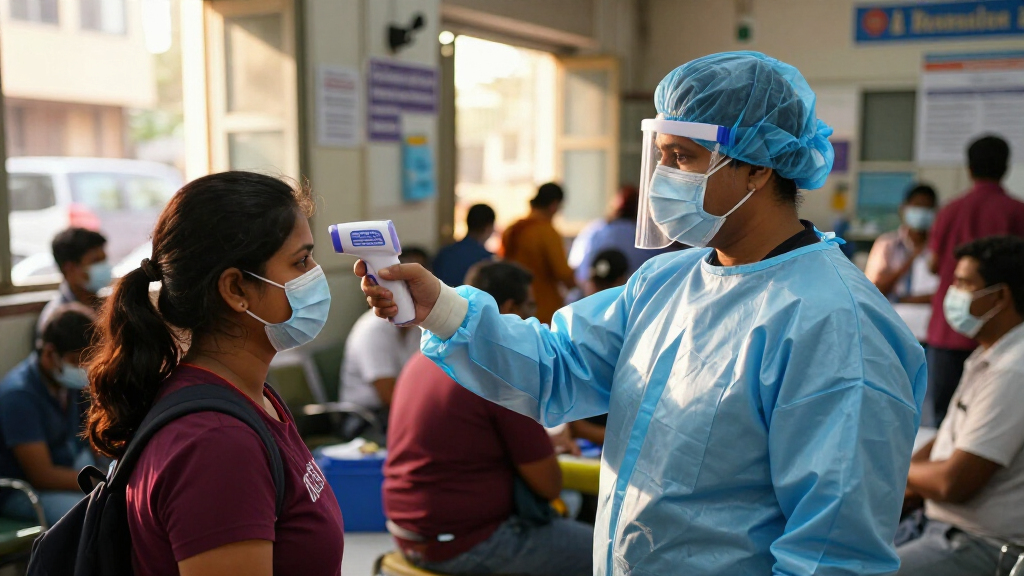
Mumbai’s swine flu cases have increased sharply to 441, according to local health authorities, raising alarm about potential outbreak escalation. Officials are monitoring the situation closely as public health measures are being intensified.
Mumbai has confirmed a surge in swine flu cases, with the total now reaching 441, according to local health officials. This increase comes amid heightened concerns about the potential for wider transmission and the need for intensified health interventions in the city, which is densely populated and highly susceptible to infectious disease outbreaks.
Health authorities in Mumbai announced that the number of confirmed swine flu cases has increased to 441 as of today, marking a significant rise from previous counts. The surge has been observed over the past few weeks, with authorities attributing the spike to increased testing and ongoing community transmission.
Officials from the Mumbai Municipal Corporation stated that the majority of cases are concentrated in certain districts, but there is concern about the possibility of wider spread given the city’s high population density and mobility. The health department has ramped up surveillance, contact tracing, and public awareness campaigns to contain the outbreak.
Hospital officials report that several patients are receiving treatment, with some requiring intensive care. No deaths have been officially reported yet related to swine flu in Mumbai, but health officials warn that the situation remains dynamic and warrants close monitoring.
Implications of the Swine Flu Surge in Mumbai
The rise to 441 confirmed cases signifies a notable escalation in swine flu activity within Mumbai, which could strain local healthcare resources if the trend continues. The increase underscores the importance of early detection, vaccination, and public health messaging to prevent further transmission. Given Mumbai’s dense population and high mobility, this surge could have wider implications for regional and national health security if not contained promptly.
Public concern is mounting, especially among vulnerable groups such as the elderly and those with pre-existing health conditions. The situation highlights the ongoing need for preparedness against seasonal influenza strains and potential outbreaks of zoonotic diseases like swine flu.
As an affiliate, we earn on qualifying purchases.
Background on Swine Flu in Mumbai and Past Trends
Swine flu, caused by the H1N1 influenza virus, periodically affects India, with Mumbai being among the most impacted cities due to its large population and international connectivity. Past outbreaks have seen fluctuating case numbers, with health authorities implementing vaccination drives and awareness campaigns to control spread.
In recent years, Mumbai has experienced localized surges during seasonal peaks, but the current rise to 441 cases marks one of the more significant increases in recent times. The last major outbreak was reported in 2019, which prompted health officials to reinforce surveillance and preparedness measures.
Experts note that increased testing and reporting may partly explain the rise, but the actual transmission rate remains under study. The current trend is being closely watched by public health officials, who emphasize the importance of vaccination and hygiene practices.
As an affiliate, we earn on qualifying purchases.
Unconfirmed Factors Behind the Surge in Cases
It remains unclear whether the rise in cases is solely due to increased testing, or if there is an actual spike in community transmission. The exact source and extent of new infections are still under investigation, and health officials have not yet confirmed a new strain or mutation of the virus.
Additionally, the impact of seasonal factors or recent public health measures on the case numbers has not been fully analyzed, leaving some uncertainty about future trends.
As an affiliate, we earn on qualifying purchases.
Next Steps in Managing the Swine Flu Outbreak in Mumbai
Health authorities are expected to continue intensified surveillance, expand vaccination efforts, and increase public awareness campaigns to curb further spread. Monitoring of hospital admissions and case severity will inform whether additional healthcare resources are needed.
Further testing and genomic analysis of the virus are likely to be conducted to understand if any new variants are contributing to the surge. Officials will also review and possibly reinforce existing containment protocols as a precaution.
As an affiliate, we earn on qualifying purchases.
Key Questions
Are there any new variants of swine flu identified in Mumbai?
It is not yet confirmed whether new variants are involved; investigations are ongoing to analyze the virus strains circulating in the area.
What precautions should residents take to avoid infection?
Health officials recommend practicing good hygiene, wearing masks in crowded places, avoiding close contact with infected individuals, and getting vaccinated if eligible.
Are hospitals prepared to handle an increase in swine flu cases?
Hospitals are monitoring resource availability and have ramped up treatment capacity, but officials emphasize the importance of early detection and prevention to avoid overwhelming healthcare facilities.
Will there be a vaccination drive in response to the surge?
Public health authorities are considering expanding vaccination efforts, especially targeting vulnerable populations, but specific plans are still being finalized.
Is this surge linked to any recent public health policy changes?
There is no confirmed link between policy changes and the current surge; officials attribute the rise mainly to increased detection and ongoing community spread.
Source: local
Halloween Picks
halloween
As an affiliate, we earn on qualifying purchases.