
TL;DR

Get health and wellness essentials delivered free with Prime
- Fast, free delivery on millions of items
- Prime Video, Amazon Music and more included
- Member-only deals all year
A study of nearly 400,000 Medicaid enrollees with acute low back pain found that starting with opioids or gabapentinoids was associated with higher rates of later opioid use disorder or overdose diagnoses than not starting those drugs. Chiropractic and physical therapy as initial treatments were associated with lower rates, but the observational study cannot establish that the treatments caused those differences.
A study of 399,500 Medicaid enrollees diagnosed with acute low back pain found that those initially prescribed opioids or gabapentinoids had higher rates of later opioid use disorder or overdose diagnoses than patients who did not start with those drugs. The findings, published in JAMA Network Open, add evidence relevant to treatment guidelines that recommend trying nondrug care before prescription painkillers for acute back pain, but the observational design cannot show that the medicines caused the added risk.
Researchers led by Kara E. Rudolph of Columbia University examined Medicaid claims from 25 states for 2016-2019. The patients had a new acute low back pain diagnosis and no recent record of opioid use. Within one month of diagnosis, 21% received an opioid and 5.8% received gabapentin or a related drug. About 35% had a claim for a nondrug treatment, including chiropractic, physical therapy or massage.
Compared with patients who did not start an opioid, those starting at less than 50 milligrams of morphine equivalents a day for at least seven days had a 105.2% higher likelihood of the combined outcome of opioid use disorder or overdose. The corresponding increase associated with starting a gabapentinoid was 101.6%. Starting an opioid above 50 milligrams of morphine equivalents was associated with a 146.6% increase. The study reported confidence intervals for these estimates, but the outcome grouped opioid use disorder and overdose together rather than reporting them separately.
Initial chiropractic care was associated with a 32.8% lower risk of the combined outcome compared with not starting chiropractic; physical therapy was associated with a 31.1% lower risk. These are associations, not proof that either therapy prevented the outcome. Across the study population, cumulative rates of the combined diagnoses were 1.4% at seven months and 2.3% at 13 months after the initial back-pain diagnosis.
Risks of Starting With Prescription Drugs
The findings matter because opioids are still prescribed to some people with acute back pain despite longstanding guidance favoring nondrug treatments first. The study gives a large, real-world view of what happened after different initial treatment choices among Medicaid patients, a population for whom access to physical therapy or other services may be limited.
The reported relative increases should not obscure the absolute figures: the combined outcome was recorded in 2.3% of participants by 13 months. Nor do the results establish that an initial prescription alone explains a later diagnosis. Patient health, pain severity, access to care and other factors may influence both treatment choice and outcomes. The findings support a discussion of potential benefits and risks, not a conclusion that medication is never appropriate.
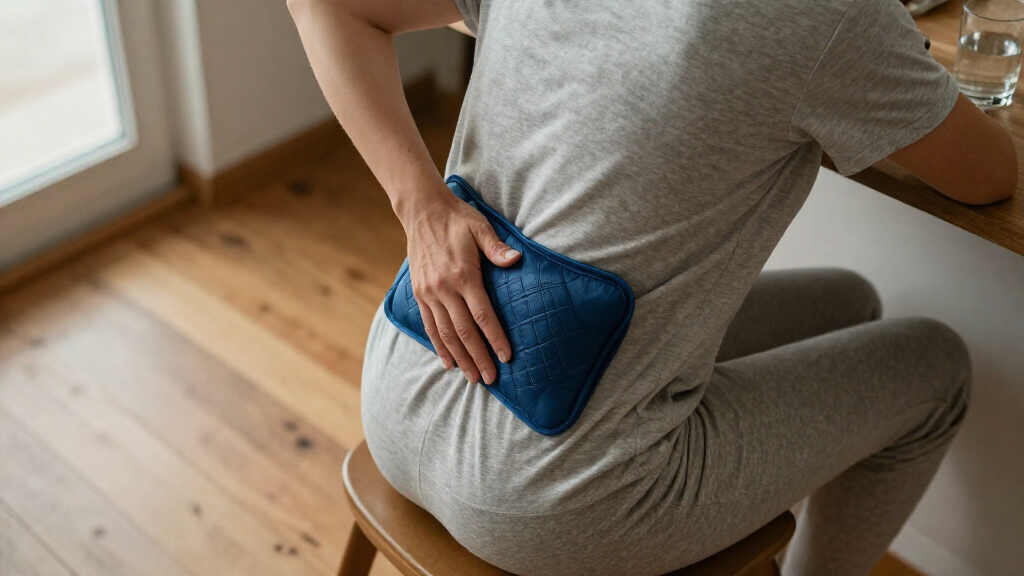
electric heating pad for back pain
As an affiliate, we earn on qualifying purchases.
As an affiliate, we earn on qualifying purchases.
Guidelines and Treatment Patterns
Clinical guidelines have recommended nondrug approaches first for acute low back pain for more than a decade. Even so, prior research cited by the study authors found that 12% to 20% of privately insured or Medicaid patients received opioid prescriptions in 2017-2018. Gabapentinoids, including gabapentin and pregabalin, have also been used as alternatives, although the report notes that evidence for their effectiveness in low back pain is limited.
The current analysis included patients with a mean age of 39; 60% were women, and 98% had incomes below 138% of the federal poverty level. The researchers identified opioid use disorder or overdose through later diagnostic codes or a prescription for medication used to treat opioid use disorder. More than 90,000 people who did not start with an opioid received one later during the records period, illustrating that the comparison was about initial treatment, not whether patients ever received an opioid.
“Pharmacologic therapies can be considered after weighing potential benefits against longer-term risks.”
— Kara E. Rudolph and colleagues, as quoted in the report
As an affiliate, we earn on qualifying purchases.
Limits of the Medicaid Analysis
The study used observational claims data, so it cannot establish cause and effect. Claims records may not capture pain severity, clinical reasoning, care patients paid for themselves, or medicines obtained without a prescription. The analysis was limited to Medicaid enrollees in 25 states, which means its results may not apply in the same way to other populations or health systems.
The combined outcome also leaves a key detail unresolved: the researchers did not distinguish how many cases involved opioid use disorder, overdose, or both. The report does not establish whether the lower rates associated with chiropractic and physical therapy reflect the therapies themselves, differences in patients who could access them, or other factors. The data also cannot show that every patient with acute back pain should follow the same treatment plan.
As an affiliate, we earn on qualifying purchases.
Applying the Findings to Care
The study adds evidence to existing guidance favoring nondrug approaches as an initial option for acute low back pain. The researchers said medication can be considered after weighing potential benefits against longer-term risks, and advised minimizing opioid dose and duration when opioids are prescribed. The report does not identify a specific next research milestone or a change to clinical guidelines.
Further research could help clarify whether separate outcomes differ for opioid use disorder and overdose, and how treatment access affects the observed associations. For individual care decisions, patients should discuss options with a qualified health professional who can account for their symptoms, medical history and access to treatment.
As an affiliate, we earn on qualifying purchases.
Key Questions
What did the study find about opioids for acute back pain?
Starting an opioid was associated with higher later rates of the combined outcome of opioid use disorder or overdose than not starting one. The increase varied by dose group, but the observational study cannot establish that opioids caused the outcomes.
Did gabapentin show a similar association?
Yes. Starting a gabapentinoid, such as gabapentin, was associated with a 101.6% higher likelihood of the combined outcome compared with not starting one. The study does not prove the medication caused that increase.
Were physical therapy and chiropractic associated with lower risk?
Yes. Initial physical therapy and chiropractic care were associated with lower rates of the combined outcome compared with not starting those therapies. Those comparisons do not prove the treatments caused the difference.
How common was the combined outcome?
Across the study population, cumulative rates of opioid use disorder or overdose diagnoses were 1.4% at seven months and 2.3% at 13 months after the initial diagnosis. The study did not report the two outcomes separately.
Does the study mean opioids should never be prescribed?
No. The researchers said medication may be considered after weighing potential benefits and longer-term risks. They advised minimizing opioid dose and duration when opioids are prescribed; treatment decisions depend on the individual patient and should be discussed with a qualified health professional.
Source: rss
Fall Picks
fall essentials
As an affiliate, we earn on qualifying purchases.