Dream symbols like being chased, falling, or feeling trapped often reflect your subconscious fears and anxieties you might not fully realize. These images are messages from your mind about avoidance, insecurity, or feelings of helplessness. By understanding what these symbols truly mean, you can uncover hidden worries and work through them. If you keep exploring, you’ll discover more insights into what your dreams reveal about your emotional state.
Listen free for 30 days with Audible
Thousands of audiobooks and originals — cancel anytime.
As an affiliate, we earn on qualifying purchases.
Key Takeaways
- Dream symbols like being chased or falling reflect subconscious fears of avoidance, loss of control, or insecurity.
- Feelings of confinement or helplessness in dreams indicate emotional restrictions and overwhelm.
- Loss of voice or inability to communicate signifies fears of being dismissed or ignored in waking life.
- Natural disasters symbolize emotional chaos and instability related to anxiety or life upheavals.
- Recognizing these symbols and emotions can reveal underlying fears, aiding in emotional understanding and growth.
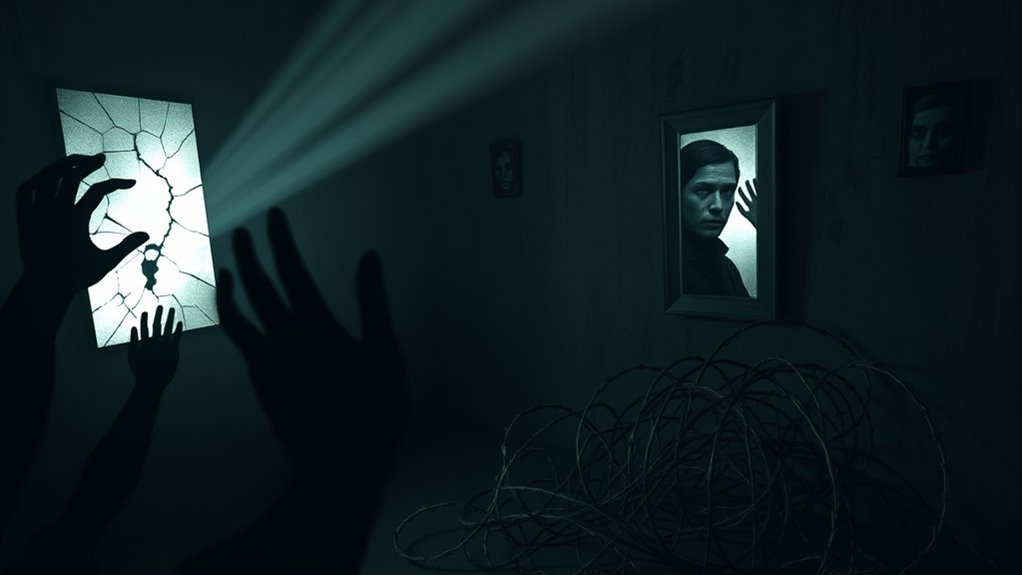
Dreams often serve as a mirror to our subconscious, revealing underlying fears and anxieties through powerful symbols. When you wake up wondering what those unsettling images mean, you’re engaging in a form of dream interpretation. These symbols are not random; they act as messages from your mind, spotlighting subconscious fears you might not be fully aware of during your waking hours. Recognizing these symbols can help you understand what’s truly bothering you beneath the surface.
Dreams reveal subconscious fears through powerful symbols, offering insight into what truly troubles us beneath the surface.
For example, dreaming of being chased is a common symbol of anxiety. It often signifies that you’re avoiding something in your life—perhaps a problem, responsibility, or emotion you find difficult to confront. The act of running away in your dream mirrors your desire to escape from these issues. Similarly, dreams of falling can symbolize a loss of control or stability, echoing fears about failure or insecurity. Falling dreams often leave you with a sense of helplessness, hinting that your subconscious fears are rooted in feelings of vulnerability or inadequacy.
Another powerful symbol linked to subconscious fears is being trapped or confined. Whether it’s stuck in a small room, a cage, or an enclosed space, these dreams reflect feelings of restriction or helplessness in your waking life. You might feel overwhelmed by obligations, relationships, or work pressures, and your mind manifests these emotions through images of confinement. Conversely, dreams about losing your voice or being unable to communicate can reveal fears of being unheard or dismissed, which are common anxiety triggers.
Dreams involving natural disasters like floods, earthquakes, or storms are also significant. These symbols often point to emotional upheaval or a sense that your life is out of control. Your subconscious fears are surfacing in these powerful images, warning you that some aspect of your life feels unstable or overwhelming. Recognizing these symbols through careful dream interpretation can guide you toward addressing unresolved fears or anxieties.
Ultimately, understanding what these symbols mean requires honest reflection. Your subconscious fears are often cloaked in vivid images, but they speak in symbols that, once decoded, can provide insight and clarity. Paying attention to the emotions you experience during these dreams—the fear, helplessness, or dread—can help you connect the symbols to specific worries in your waking life. By doing so, you can begin to confront your subconscious fears and work towards emotional resilience and peace.
As an affiliate, we earn on qualifying purchases.
Frequently Asked Questions
Can Recurring Nightmares Indicate Underlying Mental Health Issues?
Yes, recurring nightmares can indicate underlying mental health issues. If you notice frequent nightmares, it might be linked to stress, anxiety, or trauma. The emotional impact of these dreams can disrupt your sleep and increase daytime fatigue. Pay attention to how often your nightmares occur and how they make you feel, as persistent nightmares could signal a need to seek professional support to address underlying emotional or psychological concerns.
How Do Cultural Differences Influence Dream Symbolism of Fear?
Cultural interpretations shape how you perceive fear in dreams, influencing cross-cultural symbolism profoundly. What might symbolize danger or warning in one culture could represent growth or protection in another. These differences remind you that dream symbols are often rooted in cultural beliefs and traditions. To understand your dreams better, consider the cultural lens through which you view these symbols, allowing you to interpret your fears with greater nuance and insight.
Are There Specific Colors Associated With Anxiety in Dreams?
You might notice that specific colors in your dreams evoke anxiety through color symbolism and emotional associations. For example, red can symbolize danger or intense emotion, while black might represent fear or the unknown. Blue could indicate calmness or sadness, but in anxious dreams, it may feel overwhelming. Recognizing these color cues helps you understand underlying emotions, as each hue carries unique symbolic meaning that influences your feelings during the dream.
Can Dream Symbols of Anxiety Predict Future Events?
Dream symbolism of anxiety can sometimes hint at future concerns, but it’s not a reliable method for anxiety prediction. When you see fearful images in your dreams, they often reflect current stress or unresolved issues rather than upcoming events. Pay attention to recurring themes or symbols, as they reveal your inner fears. While they may offer insight, don’t rely solely on dream symbolism for predicting future anxiety; focus on addressing your real-life worries instead.
How Can One Differentiate Between Normal Fear and Clinical Anxiety in Dreams?
You can differentiate between normal fear and clinical anxiety in dreams through dream interpretation by noticing the intensity and frequency of fearful images. If your dreams consistently evoke overwhelming emotions or disrupt your sleep, it may indicate clinical anxiety. Practice emotional regulation by reflecting on these dreams and their meanings. Normal fears tend to be situational, while clinical anxiety persists and affects your overall well-being, signaling a deeper concern.
As an affiliate, we earn on qualifying purchases.
Conclusion
By recognizing these symbols of anxiety in your dreams, you gain insight into your subconscious fears. When you see these fearful images, are you willing to confront what’s truly bothering you? Remember, understanding what your dreams reveal can empower you to face your anxieties head-on. Your dreams aren’t just random images—they’re messages waiting to be decoded. So next time fear appears in your dreams, ask yourself: what is my mind trying to tell me?
As an affiliate, we earn on qualifying purchases.
As an affiliate, we earn on qualifying purchases.
Flea & tick season Picks
flea and tick prevention
As an affiliate, we earn on qualifying purchases.