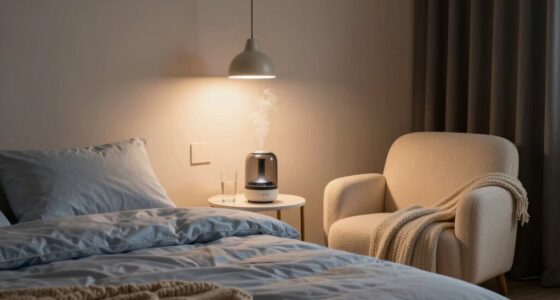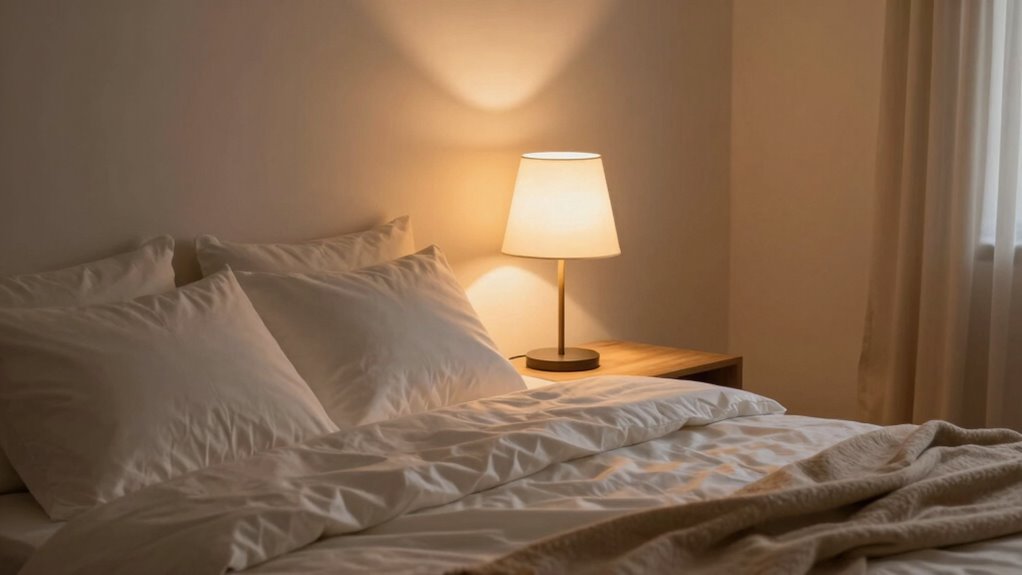

Creating a calm lighting scene before bed can truly transform your mood and improve your sleep. By choosing warm, soft lights with gentle diffusion, you signal your brain to wind down and relax. Use dimmable lamps positioned at comfortable heights to avoid harsh glare, and keep overhead lighting minimal. Thoughtfully placed lighting zones support tranquility and create a peaceful environment. Keep exploring to discover more tips that help you craft the perfect bedtime atmosphere.

Get health and wellness essentials delivered free with Prime
- Fast, free delivery on millions of items
- Prime Video, Amazon Music and more included
- Member-only deals all year
Key Takeaways
- Soft, warm lighting creates a soothing environment that signals the brain to relax and prepare for sleep.
- Dimmable fixtures allow gradual light reduction, enhancing the calming transition before bedtime.
- Proper placement of bedside lamps at comfortable heights prevents eye strain and promotes tranquility.
- Diffused light from lamps or sconces reduces glare and creates gentle pools of illumination.
- Designing specific relaxation zones with appropriate lighting fosters a peaceful, restful sleeping environment.

A calm lighting scene can transform any space into a peaceful sanctuary, inviting relaxation and serenity. When you’re preparing for bed, the right lighting can make all the difference in how quickly you unwind and how restful your sleep becomes. One of the key factors to contemplate is the color temperature of your lighting. Warm light, with a lower color temperature around 2700K to 3000K, mimics the glow of sunset and creates a cozy, inviting atmosphere. This type of lighting signals your brain that it’s time to wind down, helping you relax more easily. Avoid harsh, cool white or bluish lights, which can stimulate alertness and interfere with your melatonin production, making it harder to fall asleep.
Lighting fixtures also play an essential role in establishing a calming bedtime environment. Soft, diffused light from fixtures like table lamps, wall sconces, or pendant lights can create gentle pools of illumination that aren’t overwhelming. Instead of relying on overhead ceiling lights, opt for fixtures that direct light downward or diffuse it through shades or frosted glass. This helps eliminate harsh shadows and reduces glare, which can cause discomfort or restlessness. You might also consider adjustable fixtures with dimming features, allowing you to fine-tune the brightness to suit your mood and needs as you shift from evening activities to sleep. Incorporating lighting design principles can further enhance the calming effect by creating a balanced and harmonious environment. Additionally, lighting placement** can influence how restful your space feels, promoting a more tranquil atmosphere. Paying attention to lighting zones** within your bedroom can help you create specific areas for relaxation and reading, further supporting restful sleep.
Soft, diffused lighting from fixtures like lamps and sconces creates a calming, glare-free bedtime environment.
The placement of your lighting fixtures matters too. Position bedside lamps at a comfortable height, so you don’t strain your eyes when reading or winding down. Use warm-colored bulbs in these fixtures to maintain a soothing ambiance. If you like to read before sleeping, choose a lamp with a dimmable feature so you can gradually lower the light level as you get closer to bedtime. Avoid bright, direct lighting in your bedroom, as it can disrupt your circadian rhythm and make it harder to relax fully. Additionally, incorporating lighting control systems can help you easily adjust your environment to match your sleep routine. Ultimately, by paying attention to the color temperature of your bulbs and choosing the right lighting fixtures, you set the perfect mood for a peaceful, restful night. When your environment feels calm and inviting, falling asleep becomes smoother, and your overall bedtime experience improves notably.
As an affiliate, we earn on qualifying purchases.
Frequently Asked Questions
Can Lighting Scenes Improve Sleep Quality?
Yes, lighting scenes can improve sleep quality. You’ll experience mood enhancement as calming lights help you relax before bed. Proper lighting also supports circadian regulation by signaling your body that it’s time to wind down, which promotes better sleep patterns. By adjusting your lighting to softer, warmer tones in the evening, you create an environment that naturally encourages rest and enhances overall sleep quality.
What Colors Are Best for Bedtime Lighting?
The best colors for bedtime lighting are warm, soft hues like amber or deep orange, which create a cozy atmosphere. You should aim for a lower color temperature—around 2,700K—and gentle lighting intensity to signal your body it’s time to unwind. These colors subtly influence your mood, promoting relaxation and preparing you for restful sleep. Don’t underestimate how much the right shades can transform your bedtime experience.
How Long Should Calming Lighting Be Used Before Sleep?
You should use calming lighting for about 30 to 60 minutes before sleep to maximize mood enhancement and support circadian regulation. This period helps your body wind down, promoting relaxation and signaling that it’s time to rest. Keep the lighting dim and warm-colored during this time, allowing your mind and body to shift seamlessly into sleep mode, improving overall sleep quality and mood.
Are There Any Health Risks With Certain Lighting Colors?
Certain lighting colors, especially blue and cool-white, can pose health risks like eye strain due to their high color temperature. Prolonged exposure to these lights before bed can disrupt your sleep cycle and cause discomfort. To minimize risks, opt for warmer tones or dimmer, softer lighting in the evening. This helps protect your eyes and supports better sleep, ensuring you wake up refreshed.
Can Lighting Scenes Help With Insomnia?
Lighting scenes can definitely help with insomnia by promoting mood enhancement and creating a relaxing environment. Soft, warm lights signal your body it’s time to wind down, reducing energy disruption and easing you into sleep. Avoid bright, blue-toned lights before bed, as they can interfere with melatonin production. By setting a calming scene, you encourage your mind and body to relax, making it easier to fall asleep naturally.
As an affiliate, we earn on qualifying purchases.
Conclusion
Creating a calm lighting scene before bed isn’t just about relaxation; it can substantially improve your sleep quality. Studies show that exposure to dim, warm lighting in the evening can reduce melatonin suppression by up to 50%, helping you fall asleep faster. So, next time you wind down, remember that a simple shift in your lighting can transform your bedtime mood and boost your overall well-being. Brighten your nights with gentle light and enjoy better sleep.
As an affiliate, we earn on qualifying purchases.
adjustable ambient lighting for bedroom
As an affiliate, we earn on qualifying purchases.
As an affiliate, we earn on qualifying purchases.
Fall Picks
fall essentials
As an affiliate, we earn on qualifying purchases.