If you’re searching for hearing aids, not amplifiers, focus on devices described as digital OTC hearing aids with sound processing and controls—not products that simply make every sound louder. My best overall pick is the ELEHEAR Beyond Pro, which stands out in this lineup for its Bluetooth connectivity and rechargeable design. The Avicill 16-channel BTE is another option for buyers who want more stated sound-processing channels, while the Audien Atom X appeals to people who prefer touchscreen controls. The tradeoffs are fit, ease of adjustment, charging habits, and how clearly each product explains its sound features; channel count alone cannot predict which aid will suit your hearing. Read on for the full breakdown and guidance on choosing a model that fits your needs.

Get health and wellness essentials delivered free — and shop member deals
- Fast, free delivery on millions of items
- Access to Prime Big Deal Days deals on October 6–7
- Prime Video, Amazon Music and more included
Complete the kit


Key Takeaways
- ELEHEAR Beyond Pro is the clearest feature-led overall pick in this lineup: Bluetooth and rechargeable operation set it apart from simpler models, though buyers should check whether its app and connectivity features match their devices and routines.
- More stated channels do not automatically mean better hearing: Avicill and some Vivtone and LRUSEIFE listings emphasize 16-channel processing, but fit, adjustment options, and the quality of product information matter just as much.
- Fit and handling create the biggest practical divide: BTE designs such as EYOUBE and Avicill may be easier to handle, while CIC and supermini styles prioritize a less visible fit that can be harder to insert and maintain.
- Charging features target different routines: Magnetic cases on two listings may simplify storage and placement, while Karthus emphasizes long stated battery life; check what those claims mean for actual daily use and charging habits.
- Several entries are near-duplicates or use broad naming: Two magnetic-case listings and multiple Vivtone and LRUSEIFE models make it especially important to verify the exact model, controls, included accessories, and support before choosing.
| Rechargeable OTC Hearing Aids with Noise Cancellation and Magnetic Charging Case |  | Best for Simple, Discreet Wear | Type: OTC hearing aids | Charging: Rechargeable magnetic charging case | Hearing time: Up to 48 hours | VIEW ON AMAZON | See Our Full Breakdown |
| EYOUBE Rechargeable BTE Hearing Aids with 11-Channel Noise Cancellation | 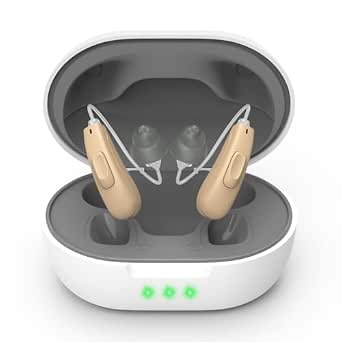 | Best for Longer Case Runtime | Fit type: Behind-the-ear | Channels: 11 | Noise control: Noise cancellation | VIEW ON AMAZON | See Our Full Breakdown |
| LRUSEIFE Rechargeable In-Ear Hearing Aids with 11-Channel Noise Cancellation | 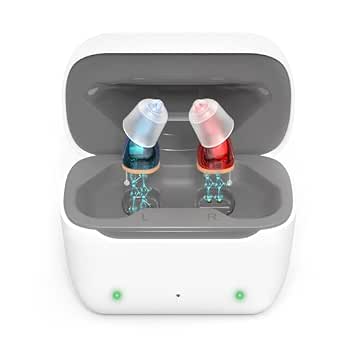 | Best Compact In-Ear Pick | Fit type: In-ear | Channels: 11 | Noise control: Active noise cancellation | VIEW ON AMAZON | See Our Full Breakdown |
| Avicill Rechargeable BTE Hearing Aids with 16-Channel Noise Cancellation | | Best for More Defined Sound Processing | Fit type: Behind-the-ear | Channels: 16 | Noise control: Active noise cancellation | VIEW ON AMAZON | See Our Full Breakdown |
| SILLVUKI Rechargeable CIC Hearing Aids with Audio Tracker |  | Best for Discreet Wear with Stated Runtime | Style: Completely-in-canal (CIC) | Fit: In-ear | Processors: Dual processors | VIEW ON AMAZON | See Our Full Breakdown |
| Audien Atom X OTC Hearing Aids with Touchscreen Control |  | Best for App-Free Controls | Fit: In-ear | Controls: Touchscreen charging case | Listening modes: Conversation, Crowd, TV, Comfort | VIEW ON AMAZON | See Our Full Breakdown |
| Vivtone Supermini Rechargeable Digital Hearing Aids |  | Best for a Minimal, Compact Routine | Type: Rechargeable digital hearing aids | Sound processing: 16-channel digital chip | Listening modes: 2 | VIEW ON AMAZON | See Our Full Breakdown |
| ELEHEAR Beyond Pro OTC Hearing Aids, Bluetooth Rechargeable, Champagne Gold |  | Best for App-Based Customization | Model: Beyond Pro | Type: Receiver-in-Canal (RIC) | Amplification: 50 dB | VIEW ON AMAZON | See Our Full Breakdown |
| Rechargeable OTC Hearing Aids with Noise Cancellation and Magnetic Charging Case |  | Best for Discreet, Simple Operation | Type: OTC hearing aids | Fit: Nearly invisible in-ear design | Features: Adjustable volume, noise cancellation | VIEW ON AMAZON | See Our Full Breakdown |
| Rechargeable OTC Hearing Aids with Noise Cancellation | 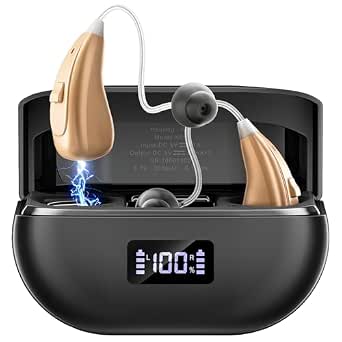 | Best for Long Listed Runtime | Fit: In-ear | Sound processing: 16-channel | Noise control: Adaptive noise cancellation | VIEW ON AMAZON | See Our Full Breakdown |
| Audien Atom One OTC Hearing Aids |  | Best for App-Free Fine-Tuning | Fit type: In-ear | Intended users: Adults with mild to moderate hearing loss | Controls: Analog volume and frequency dials | VIEW ON AMAZON | See Our Full Breakdown |
| Rechargeable Hearing Aids for Seniors and Adults with 5-Level Volume Control |  | Best for Long Time Between Charges | Technology: RIC (receiver-in-canal) | Sound processing: 16-channel chip with described noise-reduction technology | Sound amplification: Up to 40 dB ± 5 dB | VIEW ON AMAZON | See Our Full Breakdown |
| Vivtone Supermini Rechargeable Digital Hearing Aids with 16-Channel Sound Processing |  | Best for Switching Listening Modes | Type: Over-the-counter hearing aids | Sound processing: 16-channel digital | Listening modes: Two | VIEW ON AMAZON | See Our Full Breakdown |
| LRUSEIFE Invisible Digital Hearing Aids for Seniors – 16 Channel Rechargeable OTC with Noise Cancellation |  | Best for a Minimal In-Ear Profile | Model: IT1 | Fit type: In-ear | Channels: 16 | VIEW ON AMAZON | See Our Full Breakdown |
| Karthus Rechargeable Hearing Aids for Seniors with Noise Cancelling and 100H Battery Life |  | Best for Long Daily Wear Without an App | Target audience: Adults with mild to moderate hearing loss | Technology: 16-channel DSP | Battery life: 30 hours per charge; up to 100 hours with charging case | VIEW ON AMAZON | See Our Full Breakdown |
| hearing aids not amplifier | Battery life |
|---|---|
| Rechargeable OTC Hearing Aids | — |
| EYOUBE Rechargeable BTE Hearin | — |
| LRUSEIFE Rechargeable In-Ear H | — |
| Avicill Rechargeable BTE Heari | — |
| SILLVUKI Rechargeable CIC Hear | — |
| Audien Atom X OTC Hearing Aids | Up to 16 hours per charge; up to 48 hours with charging case |
| Vivtone Supermini Rechargeable | — |
| ELEHEAR Beyond Pro OTC Hearing | Up to 20 hours per charge; 100 hours total with case |
| Rechargeable OTC Hearing Aids | Up to 48 hours with charging case |
| Rechargeable OTC Hearing Aids | 25+ hours per charge; 100+ hours with charging case |
| Audien Atom One OTC Hearing Ai | Up to 24 hours |
| Rechargeable Hearing Aids for | Up to 25 hours per charge; up to 100 hours with charging case |
| Vivtone Supermini Rechargeable | — |
| LRUSEIFE Invisible Digital Hea | 18 hours |
| Karthus Rechargeable Hearing A | 30 hours per charge; up to 100 hours with charging case |
More Details on Our Top Picks
Rechargeable OTC Hearing Aids with Noise Cancellation and Magnetic Charging Case
This pair is the straightforward choice for shoppers who value a low-profile fit and easy controls over detailed sound customization. Its push-button volume adjustment keeps everyday changes simple, while three dome sizes offer a chance to find a more secure, comfortable fit. The case can recharge the aids for up to 48 hours of hearing time, making it more convenient for regular use than a model with no stated case capacity, such as the Avicill BTE. The tradeoff is limited supporting detail: the listing gives no measured noise-cancellation performance or guidance on which hearing-loss levels it suits. Unlike the EYOUBE BTE, it also does not specify multi-channel processing. I’d choose it for uncomplicated, discreet wear, not for buyers seeking documented fitting guidance or extensive sound controls.
Pros:- Nearly invisible design for buyers who prefer a low-profile device
- Push-button volume adjustment avoids complicated controls
- Charging case provides up to 48 hours of hearing time
- Three dome sizes offer fit options
Cons:- Noise-cancellation performance is not specified
- Supported hearing-loss levels are not stated
- No channel count or advanced sound-adjustment details are provided
Best for: Adults seeking a discreet OTC option with simple volume buttons, multiple dome sizes, and a rechargeable case for daily routines.
Not ideal for: Buyers who need clear guidance on supported hearing-loss levels or want detailed noise-control and sound-processing specifications.
- Type:OTC hearing aids
- Charging:Rechargeable magnetic charging case
- Hearing time:Up to 48 hours
- Included dome sizes:3
- Volume control:Adjustable push-button control
- Design:Discreet, nearly invisible
Our verdict“Choose this pair for discreet wear and simple rechargeable operation, but look elsewhere if documented sound processing or hearing-loss guidance is a priority.”
EYOUBE Rechargeable BTE Hearing Aids with 11-Channel Noise Cancellation
The EYOUBE stands out for buyers who want a behind-the-ear fit and a clearly stated reserve of power: its magnetic case provides up to 100 hours of hearing time and up to four recharges. That makes it a stronger pick for people who would rather charge less often than the more compact LRUSEIFE in-ear model, whose listing does not state a comparable total runtime. Its 11-channel processing, noise cancellation, and volume buttons add more defined sound-control details than the simpler magnetic-case OTC model in this lineup. There are limits: EYOUBE is intended for light to medium hearing loss, not severe loss, and runtime per charge is not provided. The BTE shape is also more visible than an in-ear design. I’d favor it for everyday conversation use and case capacity, not for a discreet fit or severe hearing needs.
Pros:- 11-channel digital processing with noise cancellation
- Magnetic case provides up to four recharges and up to 100 hours of hearing time
- Adjustable volume and button controls
- Intended for everyday listening with light to medium hearing loss
Cons:- Not intended for severe hearing loss
- Runtime per charge is not specified
- Behind-the-ear design is more visible than the LRUSEIFE in-ear option
Best for: Adults with light to medium hearing loss who prefer behind-the-ear controls and want a charging case with substantial stated reserve runtime.
Not ideal for: People with severe hearing loss, shoppers prioritizing an invisible in-ear fit, or buyers who need a stated runtime for each charge.
- Fit type:Behind-the-ear
- Channels:11
- Noise control:Noise cancellation
- Hearing-loss range:Light to medium; not intended for severe hearing loss
- Power:Rechargeable NiMH battery
- Charging case:Magnetic; up to 4 recharges
- Hearing time with case:Up to 100 hours
- Controls:Adjustable volume and button controls
Our verdict“Pick the EYOUBE if you have light to medium hearing loss and value a BTE fit with extensive case runtime over a smaller, less visible style.”
LRUSEIFE Rechargeable In-Ear Hearing Aids with 11-Channel Noise Cancellation
For shoppers who want an in-ear shape rather than a behind-the-ear device, LRUSEIFE gives compactness priority. The 11-channel noise reduction and button controls provide more specific sound-processing information than the basic discreet magnetic-case model, while its lightweight build is aimed at mild to medium hearing loss. Compared with the EYOUBE BTE, this is the less visible option; compared with SILLVUKI’s CIC pair, however, it has no stated per-charge runtime or case reserve to help buyers plan charging. The listing also describes the included rechargeable battery as a nonstandard type, which leaves practical replacement and servicing questions unanswered. I’d consider it for a compact fit and simple controls, but skip it if battery details or clearly documented support are central to the decision.
Pros:- Compact in-ear design is less conspicuous than the EYOUBE BTE
- 11-channel noise reduction is specified
- Rechargeable design with a charging case
- Button controls offer a direct way to adjust the device
Cons:- Battery is listed as a nonstandard type, with limited practical detail
- No per-charge or case runtime is stated
- Intended for mild to medium hearing loss, not more severe needs
Best for: Adults with mild to medium hearing loss who prefer a compact in-ear style and want physical button controls.
Not ideal for: Buyers who need clearly specified battery runtime, standard battery information, or a behind-the-ear fit with more stated charging details.
- Fit type:In-ear
- Channels:11
- Noise control:Active noise cancellation
- Recommended hearing-loss range:Mild to medium
- Battery:Rechargeable NiMH; listed as one nonstandard battery included
- Controls:Button control
- Material:Plastic
- Color:Blue-red
Our verdict“Choose LRUSEIFE for a compact in-ear fit and button controls, provided the limited battery and runtime information is acceptable.”
Avicill Rechargeable BTE Hearing Aids with 16-Channel Noise Cancellation
Avicill is the processing-focused BTE choice here, with a stated 16-channel chip and noise reduction. That gives buyers a clearer technical point of difference from the EYOUBE’s 11-channel setup, though the channel count alone does not establish how well either aid will suit an individual’s hearing. Its button volume control and rechargeable design keep operation familiar, and the lightweight plastic-and-silicone construction is intended for everyday wear. The main drawback is missing practical charging information: unlike EYOUBE’s stated case capacity or SILLVUKI’s listed per-charge runtime, Avicill provides no battery-life or charging-time figure. It is also intended for light to medium hearing loss. I’d shortlist it for shoppers who value specified processing and a BTE fit, but not for those who need predictable charging schedules before buying.
Pros:- 16-channel sound processing with noise reduction
- Rechargeable BTE design for everyday wear
- Button and volume controls are specified
- Plastic and silicone construction is described as lightweight
Cons:- Battery life and charging time are not specified
- Intended for light to medium hearing loss
- No runtime details are available to compare with EYOUBE or SILLVUKI
Best for: Adults with light to medium hearing loss who want a rechargeable BTE aid and prioritize a stated 16-channel processing specification.
Not ideal for: People who need published battery runtime or charging time, or buyers whose hearing needs fall outside the stated light-to-medium range.
- Fit type:Behind-the-ear
- Channels:16
- Noise control:Active noise cancellation
- Power:Rechargeable; power source listed as battery powered
- Controls:Button control and volume control
- Recommended hearing-loss range:Light to medium
- Materials:Plastic and silicone
- Part number:8T26
Our verdict“Avicill suits buyers who want a rechargeable BTE with stated 16-channel processing, but its unspecified charging performance makes it a less predictable daily-use choice.”
SILLVUKI Rechargeable CIC Hearing Aids with Audio Tracker
SILLVUKI combines a completely-in-canal design with more useful charging figures than the other in-ear options in this group: up to 20 hours per charge, plus up to 80 additional hours from the case. That makes it easier to plan daily use than LRUSEIFE, whose listing leaves runtime unspecified. The product also lists dual processors intended to improve speech clarity and three dome sizes for fit, giving it more concrete everyday-use details than the basic discreet OTC pair. Still, the CIC fit will not suit everyone, and the listing does not specify a supported hearing-loss range or explain the audio-tracker feature in detail. Buyers who prefer visible controls or a BTE shape may find EYOUBE easier to handle. I’d pick SILLVUKI for discreet wear and charging information, not for a deeply documented fitting profile.
Pros:- Completely-in-canal style offers a discreet alternative to EYOUBE’s BTE fit
- Up to 20 hours of use per charge
- Case provides up to 80 additional hours
- Three dome sizes and dual processors are listed
Cons:- Supported hearing-loss range is not specified
- Audio-tracker feature is not explained in the supplied details
- CIC fit may be less suitable for buyers who prefer a more accessible behind-the-ear style
Best for: Adults who prioritize a discreet CIC fit, want multiple dome sizes, and need stated per-charge and case runtime for planning.
Not ideal for: Shoppers who want a behind-the-ear device, detailed guidance on supported hearing-loss levels, or a clear explanation of the audio-tracker feature.
- Style:Completely-in-canal (CIC)
- Fit:In-ear
- Processors:Dual processors
- Noise control:Noise reduction
- Continuous use:Up to 20 hours per charge
- Charging time:2 hours
- Charging case:Up to 80 additional hours
- Included domes:Three sizes
- Battery:Lithium polymer
Our verdict“Choose SILLVUKI for a discreet CIC design with clear runtime figures, but seek more fitting guidance if your hearing needs require specific support.”
Audien Atom X OTC Hearing Aids with Touchscreen Control
The Atom X is a strong fit for buyers who want to change settings without handling tiny buttons or relying on a smartphone. Its touchscreen charging case selects among four modes for conversations, crowds, TV, and quieter listening, giving it more situation-specific choices than Vivtone Supermini’s two modes. The tradeoff is that those controls are on the case, not the earpieces, so adjusting settings while the case is put away may be less convenient. Its rechargeable in-ear design runs up to 16 hours per charge, with the case extending stated use to 48 hours. Multiple ear domes and an expert-guided setup session add useful support, though the product information does not spell out which hearing profiles the modes best serve. I’d choose it for straightforward, app-free control rather than maximum battery life or phone connectivity.
Pros:- Touchscreen case provides mode and volume controls without an app or small device buttons.
- Four listening modes cover more environments than Vivtone Supermini’s two.
- Rechargeable case provides portable backup charging.
- Multiple ear domes and an expert-guided setup session support fitting and setup.
Cons:- The stated 16-hour runtime is per charge; the longer figure includes the charging case.
- Mode and volume controls are on the charging case rather than the hearing aids.
- The product details do not specify compatibility with particular hearing profiles.
Best for: Adults who want several listening presets and straightforward controls without using a smartphone app.
Not ideal for: People who need to adjust settings while wearing the aids but do not want to carry or reach for the charging case.
- Fit:In-ear
- Controls:Touchscreen charging case
- Listening modes:Conversation, Crowd, TV, Comfort
- Battery life:Up to 16 hours per charge; up to 48 hours with charging case
- Power source:Rechargeable lithium-ion batteries
- Color:Beige
- Included accessories:Charging case, USB cable, wall adapter, extra ear domes, replacement wax guards, cleaning brush
Our verdict“Choose the Atom X if you want app-free access to four listening modes and are comfortable using the case to change settings.”
Vivtone Supermini Rechargeable Digital Hearing Aids
Vivtone Supermini suits buyers who value a small in-ear form and a simple daily routine over lots of adjustment options. Its automatic on/off and memory functions reduce repeated setup, while the two listening modes cover general and noisy environments. That is less flexibility than Audien Atom X, which offers four named modes, but it may be easier for someone who prefers fewer choices. The listed 16-channel digital processing describes how sound is handled; it does not, on its own, establish a fit for a particular hearing profile. A two-hour charge provides more than 16 hours of use, and four earbud sizes give more fitting options than products listing only a few domes. The case’s standby power is described as lasting around a week, so long gaps between use may require charging. I’d skip it if you need clearly specified hearing-needs compatibility or extensive sound customization.
Pros:- Compact in-ear design is intended to sit inside the ear canal.
- Automatic on/off and memory functions simplify repeat use.
- Two modes offer a basic choice between general and noisy settings.
- Four earbud sizes provide a broad selection for fitting.
Cons:- Two listening modes offer less choice than Audien Atom X’s four.
- The product description does not specify compatibility with different hearing needs.
- Charging-case standby power is described as around one week, which may require attention during infrequent use.
Best for: Adults seeking compact in-ear aids with automatic power behavior, memory, and a small set of listening modes.
Not ideal for: Buyers who want several environment-specific presets or documented guidance on which hearing profiles the device supports.
- Type:Rechargeable digital hearing aids
- Sound processing:16-channel digital chip
- Listening modes:2
- Charging time:2 hours
- Operating time:More than 16 hours
- Earbud sizes:X-small, small, medium, large
- Features:Auto on/off, memory function, charging case
Our verdict“Pick Vivtone Supermini for a compact, low-fuss routine, but choose a more adjustable model if you need multiple listening presets.”
ELEHEAR Beyond Pro OTC Hearing Aids, Bluetooth Rechargeable, Champagne Gold
ELEHEAR Beyond Pro is the clearest choice here for buyers who want a receiver-in-canal design with Bluetooth and app controls, rather than a more self-contained in-ear aid such as Audien Atom X. Its app allows customization, while Bluetooth 5.3 adds phone connectivity; buyers who prefer to avoid apps should look elsewhere. The listing describes VocClear 2.0 speech processing, noise and feedback reduction, and a separate music mode, which gives it a broader feature set than Vivtone Supermini’s two listening modes. A 15-minute charge is stated to provide six hours of use, helpful when a full charge is not practical, and the per-charge runtime is listed at up to 20 hours. The description targets mild to moderate hearing loss, but software update support is unspecified. I’d favor this option for connected listening and app adjustments, not for someone seeking the simplest setup.
Pros:- Bluetooth 5.3 and an iOS/Android app provide phone connectivity and customization.
- Dedicated music mode separates music listening from hearing-focused settings.
- A 15-minute charge is listed to provide six hours of use.
- RIC design includes noise cancellation and feedback reduction.
Cons:- Full customization and remote support require a smartphone app.
- Software update support status is not specified.
- The listed 50 dB amplification figure does not explain how settings match an individual hearing profile.
Best for: Adults with mild to moderate hearing loss who want Bluetooth, app-based adjustments, and a dedicated music mode.
Not ideal for: People who do not use a compatible smartphone, prefer app-free controls, or want confirmed information about ongoing software updates.
- Model:Beyond Pro
- Type:Receiver-in-Canal (RIC)
- Amplification:50 dB
- Connectivity:Bluetooth 5.3
- Battery life:Up to 20 hours per charge; 100 hours total with case
- Fast charging:15 minutes for 6 hours of use
- Control:App control for iOS and Android
- Target audience:Seniors and adults with mild to moderate hearing loss
Our verdict“Choose Beyond Pro if app control, Bluetooth, and a music mode matter more to you than a simple app-free setup.”
Rechargeable OTC Hearing Aids with Noise Cancellation and Magnetic Charging Case
This model keeps the feature set uncomplicated: an in-ear fit, push-button volume adjustment, and a magnetic charging case. That makes it a more basic alternative to Audien Atom X, whose four named modes give buyers more ways to tailor listening by setting. The listing also claims noise cancellation, but provides no performance details or mode breakdown, so I would not choose it on that feature alone. Three dome sizes offer some flexibility for fit, while the claimed 48 hours of hearing time depends on the charging case rather than describing a single charge. Compared with ELEHEAR Beyond Pro, it avoids app-based controls and Bluetooth, but gives up that model’s connected customization and dedicated music mode. The product details do not identify specific supported hearing profiles, either. I’d treat it as a straightforward, discreet option when simple volume control matters more than documented sound customization.
Pros:- Nearly invisible in-ear design prioritizes discretion.
- Push-button volume control avoids reliance on a smartphone app.
- Magnetic charging case is included for portable charging.
- Three dome sizes provide some fit choice.
Cons:- Noise-cancellation performance is not described in detail.
- The up-to-48-hour figure includes the charging case and does not specify per-charge runtime.
- The product information does not describe listening modes or compatibility with different hearing needs.
Best for: Adults who want a discreet in-ear device with push-button volume adjustment and a portable magnetic charging case.
Not ideal for: Buyers who need detailed noise-control settings, app customization, or clear guidance about supported hearing profiles.
- Type:OTC hearing aids
- Fit:Nearly invisible in-ear design
- Features:Adjustable volume, noise cancellation
- Controls:Push button
- Battery life:Up to 48 hours with charging case
- Charging case:Portable magnetic charging case
- Included fit accessories:Three dome sizes
Our verdict“Consider this model if you want discreet, button-controlled aids, but look elsewhere for clearly described sound settings or app customization.”
Rechargeable OTC Hearing Aids with Noise Cancellation
Among these five options, this model stands out for its stated 25-plus hours per charge and more than 100 hours with the case. That makes it a stronger fit for buyers who want fewer charging interruptions than the Audien Atom X, which lists up to 16 hours per charge. It also combines 16-channel processing with adaptive noise cancellation and five volume levels, while keeping operation to a one-button control. Those features offer a more structured adjustment setup than the simpler magnetic-case model, whose listing gives no number of volume levels or specific noise-control performance. The tradeoff is limited fit detail: the product information does not describe ear-size options, even though comfort and fit can make or break an in-ear aid. Battery figures are manufacturer-provided, and the listing does not explain individualized sound fitting. I’d favor it for runtime and simple adjustments, not for buyers who need extensive fit guidance.
Pros:- Listed runtime exceeds 25 hours per charge, with more than 100 hours stated with the case.
- Adaptive noise cancellation and 16-channel processing are designed to help manage speech and background sound.
- Five volume levels give more adjustment steps than a basic single-setting device.
- One-button control keeps operation straightforward.
Cons:- The product description does not specify fit options or compatibility details.
- Battery life and comfort claims are manufacturer-provided and not independently verified.
- Adaptive noise cancellation is described without specific performance information.
Best for: Adults with mild to moderate hearing loss who prioritize long listed battery life, several volume levels, and one-button operation.
Not ideal for: Buyers who need detailed ear-fit options or individualized guidance on whether the device suits their hearing profile.
- Fit:In-ear
- Sound processing:16-channel
- Noise control:Adaptive noise cancellation
- Volume control:5 levels
- Controls:One-button control
- Battery life:25+ hours per charge; 100+ hours with charging case
- Charging time:Within 2 hours
- Intended use:Mild to moderate hearing loss
- Warranty:1 year
Our verdict“Choose this model for its long stated runtime and simple multi-level controls if the limited fit information is acceptable to you.”
Audien Atom One OTC Hearing Aids
The Audien Atom One is a strong match for someone who wants a discreet in-ear aid but would rather adjust it by hand than manage an app. Its separate volume and frequency dials offer more direct control than the five-level volume system on the Rechargeable Hearing Aids for Seniors and Adults, though finding a comfortable setting may take some trial and adjustment. A USB-C rechargeable battery provides up to 24 hours per charge, and the included guided setup can help new users get started. Three dome sizes give buyers some choice in fit, while the small in-ear form keeps the device less visible than Karthus’s behind-the-ear design. The tradeoff is a feature set aimed at mild to moderate hearing loss; it lacks the multiple listening modes listed for Vivtone Supermini.
Pros:- Separate analog dials allow independent volume and frequency adjustment.
- Rechargeable battery provides up to 24 hours of use per charge.
- Three ear dome sizes help accommodate different ear fits.
- Expert-guided setup is included.
Cons:- Finding comfortable volume and frequency settings may require repeated adjustment.
- Designed for mild to moderate hearing loss, not more severe needs.
Best for: Adults with mild to moderate hearing loss who want a discreet in-ear fit, manual sound adjustments, and guided setup without using an app.
Not ideal for: Buyers who need multiple preset listening modes, prefer simple fixed-level controls, or need support beyond mild to moderate hearing loss.
- Fit type:In-ear
- Intended users:Adults with mild to moderate hearing loss
- Controls:Analog volume and frequency dials
- Battery:Rechargeable lithium-ion
- Battery life:Up to 24 hours
- Charging time:About 3 hours
- Charging connector:USB-C
- Ear dome sizes:Small, medium, and large
Our verdict“Choose the Atom One if you want discreet, app-free in-ear controls and are willing to fine-tune the settings yourself.”
Rechargeable Hearing Aids for Seniors and Adults with 5-Level Volume Control
The standout here is endurance: the aids are rated for up to 25 hours per charge, while the case can provide up to 100 hours of total use and shows its battery status on an LED display. That makes this a practical pick for buyers who want fewer charging interruptions, especially compared with the Vivtone Supermini, which lists more than 16 hours per charge. Its five volume levels and setting memory keep daily operation straightforward; unlike the Audien Atom One, it does not offer separate frequency adjustment. The receiver-in-canal design and four silicone tips offer a different fit approach from Audien’s in-ear domes. Product details describe a 16-channel chip and noise reduction, but they do not establish how well those claims perform in varied settings. Buyers should treat those claims as unverified rather than assume background noise will disappear.
Pros:- Up to 25 hours of use per charge and up to 100 hours with the case.
- Five volume levels with memory for the last setting.
- LED display helps check charging-case battery status.
- Four silicone ear tips provide several fit options.
Cons:- Noise-reduction and sound-quality claims are supplied in the product description without independent verification.
- Volume adjustment is limited to five levels, with no separate frequency control listed.
Best for: Adults who want straightforward volume controls, multiple ear-tip sizes, and a charging case that can extend use between outlets.
Not ideal for: Buyers seeking independently adjustable frequency settings, verified performance in noisy places, or app-based customization.
- Technology:RIC (receiver-in-canal)
- Sound processing:16-channel chip with described noise-reduction technology
- Sound amplification:Up to 40 dB ± 5 dB
- Volume control:Five levels with volume memory
- Battery life:Up to 25 hours per charge; up to 100 hours with charging case
- Charging case:Provides 3 to 4 full charges and has an LED battery display
- Ear tips:Four silicone tips: one small, two medium, one large
Our verdict“Pick this model if long case-supported use and simple remembered volume settings matter more than fine-grained sound adjustment.”
Vivtone Supermini Rechargeable Digital Hearing Aids with 16-Channel Sound Processing
The Vivtone Supermini earns its place for buyers who want a choice between two listening modes rather than only adjusting overall volume. The modes are described for general and noisy environments, giving it a more situation-focused control than the five-level volume system on the Rechargeable Hearing Aids for Seniors and Adults. Its 16-channel digital processing, auto on/off, and memory function add practical controls without requiring an app, while four earbud sizes help buyers work toward a secure fit. The compact design is another contrast with Karthus, which sits behind the ear. Battery life is more modest: Vivtone lists over 16 hours per charge, shorter than the 24 hours stated for the Audien Atom One. The charging case’s standby time is around one week, so it suits regular charging habits better than long periods away from power.
Pros:- Two modes offer a choice for general and noisy listening environments.
- Four earbud sizes provide a broad range of fit options.
- Auto on/off and memory functions simplify routine use.
- Two-hour charging time and more than 16 hours of use per charge.
Cons:- Per-charge use is shorter than the stated runtime for Audien Atom One and several other options in this lineup.
- Charging case standby time is around one week.
Best for: Adults who want a compact OTC aid with two listening modes and several earbud sizes for fit adjustment.
Not ideal for: People who need a longer stated runtime between charges or expect to leave the charging case unused for extended periods.
- Type:Over-the-counter hearing aids
- Sound processing:16-channel digital
- Listening modes:Two
- Charging time:2 hours
- Use per charge:More than 16 hours
- Standby power:Around one week
- Earbud sizes:X-small, small, medium, and large
- Other features:Auto on/off, memory function, rechargeable charging case
Our verdict“Choose the Vivtone Supermini if having two listening modes and a compact fit matters more than maximizing time between charges.”
LRUSEIFE Invisible Digital Hearing Aids for Seniors – 16 Channel Rechargeable OTC with Noise Cancellation
LRUSEIFE’s IT1 is aimed at buyers who put low visibility and simple operation ahead of a long feature list. Its in-ear fit and button control keep the routine uncomplicated, while the rechargeable design is rated for up to 18 hours per charge. That is less than the 24 hours listed for Audien Atom One and the 30 hours per charge listed for Karthus, so frequent or extended daily use may call for more careful charging. LRUSEIFE describes a 16-channel DSP and noise cancellation, but the provided details do not independently verify those performance claims. Compared with Vivtone Supermini, which specifies two listening modes and four earbud sizes, the IT1’s supplied information is lighter on customization and fit choices. Its modest profile may appeal to mild-to-moderate users, but it is not a substitute for assessment when hearing needs are more significant.
Pros:- Discreet in-ear design is intended for low visibility during daily wear.
- Button control offers a simple alternative to app-based operation.
- Rechargeable design includes a charging case.
- Product data lists 16-channel DSP processing.
Cons:- Listed battery life of 18 hours is shorter than several alternatives in this group.
- Noise-cancellation and natural-sound claims are not independently verified in the supplied product data.
- Product description says it is intended for mild to moderate hearing loss, not severe loss.
Best for: Seniors with mild to moderate hearing loss who prioritize a discreet in-ear design and straightforward button controls.
Not ideal for: Buyers who need a longer runtime, multiple stated listening modes, or stronger evidence for noise-cancellation performance.
- Model:IT1
- Fit type:In-ear
- Channels:16
- Battery life:18 hours
- Charging time:2.5 hours
- Battery type:Rechargeable NiMH
- Control type:Button
- Intended users:Seniors with mild to moderate hearing loss
Our verdict“Consider the LRUSEIFE IT1 if a low-profile in-ear fit is your priority and its shorter stated runtime suits your routine.”
Karthus Rechargeable Hearing Aids for Seniors with Noise Cancelling and 100H Battery Life
Karthus is the lineup’s practical behind-the-ear choice for buyers who want extended daily use without Bluetooth or smartphone setup. It lists 30 hours per charge, up to 100 hours with its charging case, and a quick-charge claim of six hours of use from 15 minutes of charging. That is a longer stated per-charge run than the Audien Atom One or LRUSEIFE IT1. Its lightweight design, glasses-friendly fit, one-button operation, and Quiet and Noise modes target straightforward conversations and TV listening. Compared with Vivtone Supermini, Karthus offers a longer listed runtime and a behind-the-ear fit rather than a compact in-ear design. The tradeoff is visibility: buyers seeking an invisible profile may prefer LRUSEIFE or Audien. Its 16-channel DSP and noise-cancellation claims also do not guarantee the same results in every setting.
Pros:- Up to 30 hours per charge and up to 100 hours with the charging case.
- Quick-charge claim provides up to six hours of use from 15 minutes of charging.
- Lightweight behind-the-ear design is described as glasses-friendly.
- Two listening modes and one-button operation avoid app setup.
Cons:- Behind-the-ear placement is more visible than the in-ear designs from Audien and LRUSEIFE.
- No Bluetooth or app connectivity is listed.
- Fit and listening results can vary by ear and environment; not intended for severe or profound hearing loss.
Best for: Adults with mild to moderate hearing loss who want a lightweight behind-the-ear fit, simple controls, and long stated battery life without a phone app.
Not ideal for: Buyers who want an invisible in-ear aid, Bluetooth or app connectivity, or support for severe or profound hearing loss.
- Target audience:Adults with mild to moderate hearing loss
- Technology:16-channel DSP
- Battery life:30 hours per charge; up to 100 hours with charging case
- Quick charge:15 minutes for up to 6 hours of use
- Volume levels:Seven
- Modes:Quiet Mode and Noise Mode
- Connectivity:No Bluetooth or app
- Weight:0.1 oz
Our verdict“Choose Karthus if you prefer simple, app-free behind-the-ear aids with a long stated runtime over a less visible in-ear design.”

How We Picked
I compared the 15 listings around the difference implied by hearing aids, not amplifiers: whether the product is presented as a digital OTC hearing aid with sound processing and user controls, rather than only a device that raises volume. I weighed the clarity of stated features, adjustment and control options, form factor, charging approach, and the practical demands of cleaning, inserting, and handling each style. I also treated claims such as channel counts, noise cancellation, and battery life as specifications to verify—not proof of a better hearing outcome.
The order gives more weight to clearly differentiated features and a plausible everyday use case than to large numbers in a listing title. That puts the Bluetooth-equipped ELEHEAR Beyond Pro first, followed by options whose listed processing or controls give them a distinct role. Compact, basic, and similarly titled models rank lower when the supplied descriptions leave more questions about adjustment, fit, or how they differ from alternatives. These products are not substitutes for a hearing evaluation; suitability depends on the user and the device’s actual fitting and support options.
Factors to Consider When Choosing Hearing Aids Not Amplifiers
Choosing a hearing aid involves more than sorting products by channel count or noise-cancellation claims. I would start with the hearing difficulty you want help with, then weigh fit, adjustment, handling, and the kind of support available if the first settings do not work well. These checks can help separate a suitable OTC hearing aid from a purchase based mostly on broad marketing language.
Check That the Product Is a Hearing Aid, Not Just a Sound Booster
Look for a clear description of digital sound processing, user adjustments, and the intended hearing-loss range, rather than relying on the word “amplifier” or a vague noise-cancellation claim. A device can make sounds louder without helping you distinguish speech from background noise in the situations that matter to you. Check the manufacturer’s fitting instructions and whether the device is an OTC hearing aid intended for adults with perceived mild to moderate hearing loss. Do not treat a high channel count as clinical proof of speech clarity; it describes a processing specification, not your personal result. If you have sudden hearing changes, ear pain, drainage, or trouble hearing in one ear, seek professional care instead of trying to solve it with an online purchase. The better choice is the one whose intended use and adjustment process are clearly explained.
Match the Fit to Your Hands, Ears, and Daily Routine
BTE models can be easier to grip, insert, and remove, which may matter more than a discreet profile for someone with limited dexterity. CIC and supermini models sit closer to or inside the ear, but their smaller parts can be fiddlier to handle and easier to misplace. A snug fit also affects comfort and sound; a device that works loose or creates an uncomfortable seal is unlikely to be worn consistently. Before buying, check the sizes of included tips, how replacements are obtained, and whether the return or fitting process lets you address discomfort. Buyers often focus on visibility while overlooking the daily steps of insertion, cleaning, and storage. Prioritize the style you can manage reliably, not simply the one that appears smallest.
Choose Controls You Can Adjust Without Friction
Volume buttons, touchscreens, phone apps, and preset programs each suit different habits. Direct controls can be useful if you do not want to reach for a phone, while app-based adjustments may offer more ways to tailor settings but add setup and compatibility questions. Touch controls can be convenient, yet accidental taps or small screens may frustrate users who prefer physical buttons. Check whether you can change settings on the device itself, whether Bluetooth is needed for basic operation, and what phones the app supports. A common mistake is choosing a feature-rich model without checking whether the wearer wants to manage those features. The best control scheme is one the user can understand and operate in everyday situations.
Treat Channel Counts and Noise Claims as Clues, Not Guarantees
Listings in this roundup highlight 11- or 16-channel processing, but a larger number alone cannot tell you how natural speech will sound or how well a device will handle a restaurant. Noise reduction may help manage distracting sounds, yet it can also change the sound environment in ways that do not suit every listener. Look for descriptions of adjustment options and listening programs, and ask whether settings can be changed after purchase. If a listing gives only a channel count and a broad noise-cancellation label, regard that as limited evidence rather than a performance promise. Compare the practical controls and fitting guidance alongside those specifications. A well-explained, adjustable device may be a safer bet than a model with impressive numbers but little detail.
Plan for Charging, Cleaning, and Replacement Parts
Rechargeable models avoid routine disposable-battery changes, but they still require a dependable charging habit and a way to keep the case powered. Magnetic charging cases can make placement easier, while long battery-life claims may matter to people who travel or prefer fewer charging sessions. Confirm whether the stated runtime refers to the hearing aids alone, includes the case, or assumes particular usage conditions. Ask how to clean the device, replace ear tips, and obtain a charging case if it is lost or damaged. Moisture, earwax, and blocked openings can affect operation, so maintenance is part of ownership rather than an optional extra. Choose the charging and care routine you can sustain every day.
Know When OTC Is a Sensible Route—and When It Is Not
OTC hearing aids are intended for adults who perceive mild to moderate hearing loss and want to manage the process themselves. They are not the right answer for every hearing concern, and buying online does not provide the same assessment as an appointment with a hearing professional. Get evaluated if hearing changes suddenly, is much worse on one side, or comes with pain, dizziness, or fluid from the ear. For gradual difficulty, consider whether you want an easy trial period, fitting help, and a clear route to support before choosing a device. Paying more can make sense when it buys usable controls, dependable service, or better fitting guidance—not merely a longer feature list. The right decision balances convenience with the amount of help you need.
Frequently Asked Questions
How can I tell whether an online listing is for a hearing aid rather than a simple amplifier?
Read past the product title and look for an explicit OTC hearing-aid designation, an intended hearing-loss range, and instructions for fitting or adjusting the sound. A generic promise to amplify sound or reduce noise does not explain how the device processes different sounds. Check whether it offers controls or programs for adjusting what you hear, and whether the manufacturer provides usable support and care guidance. In this roundup, some listings provide more specific details, such as stated channel counts or Bluetooth, while others use broader descriptions. If the listing does not explain intended use and adjustment, ask the seller or manufacturer before purchasing.
Should I choose a model with 16 channels over one with 11 channels?
Not on channel count alone. The 16-channel labels on models such as Avicill, Vivtone, and LRUSEIFE indicate a stated processing specification, but they do not prove better speech understanding or a better fit for your hearing. The 11-channel EYOUBE and LRUSEIFE listings may still be more suitable if their shape, controls, or handling better match the wearer. Look for clear fitting instructions, adjustable settings, and a way to address discomfort or poor sound after setup. If a seller cannot explain how its processing helps in everyday listening, the channel number should carry little weight in your decision.
Are BTE hearing aids a better choice than CIC or invisible styles for older adults?
They can be easier to handle, but age alone does not determine the right fit. BTE designs such as EYOUBE and Avicill may be simpler to grip and insert than small CIC or supermini options, which can matter for users with reduced dexterity or vision. Smaller in-ear styles may appeal to someone who prioritizes a less visible device and can manage careful insertion and cleaning. Comfort, ear shape, and the ability to change tips also affect whether a device will be worn consistently. If possible, compare the physical handling steps before deciding based on appearance.
Is Bluetooth worth prioritizing if I mainly want help hearing conversations?
Bluetooth is useful if you want to connect with compatible phones or other supported devices, but it is not a substitute for a good fit and suitable sound settings. The ELEHEAR Beyond Pro is the clearest connectivity-focused option in this group; buyers should verify phone compatibility and which functions actually use Bluetooth. If you rarely stream audio or adjust settings by phone, a simpler model with direct controls may be easier to manage. Check whether the aids can operate independently of an app and whether setup requires a smartphone. Choose connectivity for a specific routine, not just because the feature appears on the box.
What should I verify before buying a rechargeable OTC hearing aid online?
Confirm the intended hearing-loss range, fitting instructions, control method, included ear-tip sizes, and the seller’s process for returns or support. For rechargeable models, check what the battery-life claim covers, how the case charges, and whether replacement tips or cases are available. Compare the exact model name and included accessories, especially among the repeated magnetic-case, Vivtone, and LRUSEIFE listings. Look for clear cleaning instructions and ask how to get help if the device whistles, feels uncomfortable, or does not provide useful sound. If symptoms are sudden, painful, or notably worse in one ear, arrange a professional evaluation rather than relying on an OTC purchase.
Conclusion
For the strongest mix of clearly stated features and everyday versatility, I would start with the ELEHEAR Beyond Pro as this roundup’s best overall pick, particularly if Bluetooth matters to you. For a best value choice, compare the simpler rechargeable BTE listings, including EYOUBE, against the controls and support you actually need rather than paying extra for an unexplained channel count. The Avicill 16-channel BTE is the best fit for buyers drawn to a more detailed processing specification in a behind-the-ear form, while the Audien Atom X is the beginner-friendly pick for someone who prefers touchscreen control. For a smaller profile, consider the Vivtone Supermini or a CIC option, accepting that compact handling and cleaning may take more care. For specific charging needs, compare the magnetic-case models with Karthus’s stated long battery-life claim and verify the exact runtime details. Before choosing, confirm fit guidance, support, and return terms; a device that is easy to adjust and wear consistently matters more than a headline feature.
Halloween Picks
halloween
As an affiliate, we earn on qualifying purchases.