
In 2026, choosing the right OTG cable lock means balancing security, durability, and compatibility. The MEIRIYFA USB 3.0 to USB C OTG Data Cable stands out for its rugged right-angled design and dual screw locking mechanism, making it ideal for those who prioritize a secure connection. On the other hand, the USB C to USB Female Cable offers a compact, plug-and-play solution for quick data transfers on the go, perfect for users needing portability. Both options serve different needs, with tradeoffs in length, versatility, and locking features that influence their suitability.

Get health and wellness essentials delivered free with Prime
- Fast, free delivery on millions of items
- Prime Video, Amazon Music and more included
- Member-only deals all year
Key Takeaways
- The MEIRIYFA cable emphasizes secure locking and durability, suited for fixed setups or frequent use in demanding environments.
- The USB C to USB Female cable prioritizes portability and ease of use, ideal for quick file transfers with USB C devices.
- Dual screw locking provides extra security but may be more cumbersome for quick disconnects, while simple plug-and-play cables sacrifice some security for convenience.
- Cable length and compatibility are critical; longer cables offer flexibility, but may introduce signal loss or clutter.
- Both products support high-speed data transfer up to 5Gbps, but their locking mechanisms and build quality differ significantly.
| MEIRIYFA USB 3.0 to USB C OTG Data Cable 90 Degree Angled |  | Best Overall OTG Cable Lock for Secure, Heavy-Duty Use | Connector 1: USB 3.0 Type-A | Connector 2: USB 3.1 Type-C | Transfer Speed: 5Gbps | VIEW ON AMAZON | See Our Full Breakdown |
| USB C to USB Female Cable 1.6FT, 5Gbps USB 3.0 OTG Adapter for MacBook Pro | 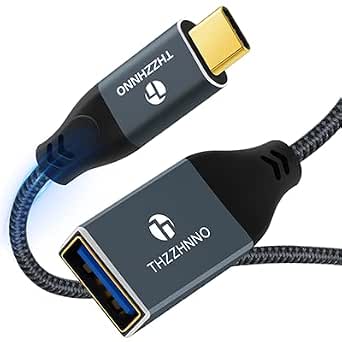 | Best Portable OTG Cable for Quick Data Transfers | Length: 1.6 feet | Data Transfer Speed: 5Gbps | Compatibility: USB C devices, MacBook Pro, LG G6 G5 V20 | VIEW ON AMAZON | See Our Full Breakdown |
| otg cable lock | Compatibility | Connector 1 | Connector 2 | Transfer Speed |
|---|---|---|---|---|
| MEIRIYFA USB 3.0 to USB C OTG | Mobile phones, tablets, laptops, hard drives, USB sticks, mice, keyboards | USB 3.0 Type-A | USB 3.1 Type-C | 5Gbps |
| USB C to USB Female Cable 1.6F | USB C devices, MacBook Pro, LG G6 G5 V20 | — | — | — |
More Details on Our Top Picks
MEIRIYFA USB 3.0 to USB C OTG Data Cable 90 Degree Angled
This cable excels for users who need a durable and secure connection, thanks to its dual screw locking mechanism and rugged right-angled design. Compared to simpler cables, it offers a higher level of physical security, making it suitable for fixed or semi-permanent setups. However, it’s limited to data transfer and charging, with no video output support. Its 1.2-meter length might not suit all configurations, and it doesn’t feature reinforcement like braided cables, which could affect longevity under heavy use.
Pros:- High-speed data transfer up to 5Gbps
- Durable right-angled design reduces wear
- Secure dual screw locking for reliable connection
- Wide compatibility with mobile devices, tablets, and laptops
Cons:- Limited to data transfer and charging, no video output
- Cable length may not fit all setups
- No reinforced or braided exterior for extra durability
Best for: Users seeking a secure, lockable connection for stationary or semi-permanent device setups.
Not ideal for: Those who need ultra-portable cables or quick disconnects for frequent use on the move.
- Connector 1:USB 3.0 Type-A
- Connector 2:USB 3.1 Type-C
- Transfer Speed:5Gbps
- Maximum Current:5A
- Cable Length:1.2M
- Design:Right-angled
- Locking Mechanism:Dual screw locking
- Compatibility:Mobile phones, tablets, laptops, hard drives, USB sticks, mice, keyboards
Our verdict“This pick offers the best security and durability for stationary or semi-permanent setups, with tradeoffs in portability and length.”
USB C to USB Female Cable 1.6FT, 5Gbps USB 3.0 OTG Adapter for MacBook Pro
This cable is tailored for users who need a lightweight, plug-and-play solution for fast data transfers between USB C devices and USB A peripherals. Its 1.6-foot length offers good portability, and its simple design makes it easy to connect without fuss. While it supports high-speed data transfer up to 5Gbps, it’s limited to USB C to USB A connections and may not be suitable for complex setups requiring locking mechanisms. Its compact size makes it perfect for on-the-go use, but the limited length could be a drawback for some users needing more flexibility.
Pros:- High-speed data transfer up to 5Gbps
- Compact, lightweight, and portable
- Durable materials for everyday use
- Plug-and-play, no drivers needed
Cons:- Limited to USB C to USB A connections
- Only 1.6 feet in length
- No locking mechanism for added security
Best for: Users who prioritize portability and quick data transfer on USB C devices like MacBook Pro and smartphones.
Not ideal for: Those needing a locking mechanism or a longer cable for more flexible setups.
- Length:1.6 feet
- Data Transfer Speed:5Gbps
- Compatibility:USB C devices, MacBook Pro, LG G6 G5 V20
Our verdict“This cable makes the most sense for users who want a simple, portable solution for quick data transfers between USB C and USB A devices, with some compromise on security features.”

How We Picked
We evaluated OTG cable locks based on security features, durability, ease of use, compatibility, and build quality. Priority was given to locking mechanisms that prevent accidental disconnection, as well as cables that support high-speed data transfer. We also considered user scenarios—whether stationary or portable—and balanced these against potential tradeoffs like cable length and complexity. Our selections reflect a mix of premium security and everyday convenience, aiming to serve different user needs.
| otg cable lock | Compatibility |
|---|---|
| MEIRIYFA USB 3.0 to USB C OTG | Mobile phones, tablets, laptops, hard drives, USB sticks, mice, keyboards |
| USB C to USB Female Cable 1.6F | USB C devices, MacBook Pro, LG G6 G5 V20 |
Factors to Consider When Choosing Otg Cable Locks
When selecting an OTG cable lock, it’s vital to consider how much security versus convenience you need. Secure locking mechanisms are excellent for protecting data and preventing accidental disconnections but can be less practical for quick swaps. Compatibility with your devices ensures seamless use, while cable length and build quality influence durability and flexibility. Balancing these factors will help you choose a cable that fits your specific use case best.Security and Locking Features
For environments where data security and physical connection integrity are priorities, opt for cables with locking mechanisms, such as dual screw locks. These prevent accidental disconnections and tampering. However, they may require more effort to connect and disconnect, making them less suited for quick swaps or portable use. Conversely, simple plug-and-play cables excel in portability and ease but do not provide physical security against accidental unplugging or theft.
Compatibility and Device Support
Check that the cable supports your devices’ ports and data transfer speeds. USB C is increasingly common on newer smartphones and laptops, but ensure the OTG cable you choose matches your device’s ports. Some cables are designed specifically for high-speed data transfer, while others focus on compatibility with specific device brands like MacBook Pro or Android phones. Matching your device’s requirements with the cable’s capabilities is key to a smooth experience.
Build Quality and Durability
Look for cables with reinforced connectors, braided exteriors, or other durability features if you plan to use them frequently or in demanding environments. A sturdy build prolongs lifespan, especially for cables with locking mechanisms that might undergo repeated locking and unlocking. Consider length carefully—longer cables provide flexibility but can introduce signal degradation or clutter, while shorter cables are more portable but less versatile.
Frequently Asked Questions
What is an OTG cable lock?
An OTG cable lock is a type of cable designed to connect devices via USB On-The-Go (OTG) functionality and includes locking mechanisms to secure the connection physically. These locks prevent accidental disconnections, tampering, or theft, especially useful in environments where stability and security are critical.
Are OTG cable locks compatible with all devices?
Compatibility depends on the cable’s connectors and supported protocols. Most OTG locks are compatible with common USB A, USB C, or micro-USB ports, but you should verify that the cable’s connectors match your device’s ports. Additionally, supported data transfer speeds and device compatibility may vary, so check the specifications before purchase.
Do locking OTG cables affect data transfer speeds?
Generally, locking mechanisms do not impact data transfer speeds, provided the cable is of good quality and supports the desired speeds. The main tradeoff is convenience versus security; locking cables might be a bit bulkier or more complex to connect but do not inherently slow down data transfer if properly designed.
Can I use these cables for video output?
Most OTG cables, especially those with simple locking features, are designed primarily for data transfer and charging. If you need video output, look for cables explicitly marketed with video support, as standard OTG cables often lack this capability.
How do I know if my device supports OTG?
Device support for OTG varies; most modern smartphones and tablets do support OTG, but some older models may not. Check your device’s specifications or user manual. You can also try connecting an OTG cable to see if the device recognizes it—many devices will prompt or detect the connection automatically.
Conclusion
If you prioritize security and durability for stationary or semi-permanent setups, the MEIRIYFA USB 3.0 to USB C OTG Data Cable is the best choice. For users who need an easily portable, quick-transfer cable without locking features, the USB C to USB Female Cable offers excellent convenience. Those wanting maximum security should lean toward the first option, while frequent travelers or casual users might find the second more practical.