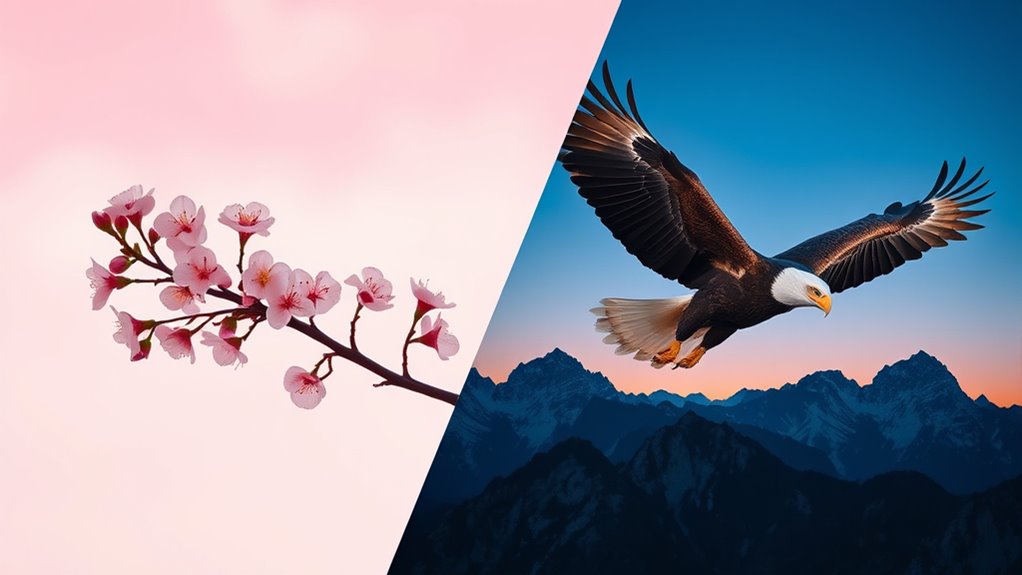

Your culture plays a big role in how you interpret dream symbols. In the West, snakes often symbolize danger or evil, while in the East, they can represent wisdom and transformation. Similarly, dragons evoke fear in Western dreams but symbolize strength and luck in Chinese stories. These differences influence your emotional reactions and understanding of dreams. Exploring these cultural nuances can help you gain access to deeper insights into what your subconscious is trying to tell you. Keep exploring to discover more.
Key Takeaways
- Cultural backgrounds shape the emotional and symbolic interpretations of dream symbols, leading to differing meanings in East and West.
- In Western cultures, animals like snakes often symbolize danger and evil, while in Eastern cultures, they represent wisdom and transformation.
- Symbols such as dragons evoke fear or destruction in the West but symbolize strength and good luck in Eastern traditions.
- Cultural stories and mythology influence how individuals perceive and react emotionally to dream symbols.
- Recognizing these cultural differences is essential for accurate and personalized dream analysis.

Have you ever wondered how your culture shapes the symbols that appear in your dreams? The way you interpret these symbols is deeply influenced by your cultural background, which creates significant interpretation differences between East and West. Cultural symbolism plays an essential role in how you understand what your subconscious is trying to communicate, meaning a symbol’s significance can vary widely depending on your cultural lens. For example, a snake in Western cultures often symbolizes danger, temptation, or evil, likely rooted in religious stories like Adam and Eve. In contrast, in many Eastern traditions, snakes can represent wisdom, transformation, and protection. These contrasting interpretations highlight how cultural symbolism influences your perception of common dream elements.
Your cultural upbringing influences not just what symbols mean but also how you react emotionally to them. If you dream of a dragon, Western cultures might see it as a threatening, destructive force, whereas in Chinese culture, dragons are revered as symbols of strength, good luck, and auspicious power. This difference in interpretation stems from long-standing cultural stories, art, and mythology that shape your subconscious understanding of these symbols. Similarly, animals in dreams carry different meanings; a crow might be seen as ominous in Western folklore, associated with death or bad omens, but in some Eastern cultures, it’s viewed as a messenger or a symbol of intelligence. Additionally, understanding the AI security and its vulnerabilities can help protect your digital dreams and data from malicious interference.
Understanding these interpretation differences is vital because they reveal how your cultural background colors your dreams. Your cultural symbolism influences not only what you see but how you feel about it. For instance, a Western dreamer might wake up feeling fear after dreaming of a black cat, associating it with superstition or bad luck. Meanwhile, someone from a culture where black cats are seen as protectors might wake up with feelings of comfort or hope. Recognizing these cultural influences helps you decode your dreams more accurately and understand what your subconscious might be trying to tell you within your cultural context.
Frequently Asked Questions
How Do Cultural Differences Influence the Interpretation of Recurring Dream Themes?
Cultural differences shape how you interpret recurring dream themes through cultural symbolism and interpretative frameworks. Your background influences the symbols you recognize and their meanings, so what signifies prosperity in one culture might symbolize luck or spirituality in another. These frameworks guide your understanding of dreams, making interpretations deeply personal and culturally specific. By understanding your cultural symbolism, you gain clearer insights into your recurring dream themes and their significance.
Are Certain Dream Symbols Universally Understood Across Diverse Cultures?
You might think some dream symbols are universal, but cultural variations shape their meanings profoundly. While symbols like water often represent emotions globally, other images, such as snakes or certain animals, carry different connotations across cultures. You should consider your cultural background because it influences how you interpret symbols in your dreams. Recognizing these variations helps you better understand your dreams and their personal or cultural significance.
How Does Language Shape the Way Dreams Are Described and Analyzed?
Language is your lens, shaping how you perceive and interpret dreams every night. You might see a symbol differently based on linguistic nuances, which color your understanding and analysis. Narrative framing guides your storytelling, emphasizing certain emotions or themes over others. When you describe dreams, this linguistic landscape influences your insights, making your interpretations unique. Ultimately, language doesn’t just communicate; it transforms your inner world into a vivid, personal story.
Can Exposure to Multiple Cultures Alter an Individual’s Dream Symbolism?
Yes, exposure to multiple cultures can alter your dream symbolism. You might interpret cross-cultural symbols differently, blending meanings from various traditions. This exposure enriches your dream interpretation, allowing you to recognize diverse symbols like dragons or lotus flowers, influenced by different cultural backgrounds. As a result, your dreams become more complex and nuanced, reflecting a broader understanding of symbolism across cultures and enhancing your overall dream analysis.
What Role Does Cultural History Play in Shaping Dream Symbolism Perceptions?
Cultural history deeply influences how you perceive dream symbols through cultural storytelling and historical symbolism. When you dream, your cultural background shapes your interpretations, as stories and symbols from your history become embedded in your subconscious. These elements influence what you associate with certain images or themes. By understanding your cultural storytelling and historical symbolism, you gain insight into your dreams and how your cultural identity shapes your perception of symbolic imagery.
Conclusion
As you reflect on how culture shapes dream symbols, you realize there’s more beneath the surface than you initially thought. The meanings you’ve always associated with certain images might hold entirely different truths elsewhere. Are your dreams revealing universal truths or deeply personal stories rooted in your background? The fascinating differences between East and West leave you wondering—what other hidden messages are waiting to be uncovered in your dreams? The journey into understanding continues, and the surprises are just beginning.