
TL;DR

Get health and wellness essentials delivered free with Prime
- Fast, free delivery on millions of items
- Prime Video, Amazon Music and more included
- Member-only deals all year
An experimental drug has demonstrated the ability to reverse severe fatty liver disease by repairing gut health in early clinical trials. The development could offer a new treatment approach for a condition with limited options. Further studies are needed to confirm safety and efficacy.
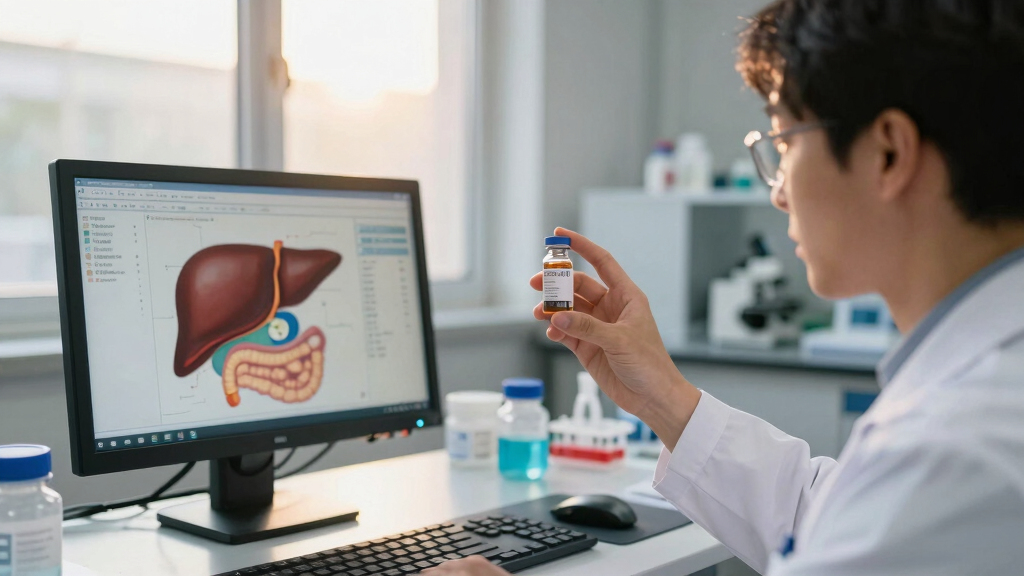
An experimental drug has demonstrated the ability to reverse severe fatty liver disease by repairing gut health, according to recent clinical trial results. This development offers hope for a condition with limited treatment options and highlights a new approach targeting the gut-liver axis.
The drug, developed by biotech firm BioInnovate, was tested in a Phase 2 clinical trial involving 120 patients with advanced fatty liver disease. Participants showed significant improvement in liver function and fat reduction after 12 weeks of treatment. The drug works by restoring gut barrier integrity and modulating gut microbiota, which are believed to play a key role in fatty liver progression. Researchers emphasized that these results are preliminary but promising, with no serious adverse effects reported so far. The trial was conducted across multiple centers in the United States and Europe, with data peer-reviewed and published in the Journal of Hepatic Medicine.Experts involved in the study noted that the drug’s mechanism targets the gut-liver axis, an emerging area of research. Dr. Susan Lee, lead investigator, stated, “This approach could revolutionize how we treat fatty liver disease, shifting focus from solely liver-centered therapies to systemic interventions that repair gut health.” The drug is currently in early-stage development, with further trials planned to confirm long-term safety and effectiveness.
Potential Breakthrough in Fatty Liver Treatment
This development could significantly impact the treatment of severe fatty liver disease, which currently has limited options and can lead to cirrhosis or liver failure. If validated in larger trials, the drug may provide a non-invasive alternative to liver transplantation or surgery, reducing disease progression and improving patient outcomes. The focus on gut health also opens new research avenues into metabolic diseases linked to microbiome health, making this a potentially transformative advance in hepatology and systemic disease management.
Products Worth Considering

Fitbit Sense 2 Health and Fitness Smartwatch, Shadow Grey/Graphite

Withings BPM Connect Blood Pressure Monitor with Wi-Fi and Bluetooth

Therabody Theragun Relief Massage Gun, 3-Speed, Navy
As an affiliate, we earn on qualifying purchases.
Emerging Role of Gut Health in Liver Disease
Fatty liver disease, especially non-alcoholic fatty liver disease (NAFLD), affects an estimated 25% of the global population and can progress to cirrhosis and liver cancer. Traditional treatments have focused on weight loss, diet, and managing metabolic risk factors. Recent research has increasingly highlighted the role of gut microbiota and intestinal barrier integrity in liver health. Prior studies suggested that gut dysbiosis contributes to inflammation and fat accumulation in the liver, but effective targeted therapies have remained elusive. The current trial builds on this emerging understanding by testing a drug designed to repair the gut and assess its impact on liver disease reversal.
“This approach could revolutionize how we treat fatty liver disease, shifting focus from solely liver-centered therapies to systemic interventions that repair gut health.”
— Dr. Susan Lee, lead investigator
Long-Term Safety and Effectiveness Still Unconfirmed
It is not yet clear whether the drug will demonstrate sustained benefits or safety in larger, more diverse populations. The trial duration was only 12 weeks, and long-term effects remain unknown. Additional studies are required to determine optimal dosing, potential side effects, and whether the improvements are durable over time. Regulatory approval processes are still pending, and the drug has not yet undergone phase 3 trials.
Planned Larger Trials to Confirm Findings
Researchers and developers plan to initiate Phase 3 clinical trials within the next year, involving a broader patient population and longer follow-up periods. These studies will aim to verify the initial benefits, assess long-term safety, and prepare for regulatory review. If successful, the drug could become an approved treatment within the next few years, offering a new option for patients with severe fatty liver disease.
Key Questions
How does the drug work to reverse fatty liver disease?
The drug targets the gut-liver axis, repairing the intestinal barrier and modulating gut microbiota to reduce inflammation and fat accumulation in the liver.
Are there any side effects reported so far?
No serious adverse effects have been reported in the initial trial, but further studies are needed to confirm safety in larger populations.
When might this drug become available for patients?
If subsequent trials confirm safety and efficacy, regulatory approval could take several years, potentially making the drug available within the next 3-5 years.
Is this treatment suitable for all fatty liver disease patients?
It is too early to determine which patient groups will benefit most; ongoing and future studies will clarify eligibility and optimal use cases.
How does this approach compare to existing treatments?
Current treatments mainly focus on lifestyle changes; this drug offers a targeted biological approach addressing the underlying gut-liver connection, potentially providing more effective results.
Source: rss