
A false awakening is a vivid dream where you believe you’ve woken up but are actually still dreaming. You might go through routine activities like getting out of bed or turning on lights, feeling convinced you’re awake. Usually, you realize the truth later, often during the dream, which can be confusing or frightening. If you’re curious about what causes these illusions and how they connect to sleep states, there’s more to discover ahead.
Key Takeaways
- A false awakening is when someone dreams they have woken up, but they are still dreaming.
- It creates the illusion of waking, only for the person to realize they are still in a dream.
- False awakenings often occur during lucid dreams or sleep paralysis episodes.
- They can involve routine activities like getting out of bed or turning on lights within the dream.
- Recognizing signs like inconsistent details helps distinguish false awakenings from real waking life.
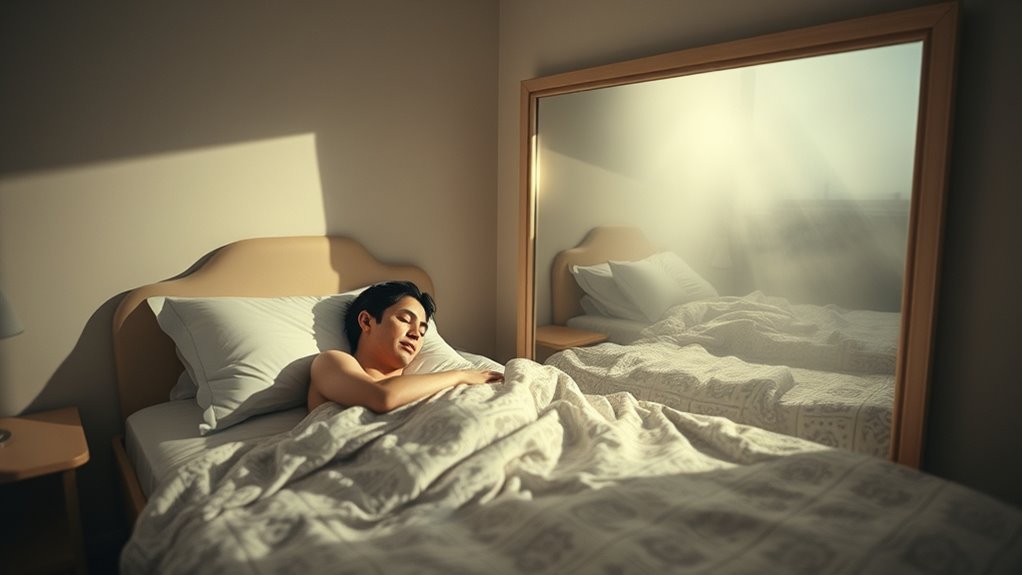
Have you ever woken up feeling certain you were finally awake only to realize you’re still dreaming? That moment, where your mind tricks you into believing you’re out of the dream world, is a classic example of a false awakening. It’s like your brain pulls a fast one on you, creating a convincing illusion that you’ve escaped your dream state, only to find yourself back in the dream bed. These experiences often occur during lucid dreaming, where you’re aware that you’re dreaming but still caught in the dream’s vividness. Sometimes, false awakenings happen during episodes of sleep paralysis, adding an extra layer of confusion and fear. Sleep paralysis can make you feel trapped between waking and dreaming, and when combined with a false awakening, it can be disorienting and unsettling. Understanding the connection between sleep paralysis and false awakenings can help you better interpret these experiences and reduce anxiety about them. When you experience a false awakening, it often feels incredibly real. You might go through your usual morning routine—getting out of bed, turning on the lights, even brushing your teeth—only to wake up again in your bed. This cycle can repeat multiple times, making you question whether you’re waking up or still caught in a dream. The realism of these episodes blurs the line between sleep and wakefulness. During lucid dreaming, you might intentionally try to recognize the false awakening by looking for signs that it’s a dream—like checking clocks or trying to read text—since these details tend to be inconsistent in dreams. Recognizing the signs can help you realize you’re caught in a false awakening and regain control over your consciousness. Sleep paralysis often accompanies false awakenings, heightening the sense of dread. During sleep paralysis, your body remains immobile while your mind wakes up, sometimes leading to hallucinations or a feeling of pressure on your chest. When a false awakening occurs during sleep paralysis, it can feel like an extension of that paralysis, with your mind believing you’re awake, but your body refusing to move. This creates a terrifying loop where you’re conscious but unable to act, and the realization that you’re still dreaming can come too late. These experiences often leave a lasting impression, making you question what’s real and what’s part of the dream. Understanding false awakenings, especially in the context of lucid dreaming and sleep paralysis, helps you see them as a natural part of the complex dreamscape. They remind you how fragile the boundary is between sleep and wakefulness and how your mind can craft incredibly vivid and convincing illusions. Recognizing the signs can empower you to navigate these episodes with greater calm and awareness, ultimately turning a confusing experience into an opportunity to explore your dreams consciously.

LC-dolida Sleep Headphones, 3D Sleep Mask Bluetooth Wireless Music Eye Mask, Sleeping Headphones for Side Sleepers Sleep Mask with Bluetooth Headphones Ultra-Thin Stereo Speakers Perfect for Sleeping
【Sleep Headphones & Bluetooth Sleep Mask & Sleep Eye Mask 3 in 1】LC-dolida sleep mask with bluetooth headphones…
As an affiliate, we earn on qualifying purchases.
As an affiliate, we earn on qualifying purchases.
Frequently Asked Questions
How Can I Tell if I Am Experiencing a False Awakening?
You can tell you’re experiencing a false awakening if things seem unusually normal but feel slightly off, like inconsistencies or strange details. Try performing a reality check, such as looking for digital clocks or reading text twice—these often change in dreams. During sleep paralysis, you might feel trapped or see hallucinations, which can overlap with false awakenings. Recognizing these signs helps you distinguish between true waking life and a lucid dream or false awakening.
Are False Awakenings Dangerous or Harmful?
In the age of the internet, false awakenings aren’t inherently dangerous, but they can be unsettling. They might trigger feelings of sleep paralysis or interfere with your lucid dreaming practice. While they usually aren’t harmful, experiencing frequent episodes could cause anxiety or disrupt your sleep cycle. If you feel overwhelmed, it’s best to consult a sleep specialist. Remember, understanding these dreams helps turn fear into curiosity.
Can False Awakenings Be Used for Lucid Dreaming?
Yes, you can use false awakenings for lucid dreaming by recognizing dream signs and practicing dream control techniques during these moments. When you realize you’re in a false awakening, you might overcome sleep paralysis and consciously manipulate your dream environment. This awareness allows you to deepen your lucidity, enhancing your ability to control your dreams. With practice, false awakenings become valuable tools for exploring and mastering your dream world.
What Triggers Frequent False Awakenings?
False awakenings can flood your nights when stress, anxiety, or irregular sleep patterns spike, making your mind restless. Poor sleep hygiene and unresolved dream symbolism often trigger these vivid, confusing episodes. Think of it as your subconscious playing tricks on you, blurring the lines between dreams and reality. To reduce frequent false awakenings, prioritize consistent sleep routines, relax before bed, and explore what your dreams symbolize to calm your mind.
Do False Awakenings Occur More Often During Certain Sleep Stages?
You’re more likely to experience false awakenings during REM sleep, which occurs in later sleep cycle stages. During REM, your brain is highly active, and dream recall is strongest, making false awakenings more vivid and frequent. As your sleep cycle progresses, these episodes can become more frequent, especially when you’re shifting between stages or experiencing sleep disruptions. Staying consistent with your sleep schedule may help reduce their occurrence.

Kolbs Bed Wedge Pillow for Sleep Apnea, FSA Eligible Acid Reflux, and Back Pain Relief, with Chic Jacquard Cover – Headboard Wedges for Sleeping (Standard Width 7.5" Height)
FSA Eligible. Experience unparalleled comfort with our sleep apnea pillow, designed to elevate your upper body and improve…
As an affiliate, we earn on qualifying purchases.
As an affiliate, we earn on qualifying purchases.
Conclusion
As you wake from the false awakening, imagine shedding a fragile, shimmering cocoon. It’s as if you’ve been caught in a mirror’s reflection, only to realize the true world waits beyond the glass. These dreams symbolize a journey through your subconscious, urging you to trust your inner light. When the illusion fades, remember, you hold the power to awaken fully, breaking free from the shadows and stepping into the sunlit truth waiting just outside your dream.

Dream Journal Notebook: Diary. Track Your Dreams, Interpretations. Ideal Gift for Women, Girls, Men (Personal Growth/ Spiritual Growth)
As an affiliate, we earn on qualifying purchases.
As an affiliate, we earn on qualifying purchases.

Sleep Essential Oil Blend for Diffuser – Dream Essential Oils for Diffusers Aromatherapy and Relaxation with Clary Sage Ylang-Ylang Roman Chamomile and Lavender for Sleep Time Support (1 Fl Oz)
Aromatherapy Oils for Diffuser – Try our dream aromatherapy diffuser oils blend with lavender oil chamomile oil clary…
As an affiliate, we earn on qualifying purchases.
As an affiliate, we earn on qualifying purchases.