
TL;DR

Get health and wellness essentials delivered free with Prime
- Fast, free delivery on millions of items
- Prime Video, Amazon Music and more included
- Member-only deals all year
Scientists have identified a potential immune tissue within the skull that may play a role in fighting brain cancer. This discovery could impact future therapies, but further research is needed to confirm its functions.
Scientists have identified a potential new immune structure within the skull, which could influence how brain cancer is fought. This discovery opens new avenues for understanding immune responses in the brain, a region traditionally considered immune-privileged. The finding is preliminary but has attracted considerable attention from the medical community, as it may lead to innovative treatment strategies for brain tumors.
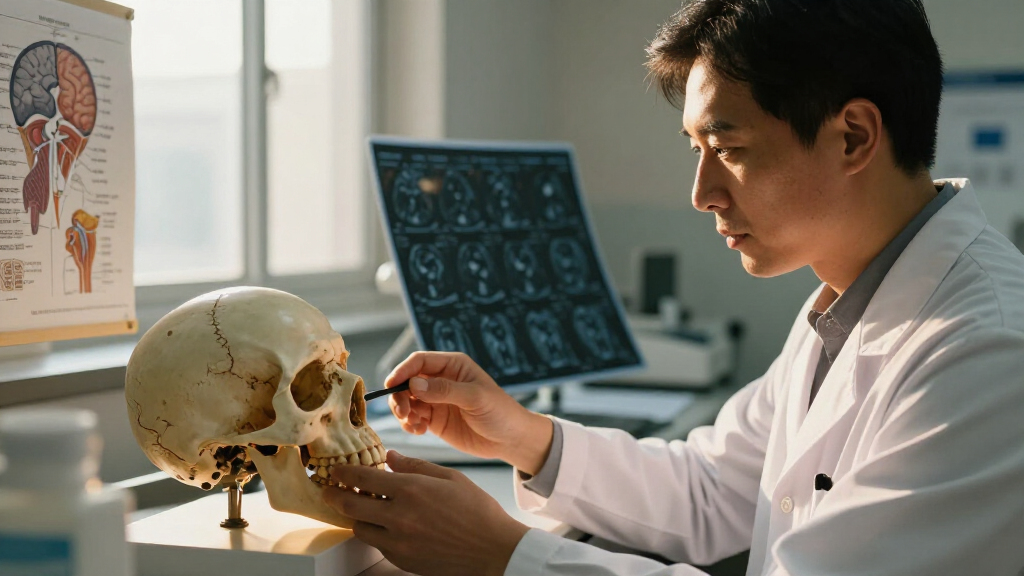
Recent research suggests the presence of a previously unrecognized immune tissue located within the skull, near the meninges, that may serve as an immune organ. This structure appears to contain immune cells capable of responding to brain tumors, according to sources familiar with the studies. The discovery was made through advanced imaging and histological analysis, indicating that the skull’s inner surfaces host immune activity that was not previously documented.
Experts involved in the research have noted that this immune tissue could be instrumental in local immune responses against brain cancers such as glioblastoma, which are notoriously difficult to treat. While the exact functions and mechanisms are still under investigation, early data suggest that this structure might facilitate immune cell trafficking or activation directly within the skull, providing a new target for immunotherapy development. It is important to emphasize that these findings are preliminary, and further validation through peer-reviewed studies is ongoing.
Potential Impact on Brain Cancer Treatments
If confirmed, the existence of a dedicated immune organ within the skull could revolutionize approaches to brain cancer therapy. Current treatments are limited by the blood-brain barrier and the brain’s immune-privileged status, which often hampers immune-based therapies. This discovery hints at a possible local immune system that could be harnessed or stimulated to improve responses to immunotherapy, potentially increasing survival rates for patients with aggressive brain tumors. However, it remains uncertain how this structure can be targeted or manipulated in clinical settings, and whether it plays a significant role in natural immune defenses against tumors.
immune support supplements for brain health
As an affiliate, we earn on qualifying purchases.
As an affiliate, we earn on qualifying purchases.
Understanding the Brain’s Immune Environment
The brain has long been considered an immune-privileged site, partly due to the blood-brain barrier that limits immune cell entry. Historically, this has complicated efforts to develop effective immunotherapies for brain cancers. Recent studies have begun to challenge this view, revealing lymphatic vessels and immune activity within the meninges, the membranes surrounding the brain. The discovery of a potential immune organ within the skull adds a new layer to this evolving understanding, suggesting that immune responses in the brain may be more localized and complex than previously thought.
This research builds on prior findings that identified lymphatic vessels in the meninges, which facilitate immune cell trafficking. The new evidence points to the skull itself as a possible site of immune activity, which could alter the paradigm of brain immunity and influence future research directions.
As an affiliate, we earn on qualifying purchases.
Unconfirmed Aspects of the Immune Skull Discovery
While the initial findings are promising, it is not yet clear how widespread or functionally significant this immune tissue is across different individuals or disease states. The research is still in early stages, and peer-reviewed validation is pending. It remains unknown whether this structure can be effectively targeted or manipulated for therapeutic purposes, or how it interacts with other components of the brain’s immune system. Further studies are needed to determine its exact role in immune responses to brain tumors and other neurological conditions.
As an affiliate, we earn on qualifying purchases.
Next Steps in Research and Clinical Exploration
Researchers plan to conduct larger studies to confirm the presence and function of this immune tissue across diverse populations. Experiments will focus on understanding how this structure responds during brain tumor development and whether it can be stimulated to enhance immune attack. Clinical trials may eventually explore therapies aimed at activating or augmenting this immune organ to improve outcomes for brain cancer patients. The scientific community is awaiting peer-reviewed publications that validate these early findings and clarify their implications.
immune system booster for brain health
As an affiliate, we earn on qualifying purchases.
As an affiliate, we earn on qualifying purchases.
Key Questions
What is the significance of this immune organ discovery?
If confirmed, it could lead to new immunotherapy approaches for brain cancer, overcoming current treatment limitations caused by the brain’s immune-privileged status.
How was this immune structure discovered?
Through advanced imaging and histological analysis, researchers identified immune cells and tissue within the skull’s inner surfaces near the meninges.
Can this discovery immediately improve brain cancer treatments?
No, the findings are preliminary. Further research is required to understand how to harness this immune tissue for therapy.
Does this mean the brain is less immune-privileged than previously thought?
It suggests that immune responses in the brain may be more localized and complex, but more evidence is needed to redefine the concept of brain immunity.
When will more definitive research be available?
Next peer-reviewed studies and clinical trials are expected within the next 1-3 years, as research progresses and validation occurs.
Source: rss
Halloween Picks
halloween
As an affiliate, we earn on qualifying purchases.