
To handle lucid dreaming and sleep paralysis safely, stay calm and focus on slow breathing to reduce panic. Remember, sleep paralysis is natural and temporary, caused by disrupted REM sleep. Avoid trying to force movement—relax your muscles instead. Building a consistent sleep routine and managing stress can decrease these episodes. If they happen often or cause distress, consider consulting a healthcare professional. Exploring these phenomena further can help you turn fear into understanding.
Key Takeaways
- Recognize that sleep paralysis is a natural, temporary phase linked to disrupted REM sleep, not a threat.
- Use slow, deep breathing and relaxation techniques to reduce anxiety during episodes.
- Maintain a consistent sleep schedule and manage stress to minimize the frequency of sleep paralysis.
- Employ reality checks and keep a dream journal to distinguish between lucid dreams and sleep paralysis.
- If episodes are frequent or distressing, consult a healthcare professional for personalized advice and support.
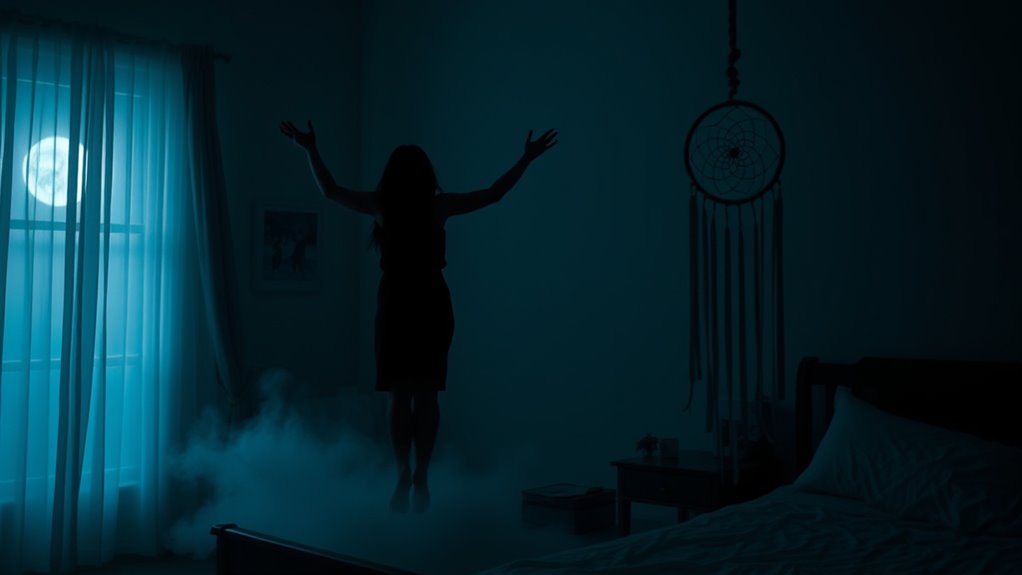
Lucid dreaming and sleep paralysis are two fascinating phenomena that often intersect, yet they are fundamentally different experiences. Understanding these differences can help you navigate them more safely. Scientific explanations suggest that lucid dreaming occurs when your brain enters a state where you’re aware that you’re dreaming while still in the dream. It’s a unique blend of consciousness and sleep, often triggered by specific brain activity patterns. Sleep paralysis, on the other hand, happens when your body is temporarily unable to move as you shift between sleep and wakefulness. During this period, you might feel trapped, overwhelmed, or even see frightening hallucinations. Recognizing these phenomena through scientific explanations can demystify your personal experiences, making them less intimidating.
When you experience sleep paralysis, it’s natural to feel fear, especially if hallucinations or a sense of a presence make it seem like something’s threatening you. However, understanding the science behind it reveals that it’s a normal part of the sleep cycle, often linked to disrupted REM sleep. Your body naturally suppresses muscle activity during REM to prevent acting out dreams, but sometimes this suppression lingers as you wake, leading to paralysis. Personal experiences with sleep paralysis vary—some people report vivid hallucinations or intense fear, while others remain calm. Knowing that these sensations are temporary and rooted in your brain’s activity can help you remain composed during an episode.
To handle sleep paralysis safely, it’s important to develop calming techniques. Focus on slow, deep breathing to reduce anxiety and remind yourself that the experience will pass. Avoid trying to force movement, as this can increase panic. Instead, concentrate on relaxing your muscles gradually. Creating a sleep routine that promotes consistent, quality sleep can reduce the frequency of episodes. Managing stress through relaxation exercises or mindfulness can also help, as stress often contributes to sleep disturbances. Remember, sleep paralysis isn’t dangerous—it’s a temporary, natural phenomenon. If episodes become frequent or severely distressing, consulting a healthcare professional is wise to rule out underlying issues.
In the domain of lucid dreaming, embracing your awareness can be empowering. Techniques like reality checks and maintaining a dream journal can enhance your ability to recognize when you’re dreaming. This awareness allows you to explore your dreams consciously and safely. If you ever feel yourself slipping into a lucid dream or experiencing sleep paralysis, remind yourself of the scientific explanations, stay calm, and focus on your breath. Recognizing these phenomena as natural parts of sleep can help you handle them more confidently, turning what might seem frightening into opportunities for exploration and self-awareness. Additionally, understanding the scientific basis of these experiences can foster a more relaxed attitude and reduce fear when they occur.

Dream Tracker – Guided Dream Journal for Women | Self Discovery & Emotional Healing Notebook for Lucid Dreaming, Sleep Reflection, and Subconscious Awareness
Unlock the Meaning of Your Dreams – Capture dream memories before they fade and decode hidden messages from…
As an affiliate, we earn on qualifying purchases.
As an affiliate, we earn on qualifying purchases.
Frequently Asked Questions
Can Sleep Paralysis Cause Long-Term Psychological Effects?
Sleep paralysis can cause psychological impacts like fear, anxiety, or sleep disturbances, but long-term effects are rare if you handle it properly. If you experience frequent episodes, it might lead to ongoing anxiety or sleep issues. Staying calm during episodes and practicing good sleep hygiene can prevent long-term effects. Seek help if it becomes overwhelming; early intervention reduces the risk of lasting psychological impacts.
Are There Specific Sleep Disorders Linked to Frequent Sleep Paralysis?
Yes, certain sleep disorder classifications are linked to frequent sleep paralysis. For example, narcolepsy and REM sleep behavior disorder often have neurological connections that increase your risk. When you experience these, your brain’s regulation of sleep cycles may be disrupted, leading to recurrent episodes. Recognizing these links helps you seek targeted treatment, which can reduce episodes and improve your sleep quality. Always consult a healthcare professional for proper diagnosis and management.
Is It Safe to Induce Lucid Dreams Intentionally?
Think of intentional dream induction as gently steering a boat—when done carefully, it’s quite safe. Lucid dreaming safety depends on your approach; avoid pushing too hard or risking sleep disruption. If you’re healthy and well-informed, you can explore lucid dreams safely. Just remember, always prioritize your sleep quality and listen to your body. With proper techniques, intentional dream induction can be a rewarding and safe experience.
How Can I Differentiate Between Nightmares and Sleep Paralysis Hallucinations?
You can tell nightmares from sleep paralysis hallucinations by paying attention to dream imagery and emotional responses. Nightmares usually feature vivid, often frightening scenes with strong emotions like fear or anxiety. Sleep paralysis hallucinations feel more like visual or tactile distortions, often accompanied by a sense of pressure or paralysis. Recognizing these differences helps you stay calm and grounded, making it easier to manage each experience safely.
Can Medication Help Reduce Sleep Paralysis Episodes?
Imagine struggling with frequent sleep paralysis episodes; medication might help. While its effectiveness varies, certain sleep aids, like antidepressants or melatonin, can reduce episodes by regulating sleep cycles. A hypothetical case shows someone using prescribed medication alongside sleep hygiene practices experienced fewer interruptions. Always consult a healthcare professional before trying medication, as they can recommend safe sleep aid options tailored to your needs and make sure you manage episodes effectively.

Speaking Breathing Lamp with Guided Meditation & Calming Light | Stress & Anxiety Relief Tool for Adults & Kids | Box Breathing, Sleep, Relaxation & Focus Exercise Device | Self Care Gift
GUIDED BREATHING & VISUAL MEDITATION – NOW WITH VOICE GUIDANCE: Your Breathing Buddy is an improved mindfulness tool…
As an affiliate, we earn on qualifying purchases.
As an affiliate, we earn on qualifying purchases.
Conclusion
Understanding lucid dreaming and sleep paralysis can help you face these experiences confidently. Did you know that about 8% of people experience sleep paralysis at least once in their lives? By staying calm and practicing safe techniques, you can navigate these moments without fear. Remember, with awareness and patience, you can turn challenging episodes into opportunities for self-discovery and control. Embrace your dreams safely, and let curiosity guide you through the night.

Sleep Patches for Adults & Kids – 60 100% Plant-Based Natural Essential Oils Sleep Aid Patches, Sleeping Stickers With No Melatonin, For Zen and Easy Bedtime
Zen & Sleep Patches For Adults & Kids – A Set of 60 sleep patches – 10 sheets…
As an affiliate, we earn on qualifying purchases.
As an affiliate, we earn on qualifying purchases.

Stress-Proof Habits: Science-Backed Nervous System Tools to Calm Stress, Reduce Anxiety, and Sleep Better (The Everyday Calm Series)
As an affiliate, we earn on qualifying purchases.
As an affiliate, we earn on qualifying purchases.