TL;DR

Get health and wellness essentials delivered free with Prime
- Fast, free delivery on millions of items
- Prime Video, Amazon Music and more included
- Member-only deals all year
Massage guns use percussive strokes to boost blood flow, reduce soreness, and improve flexibility. They are effective, safe when used correctly, and increasingly advanced with smart features and quieter motors.
Imagine finishing a tough workout and feeling that familiar ache creeping into your muscles. Now, picture a device that can target those sore spots with rapid, rhythmic strokes—without needing a partner or professional help. That’s what a massage gun does. It’s a compact powerhouse designed to boost your recovery, ease tension, and get you back in action faster.
If you’re curious about how these devices work and whether they’re worth the investment, you’re in the right place. We’ll explore their benefits, recent tech upgrades, and practical tips to get the most out of your massage gun. No fluff—just real info to help you recover smarter.
Choose a device with adjustable speed and multiple attachments for versatility.
Use the massage gun for 1-2 minutes per muscle group, avoiding overuse and sensitive areas.
Recent models feature smarter tech, longer battery life, and quieter operation, making recovery easier.
Massage guns are a supplement, not a replacement—combine with stretching and rest for best results.
Always consult a healthcare professional if you have injuries or medical conditions before regular use.
How Massage Guns Actually Help Your Muscles Recover Faster
Massage guns deliver percussive therapy—think of it as rapid, repetitive strokes that penetrate deep into your muscle tissue. This action increases blood flow, helping fresh oxygen and nutrients reach tired muscles. It also helps break down knots and fascia restrictions, reducing stiffness and soreness.
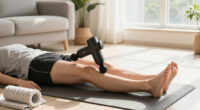
Picture this: after a long run, your legs feel heavy and tight. Using a massage gun on your quadriceps and calves for a couple of minutes can feel like a reset button, loosening up those muscles and making your next workout less painful.
Research from sports science suggests that just 1-2 minutes of targeted percussion per muscle group can accelerate recovery. Beyond immediate relief, this therapy stimulates the lymphatic system, aiding in waste removal and reducing inflammation. This means your muscles recover not just faster but with less lingering swelling or stiffness. However, there’s a tradeoff: excessive use or too high an intensity can cause bruising or discomfort, so understanding your body’s response is crucial. Proper technique and moderation maximize benefits while minimizing risks.
As an affiliate, we earn on qualifying purchases.
What Makes a Good Massage Gun? Key Features That Matter
When shopping for a massage gun, look for features that match your needs. A device with multiple speed settings lets you customize intensity—from a gentle massage to a deep, intense percussion. Interchangeable heads let you target different muscle groups or trigger points—imagine switching from a ball for large muscle groups to a bullet for pinpoint pain.
Battery life is crucial—nothing worse than a device dying mid-session. A good model should last at least 2-3 hours of use. Noise level matters too; newer models are surprisingly quiet, so you can use them without disturbing others or feeling like you’re inside a jet engine.
Choosing the right features involves understanding their implications. For example, more speed settings provide versatility but may complicate operation for beginners. Multiple attachments allow targeted therapy but can add to cost and complexity. Longer battery life ensures uninterrupted sessions, especially if you prefer multiple daily uses. Quieter operation enhances comfort and discretion. Balancing these features against your budget and recovery goals ensures you select a device that truly supports your needs.
As an affiliate, we earn on qualifying purchases.
Recent Tech Upgrades Turning Massage Guns Into Smarter Recovery Tools
Today’s massage guns come packed with smart features. Many now connect to apps that guide you through routines, track usage, and even suggest the right pressure. Some models have integrated sensors to automatically adjust intensity based on muscle response, making your recovery more personalized.
Battery technology has also improved. Newer devices boast 4-6 hours of continuous use, perfect for multiple sessions or longer recovery days. Noise reduction is another big upgrade—quiet motors make it easy to use in shared spaces or late at night without waking the house.
Design-wise, ergonomic grips and lightweight frames mean less fatigue for you—imagine holding a sleek, 2-pound device that feels like an extension of your hand. These technological innovations not only improve convenience but also expand the effectiveness of your recovery routine, allowing for more consistent and tailored use. The implication is that smarter devices can better adapt to individual needs, but they also tend to come at a higher price point, which is worth considering based on your budget and recovery priorities.
As an affiliate, we earn on qualifying purchases.
What You Need to Know Before Buying a Massage Gun
Not all massage guns are created equal. Think about your primary use—are you a weekend warrior, a professional athlete, or someone with chronic soreness? Your answer guides what features matter most.
Consider these key points:
- Power and Speed: More power is not always better. Look for at least 3-5 speed settings for versatility. Higher speeds provide deeper tissue penetration but may be uncomfortable for sensitive areas or beginners, so balancing power with control is essential.
- Attachments: A variety of heads for different needs—large balls for quads, forks for the neck, pinpoint tips for trigger points. Different attachments allow you to target specific muscles or trigger points more effectively, but choosing the right ones depends on your muscle groups and recovery goals.
- Battery Life: Aim for 3+ hours if you plan multiple daily sessions. Longer battery life reduces interruptions and allows for more flexible use, especially important if you travel or use it frequently.
- Noise Level: Quieter models (around 45-55 decibels) are easier to use anytime, even in shared spaces. Lower noise levels can also make the experience more relaxing, encouraging more consistent use.
- Price Range: Budget models start around $50, high-end devices can reach $500+. Higher-priced models often include more features, better build quality, and longer durability, but it’s important to evaluate whether those extras align with your recovery needs and budget.
Understanding these tradeoffs helps you select a massage gun that offers the best balance between features, comfort, and cost—ensuring you get a device that genuinely enhances your recovery routine.
massage gun with multiple attachments
As an affiliate, we earn on qualifying purchases.
As an affiliate, we earn on qualifying purchases.
Are Massage Guns Safe? Tips to Avoid Overdoing It
Massage guns are generally safe when used correctly, but overuse or improper technique can cause bruising or discomfort. Always start with low speed and short durations—just 1-2 minutes per muscle group.
For example, after a heavy workout, you might spend 2 minutes on each thigh, gradually increasing intensity if it feels good. Avoid areas with injuries, fractures, or deep vein thrombosis, and never press directly on bones or joints.
Pay attention to your body. If you feel sharp pain or intense soreness, stop immediately and consult a professional. Remember, moderation is key—overdoing it can lead to increased soreness, inflammation, or even tissue damage. Listening to your body’s signals and respecting its limits ensures safe, effective recovery without unintended harm.
How Massage Guns Stack Up Against Foam Rollers and Other Recovery Tools
Both massage guns and foam rollers promote muscle recovery, but they do so through different mechanisms with different implications. Massage guns deliver targeted, percussive strokes—think of a tiny hammer working deep into a specific spot—making them ideal for pinpointing tight knots or trigger points. Foam rollers, on the other hand, apply sustained pressure across larger areas, helping to release fascia and improve overall tissue mobility.
Choosing between them depends on your recovery priorities. If you need precise relief for specific sore spots, massage guns are more effective. For broader muscle relaxation and myofascial release, foam rollers excel. Many athletes benefit from combining both tools, as they complement each other’s strengths and provide a comprehensive approach to muscle health.
Key Differences Between Massage Guns and Foam Rollers
| Feature | Massage Guns | Foam Rollers |
|---|---|---|
| Targeting | Precise, pinpoint therapy that directly targets trigger points or knots | Broad, surface-level release that improves overall tissue flexibility |
| Ease of Use | Requires some technique and control but offers focused relief | Simple to use—just roll over muscles, making it accessible for most users |
| Effectiveness | Deep tissue, effective for specific trigger points and knots, especially when used with proper technique | Myofascial release that helps reduce general soreness and improve range of motion |
| Portability | Compact, battery-powered, easily portable for on-the-go recovery | Lightweight, often a foam block or roll—less portable but easy to store |
Depending on your needs and recovery style, you might prefer one over the other. For targeted, deep relief, massage guns are superior. For general muscle loosening and fascia health, foam rollers are effective. Many athletes find that combining both provides the most comprehensive muscle recovery strategy, balancing precision with broad tissue mobilization.
What’s the Bottom Line? Should You Get a Massage Gun?
If you want faster recovery, less soreness, and better flexibility, a massage gun can be a game-changer. They’re especially handy after intense workouts or long days on your feet. Plus, recent advances mean they’re quieter, smarter, and more comfortable than ever.
However, they’re not magic. Use them with care, don’t overdo it, and always listen to your body. Combining a massage gun with other recovery strategies—like stretching, hydration, and proper rest—creates a balanced approach that truly works.
Think of a massage gun as your personal mini-physio—ready to help you recover smarter, not harder. The key is understanding your body’s signals and adjusting your use accordingly. When used thoughtfully, these devices can significantly enhance your recovery process, making them a valuable addition to your fitness arsenal.
Frequently Asked Questions
Are massage guns effective for muscle recovery?
Yes, many users report faster recovery and less soreness after using massage guns. Scientific studies suggest they improve blood flow and help reduce delayed onset muscle soreness, especially when used correctly.
How often should I use a massage gun?
Most people find 1-2 minutes per muscle group, a few times daily, works well. Listen to your body—if it feels good, keep going. Overuse can cause discomfort, so moderation is key.
Can massage guns replace professional therapy?
They can supplement professional treatments but aren’t a substitute for medical advice or physical therapy, especially for serious injuries. Use them as part of a balanced recovery routine.
Are massage guns safe for everyone?
Generally yes for healthy individuals. However, avoid use over injuries, fractures, or deep vein thrombosis. Pregnant women and those with certain medical conditions should consult a doctor first.
What features should I prioritize when buying?
Look for adjustable speeds, multiple attachments, long battery life, and quiet operation. These features make the device more effective and comfortable to use.
Conclusion
Massage guns are transforming how athletes and fitness lovers recover. With the right features and mindful use, they help you bounce back faster and feel better. Think of them as a powerful, personal assistant—ready whenever you need a quick muscle reset.
Next time soreness hits, reach for your device and give your muscles the attention they deserve. Your body will thank you—and you’ll be back to moving comfortably in no time.
Halloween Picks
halloween
As an affiliate, we earn on qualifying purchases.