
TL;DR

Get health and wellness essentials delivered free with Prime
- Fast, free delivery on millions of items
- Prime Video, Amazon Music and more included
- Member-only deals all year
Massage therapy devices use pressure, vibration, percussion, heat, or rolling motion to provide relaxation and possible short-term relief from muscle soreness or tension. Different designs suit different body areas, and stronger settings are not automatically better. Compare comfort and controls, follow the product directions, and ask a clinician about use if you have a relevant health condition or persistent symptoms.
A massage gun can sound like a tiny jackhammer, while a foam roller asks you to do the work yourself. Both are called massage therapy devices, but they act differently—and the strongest one is not automatically the best fit for your sore shoulders or post-run calves.
These devices are tools designed to apply pressure, vibration, percussion, heat, or rolling motion. They range from simple handheld massagers to massage chairs and specialized clinical equipment. You’ll learn how the main types differ, what research can reasonably tell you, how to use a device cautiously, and which features matter when you shop.
The goal is practical: help you choose a tool for comfort and temporary relief without mistaking a product’s marketing for a diagnosis or treatment plan. If your pain is persistent, severe, unexplained, or getting worse, a device shouldn’t delay advice from a qualified health professional.
A percussion massager, vibration device, and roller work differently; don’t assume evidence or experience with one applies to all.
Choose for body area, comfortable handling, and control rather than maximum intensity or the most impressive marketing.
Start gently, follow the product manual, and stop for pain, bruising, tingling, numbness, or skin irritation.
Ask a clinician before use if you have a bleeding disorder, significant circulation problems, a history of blood clots, pregnancy, or another relevant health c…
Treat devices as possible comfort tools, not diagnosis or treatment for persistent pain, injuries, or chronic conditions.
What massage therapy devices do—and what they don’t
Massage therapy devices apply pressure, vibration, percussion, heat, or rolling motion to the body, usually to support relaxation or temporary relief from muscle soreness and tension. They include handheld massagers, massage balls, powered chairs, cushions, and equipment used in clinical settings. The label covers a broad range of tools, not one standardized treatment.
Think of the devices as different brushes in a toolbox: a wide brush covers a broad area, while a small one targets a narrow patch. That difference matters because a pleasant, broad sensation may suit general relaxation, whereas a small tool gives you more control—and also makes it easier to concentrate too much pressure in one spot. A chair cushion may feel pleasant after a day at a desk, while a massage ball can help you control pressure against a wall. Neither choice reveals why pain started or guarantees that it will go away.
Research suggests massage may offer short-term relief for some kinds of pain and post-exercise soreness, but results vary by person, situation, and approach. “Short-term relief” is important: feeling better for a while can make movement or rest more comfortable, but it does not establish that tissue has healed or that the cause of pain has changed. Evidence about one kind of massage should not be treated as evidence for every device or health condition. For example, a runner might enjoy gentle calf massage after a workout, yet still need a clinician’s assessment if pain keeps returning.
Use a device as a comfort tool, not a substitute for evaluation. Claims such as “recovery” or “deep tissue” describe marketing or sensation; they do not, by themselves, prove clinical benefit. If discomfort is severe, persistent, unexplained, or accompanied by weakness, numbness, swelling, or fever, seek medical advice rather than simply turning up the setting.
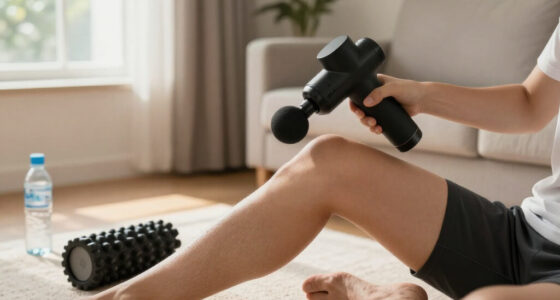
percussion massage gun for muscle relief
As an affiliate, we earn on qualifying purchases.
As an affiliate, we earn on qualifying purchases.
Choose the device that matches the body area and sensation you want
Massage therapy devices differ most in how they move and how much pressure they deliver, so choose by body area, comfort, and control rather than by the most dramatic product claims. Percussion tools tap rapidly into muscle tissue, vibration models provide gentler oscillation, and rollers or balls use your body weight to create manual pressure. These differences affect not only the sensation but also how easily you can regulate pressure: a powered device supplies the motion, while a roller depends more on your positioning and movement.
| Device type | How it feels or works | Practical example |
|---|---|---|
| Percussion massager | Repeated, relatively forceful pulses | A handheld tool moved across a large muscle after a workout |
| Vibrating massager | Gentler, faster oscillations | A cushion used while sitting at home |
| Roller or massage ball | Manual pressure controlled by your movement | A ball placed between your upper back and a wall |
| Massage chair or cushion | Powered movement over a broader area | A chair with massage functions for general relaxation |
| Heat-and-massage device | Massage paired with warmth | A heated cushion used according to its instructions |
For instance, if your hands tire quickly, a heavy massage gun may be awkward even if it has many speed settings. Its weight can make it harder to reach an area comfortably and may tempt you to brace or press more forcefully. A lighter vibrating device might be easier to handle, although it may not provide the same sensation. If you prefer to control each movement yourself, a foam roller or ball may make more sense, though it takes practice to avoid pressing too hard. That tradeoff—more direct control, but more effort and technique—is worth considering before you buy.
Every product varies, so treat the table as a starting point, not a promise of results. A device that feels comfortable on a broad thigh muscle may not suit a sensitive area or a smaller body part. Fit and control matter more than power; a tool you can use gently and steadily is often more practical than one you dread picking up. A smaller attachment or stronger setting is not inherently more precise or effective: what matters is whether you can maintain a comfortable level of pressure without straining or targeting an area unsuited to the device.
As an affiliate, we earn on qualifying purchases.
Use a massage device gently with this simple routine
To use a massage device more cautiously, read its instructions, start at a low setting, keep the tool moving where appropriate, and stop if you feel pain or unusual symptoms. A massage should feel tolerable, not like a test of how much discomfort you can endure. Starting gently is useful because you can increase intensity only if the sensation remains comfortable; beginning forcefully leaves less room to notice how your body responds. There is no single session length that suits every device and person, so follow the manufacturer’s directions.
- Check the area. Don’t use the device over broken or inflamed skin, a fresh injury, or an area where sensation is reduced.
- Set it gently. Begin with the lowest comfortable intensity, especially if you have not used that model before.
- Keep control. Use a secure grip and avoid forcing pressure into one spot. Follow any guidance about movement and duration in the product manual.
- Notice your response. Stop if you feel sharp or increasing pain, bruising, tingling, numbness, or skin irritation.
- Reassess afterward. If symptoms worsen or keep returning, don’t rely on the device; seek qualified advice.
Imagine using a percussion massager on your thigh after a brisk walk. Rather than pressing hard into one tender point, you start gently and pay attention to how your body responds. If the sensation turns sharp or leaves the skin irritated, you stop instead of assuming more intensity will help. Checking how the area feels afterward also helps distinguish temporary comfort from a reaction that suggests you should stop using the device.
More intensity is not necessarily better. Prolonged or excessive pressure can cause bruising, irritation, or increased pain, and pushing through discomfort makes it harder to recognize when the device is aggravating the area. Daily use is not automatically appropriate either; the right choice depends on the device, body area, intensity, and your health. Use the manual as your guide, and treat discomfort as information—not a reason to push harder.
massage foam roller for muscle recovery
As an affiliate, we earn on qualifying purchases.
As an affiliate, we earn on qualifying purchases.
Check health risks before you put the device to work
Before using massage therapy devices, check whether your health or the area you want to massage calls for professional guidance. Avoid using them on broken or inflamed skin, fresh injuries, or areas with reduced sensation. People with a bleeding disorder, significant circulation problems, or a history of blood clots should ask a clinician before use.
That advice is practical, not alarmist: pressure and heat may affect people differently, and reduced sensation can make it harder to notice when a device irritates or injures skin. The concern is not just how strong a setting feels; it is whether you can reliably detect and respond to discomfort. For example, if you cannot reliably feel how forceful a massage is on a particular area, guessing from the device’s setting may not give you enough feedback to use it safely.
Pregnancy and other health conditions deserve an individual answer too. If you are pregnant or have a condition that affects circulation, sensation, bleeding, bone strength, or healing, ask a qualified health professional before using a device. A clinician can help account for both the condition and the body area you have in mind, which a general product label cannot do. Don’t assume that a product described as gentle, portable, or suitable for home use is appropriate for everyone.
Stop if you develop sharp or worsening pain, bruising, numbness, tingling, or skin irritation. Persistent, severe, unexplained, or worsening symptoms warrant medical advice, especially if they occur with weakness, swelling, or fever. A massage device can offer a soothing sensation, but it cannot identify the cause of a symptom or replace a clinician’s assessment.
massage chair with heat and vibration
As an affiliate, we earn on qualifying purchases.
As an affiliate, we earn on qualifying purchases.
Shop for comfort and useful controls, not flashy claims
When shopping for massage therapy devices, prioritize comfortable handling, adjustable intensity, accessible controls, and a design that suits the area you plan to use. Weight, grip, noise, battery life, attachments, cleaning requirements, warranty, and return policy can matter more in daily use than an impressive feature list. These details determine whether a device is practical enough to use as intended: a tool that is hard to hold or unpleasantly loud may end up unused, no matter how many modes it offers.
Picture a person buying a cordless percussion massager for their shoulders. If the handle is slippery or the body is heavy, reaching the spot may become tiring; several speeds won’t fix that basic problem. A return policy gives you a chance to check whether the grip, sound, and sensation work for you before you commit. This is especially useful when product descriptions cannot tell you how the device will feel in your hands or on your body.
Before buying, compare these details:
- Ease of use: Can you hold it securely and reach the intended area without straining?
- Adjustability: Does it offer a gentle setting as well as stronger options?
- Noise and power: Is the sound manageable, and does the battery suit your routine?
- Care: Can you clean the contact surfaces as the maker directs?
- Purchase protection: Are the warranty and return terms clear?
- Safety claims: Check applicable safety certifications and local product requirements.
Products marketed as “deep tissue,” “smart massage,” or “recovery” do not establish that a device works for a specific condition. App-connected controls may add convenience, but they do not prove better results. Product availability and regulatory requirements vary by country, so check the details that apply where you live and separate useful features from claims that lack clear support. Think of features as worthwhile when they solve a real use problem—such as making the device easier to control—not simply because they make a product sound more advanced.
Set realistic expectations for soreness and pain relief
A massage device may help some people feel temporarily more relaxed or less sore, but it does not guarantee faster recovery or treat the cause of an injury or chronic pain. Research suggests massage can provide short-term relief for some types of pain and post-exercise soreness; results differ, and evidence for one device or use does not automatically apply to another. In practical terms, feeling less sore may make a day more comfortable, but it is not proof that the underlying problem has resolved or that you can safely return to an activity.
Consider two familiar situations. After a long day standing, you might use a gentle foot massager because the sensation feels relaxing. After a run, a calf may feel sore; a device could offer temporary comfort, but it cannot tell you whether that soreness is ordinary post-exercise discomfort or something that needs attention. The same sensation of relief can have different implications depending on what caused the discomfort and whether other symptoms are present.
Marketing language can blur that difference. A product described as a “recovery” tool does not prove that it speeds recovery, and a device sold for “deep tissue” use does not diagnose a muscle problem. Treat broad health claims—especially claims about treating injuries, chronic conditions, or improving circulation—with caution unless reliable evidence supports that specific claim. A claim about one use or device should not be stretched to cover another, because designs and intended uses vary.
A useful rule: judge a massage device by whether it feels comfortable and fits your routine, not by promises to cure pain or repair an injury.
If an ache keeps coming back, grows worse, or arrives with numbness, weakness, swelling, or fever, arrange medical advice. You can describe what you used and how your symptoms changed, but don’t use temporary relief as proof that the underlying issue has resolved. Keeping expectations modest helps you use the device as one comfort option while staying alert to symptoms that need a different response.
Frequently Asked Questions
What is the difference between a percussion massager and a vibrating massager?
A percussion massager delivers repeated, generally more forceful pulses, while a vibrating massager usually provides gentler, faster oscillations. How each feels depends on the model, setting, and person; start gently and follow the product directions.
Can a massage gun help with muscle soreness?
It may offer temporary relief for some people, but it does not guarantee faster recovery or treat the cause of soreness. If discomfort is severe, persistent, worsening, or paired with concerning symptoms, seek medical advice rather than relying on a massage gun.
How long should I use a massage device on one area?
There is no single time that fits every device and user. Follow the manufacturer’s instructions, begin with brief, gentle use, and avoid holding pressure on one spot for a prolonged period. Stop if the area becomes painful or irritated.
Are massage devices safe to use every day?
Daily use is not automatically appropriate; safety depends on the device, intensity, body area, and your health. Follow the manual and stop if symptoms worsen or you notice bruising, numbness, tingling, or irritation. Ask a clinician if you have a relevant health condition.
Can I use a massage device while pregnant or with a medical condition?
Ask a qualified health professional before use when pregnant or when you have a condition affecting circulation, sensation, bleeding, bone strength, or healing. The right advice depends on your health and the body area you plan to massage.
Can a massage device treat chronic pain or an injury?
A device may provide temporary comfort, but it should not be relied on to diagnose or treat an injury or chronic condition. Persistent, severe, unexplained, or worsening pain deserves assessment by a qualified health professional.
Conclusion
Choose a massage device for the sensation and body area you actually want to address, then use it gently and judge it by comfort—not by its loudest claim. A practical tool should feel manageable in your hand, offer controls you can use, and fit your routine without making you push through pain.
Remember that temporary comfort is not a diagnosis. If symptoms persist or worsen, ask a qualified health professional; let the device be a small comfort in your day, not the whole plan.
Halloween Picks
halloween
As an affiliate, we earn on qualifying purchases.