
In your dreams, light often symbolizes clarity, hope, and understanding, while darkness represents confusion, fear, or unresolved issues. Day and night images reflect shifts in your emotional state—light suggests progress and insight, whereas darkness can point to internal struggles or hidden fears. Recognizing these symbols helps you understand your feelings and personal growth. Keep exploring these contrasts, and you’ll uncover even deeper insights into your inner world.

Get health and wellness essentials delivered free with Prime
- Fast, free delivery on millions of items
- Prime Video, Amazon Music and more included
- Member-only deals all year
Key Takeaways
- Light in dreams symbolizes clarity, hope, and understanding, often representing safe, inviting spaces and personal growth.
- Darkness signifies confusion, fear, and unresolved issues, acting as a veil hiding secrets or subconscious fears.
- Transitions from night to dawn reflect renewal and hope, while day to twilight indicates uncertainty or change.
- The contrast between light and darkness enhances emotional responses, guiding interpretations of vulnerability or empowerment.
- Recognizing these symbols fosters self-awareness, aiding emotional healing and insight into personal inner worlds.
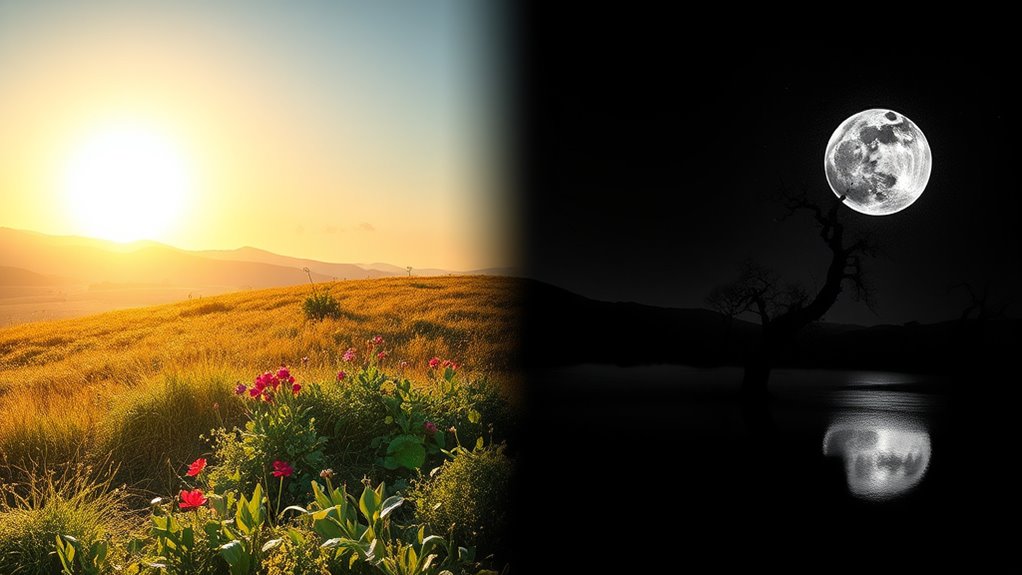
Dreams often present a striking contrast between light and darkness, symbolizing the internal struggles and revelations you experience. This symbolic contrast isn’t just about visual differences; it taps into deep emotional layers, shaping how you interpret your subconscious messages. When you dream of light, it often signifies clarity, hope, and understanding. Darkness, conversely, can represent confusion, fear, or unresolved issues. Recognizing these symbols helps you grasp the emotional impact of your dreams and the messages they convey about your waking life.
Dreams’ light and darkness reveal deep emotional truths and internal struggles shaping your subconscious messages.
In your dreams, light usually acts as a beacon, illuminating truths that might be hidden or suppressed. You might see a bright sun piercing through clouds or a luminous room that feels safe and inviting. These scenes evoke feelings of reassurance and confidence, encouraging you to confront challenges or seek clarity. The symbolic contrast between light and darkness amplifies emotional responses, making the experience more visceral. For example, waking from a dream where you escape shadowy figures into a burst of sunlight can leave you feeling empowered, as if a burden has been lifted.
Darkness in dreams often signifies the unknown or subconscious fears. It can be a veil hiding secrets or unresolved conflicts that need attention. You may find yourself wandering in a dark forest or trapped in a shadowy space, feeling lost or vulnerable. The emotional impact of darkness in dreams taps into your primal instincts, awakening feelings of anxiety or curiosity. This contrast heightens your awareness of internal struggles, urging you to explore hidden parts of yourself. Recognizing the symbolism allows you to interpret these dreams as opportunities for growth rather than mere nightmares.
The interplay of light and darkness can also symbolize transitional phases in your life. A dream where night turns into dawn suggests hope and renewal, whereas a shift from daylight to twilight might reflect uncertainty or change. These visual cues resonate emotionally, guiding you through your personal journey. When you wake, the memory of this contrast can leave you with a sense of optimism or apprehension, depending on the context. Understanding the emotional impact of these symbols helps you process your feelings more effectively and helps you navigate real-life transitions with greater awareness.
Additionally, understanding the symbolism behind light and darkness in dreams can deepen your self-awareness and aid in emotional healing. Ultimately, the symbolic contrast of light and darkness in dreams acts as a mirror to your emotional state. By paying attention to how these elements appear and evolve, you gain insight into your inner world. The emotional impact they generate can motivate you to seek clarity, confront fears, or embrace change. Recognizing the powerful language of light and darkness allows you to interpret your dreams with greater depth and intention, transforming them into tools for self-discovery and emotional healing.
dream symbolism light and darkness book
As an affiliate, we earn on qualifying purchases.
As an affiliate, we earn on qualifying purchases.
Frequently Asked Questions
Can Dreaming of Light or Darkness Predict Future Events?
Dreaming of light or darkness can hint at intuitive insights or spiritual guidance, but it doesn’t predict future events with certainty. You might feel these symbols reveal your subconscious thoughts, fears, or hopes, helping you understand yourself better. Trust your intuition to interpret what these dreams mean for you personally. Use them as clues to navigate your life, rather than strict predictions, and stay open to spiritual guidance they may offer.
How Do Cultural Differences Influence Light/Darkness Symbolism in Dreams?
Cultural differences greatly influence how you interpret light and darkness in dreams. In some cultures, light symbolizes knowledge and purity, while darkness represents mystery or danger. In others, darkness might be seen as protection or the subconscious, and light as clarity. These symbolic variations shape your understanding of dreams, guiding how you interpret the messages they convey. Your cultural background deeply colors your perception of these universal symbols.
Are There Psychological Reasons for Preferring Light or Darkness in Dreams?
You might find yourself drawn to light or darkness in dreams because of subconscious preferences and emotional associations. Ironically, craving darkness could mean you’re seeking safety and calm, while favoring light might reflect a desire for clarity and positivity. Your mind’s preferences reveal hidden feelings, making the dreamscape a mirror of your inner emotions. Embrace these symbols—they tell you what your subconscious is quietly longing for or avoiding.
Do Recurring Dreams Feature More Light or Darkness Themes?
You’ll notice recurring dreams often feature a symbolic contrast between light and darkness, reflecting recurring motifs in your subconscious. These themes can shift, with some dreams emphasizing illumination as hope or clarity, while others highlight darkness representing fear or uncertainty. The presence of these motifs helps you process ongoing emotional conflicts and personal growth, making the recurring themes rich with meaning and insight into your inner world.
How Does Age Affect the Symbolism of Light and Darkness in Dreams?
As you age, light often symbolizes clarity and hope, while darkness may represent challenges or uncertainty, reflecting your evolving inner journey. Age-related symbolism shifts, revealing generational dream themes that mirror your life stage. You might see brighter imagery in youth, symbolizing discovery, but as you grow older, darker themes can embody introspection or wisdom. Embrace these changes, as they highlight your personal growth and shifting perspectives over time.
dream interpretation light and darkness candles
As an affiliate, we earn on qualifying purchases.
As an affiliate, we earn on qualifying purchases.
Conclusion
As you wake from your dream, the clash of light and darkness leaves you pondering. What’s hidden beyond the shadows? The symbols suggest more than just day and night—they hint at inner battles, choices, and secrets waiting to be uncovered. Will you embrace the clarity of the light or fear what darkness might reveal? The answer lies within you, lurking in the shadows, ready to challenge what you think you know. Are you prepared to face it?
dream analysis light dark symbols kit
As an affiliate, we earn on qualifying purchases.
As an affiliate, we earn on qualifying purchases.
dream journal with light and dark themes
As an affiliate, we earn on qualifying purchases.
As an affiliate, we earn on qualifying purchases.
Columbus Day / Indigenous Peoples' Day Picks
long weekend sales
As an affiliate, we earn on qualifying purchases.