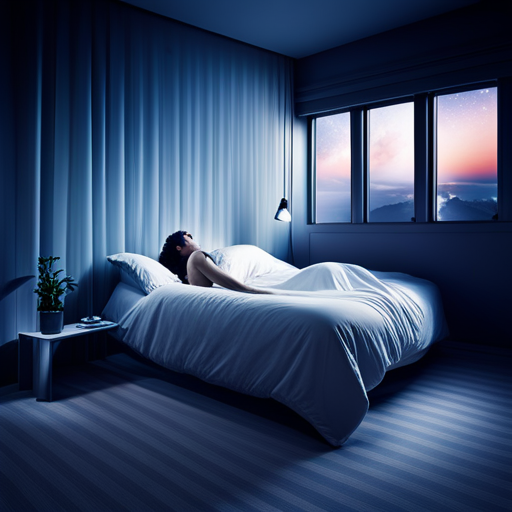
Yes, red light can become a reliable wind-down cue by signaling your brain to relax and encouraging melatonin production, which supports your natural sleep cycle. It mimics low-light conditions that promote sleep readiness without disrupting your circadian rhythm. Using red light consistently as part of your evening routine helps reinforce your body’s sleep signals and creates a calm environment. To discover how you can integrate red light effectively, keep exploring the details that can improve your sleep habits.

Get health and wellness essentials delivered free with Prime
- Fast, free delivery on millions of items
- Prime Video, Amazon Music and more included
- Member-only deals all year
Key Takeaways
- Red light mimics natural low-light conditions, signaling the brain to prepare for sleep without disrupting melatonin production.
- Consistent use of red light as part of a bedtime routine can reinforce circadian cues and improve sleep timing.
- Red light has minimal impact on melatonin compared to blue or white lights, making it a gentle sleep cue.
- Incorporating red light with other wind-down activities (reading, meditation) enhances its effectiveness.
- Overall, red light can serve as a reliable, non-disruptive signal for sleep readiness when used regularly.
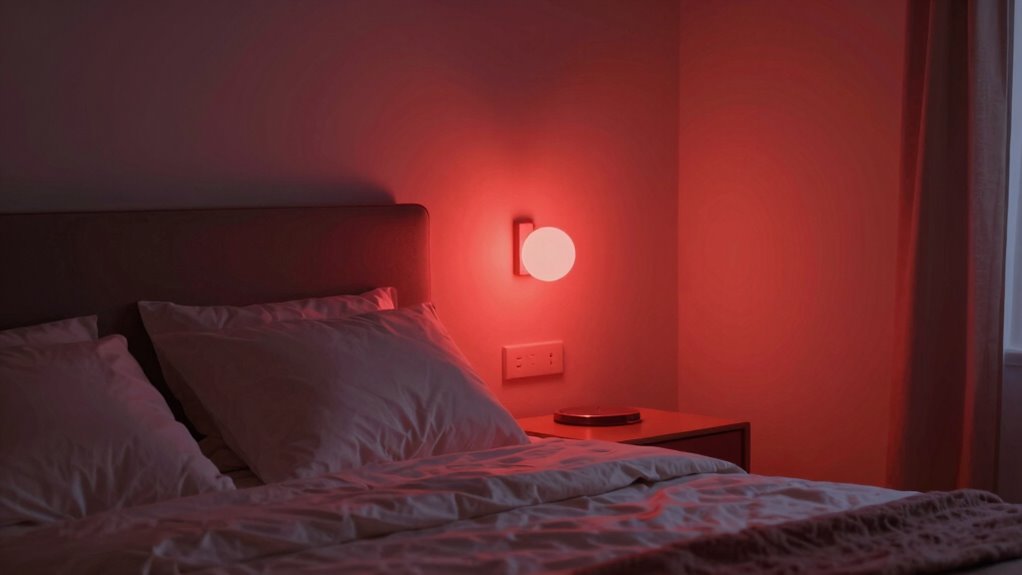
As the day winds down, turning off screens and dimming the lights can signal to your brain that it’s time to relax. This simple action plays an essential role in helping your body prepare for sleep by encouraging melatonin production. Melatonin, often called the sleep hormone, helps regulate your circadian rhythm, the internal clock that controls your sleep-wake cycle. When your environment becomes darker, your brain senses the decrease in light and ramps up melatonin secretion, making you feel sleepy and ready for rest. Dimming lights in your evening routine can support circadian rhythm synchronization, aligning your internal clock with the natural cycle of day and night.
Dimming lights signals your brain to produce melatonin, helping you relax and prepare for restful sleep.
Red light, in particular, has gained attention as a potential wind-down cue because it mimics the low-light conditions that naturally signal your body to prepare for sleep. Unlike blue or white light, which can interfere with melatonin production, red light has minimal impact on your circadian rhythm. When you use red light in the evening, it may help you relax without disrupting melatonin synthesis, making you easier to shift into sleep. This is especially useful if you’re trying to establish a consistent bedtime routine or if you’re sensitive to light exposure at night.
Additionally, incorporating natural lighting cues like red light can reinforce your body’s internal signals for sleep, further promoting circadian rhythm alignment. The idea is that red light can act as a gentle cue, indicating that it’s time to start winding down. By incorporating red light into your evening, you may reinforce your body’s natural signals for sleep, helping to maintain circadian rhythm synchronization. Consistent use of red lighting, combined with turning off screens and reducing overall brightness, can strengthen your body’s internal cues for sleep. In fact, some research suggests that red light exposure may even support sleep hormone production more effectively than other wavelengths.
Moreover, choosing the right lighting environment is crucial, as different settings can either support or hinder your sleep quality. Furthermore, understanding how to create an optimal sleep environment through light management strategies can significantly impact your overall sleep quality. Incorporating appropriate jewelry materials such as titanium or Bioflex in your sleep environment can also help reduce irritation or discomfort that might disrupt sleep. Over time, this can lead to improved sleep quality and a more predictable sleep schedule.
However, it’s important to remember that red light isn’t a magic bullet. Its effectiveness depends on your overall sleep environment and habits. Using red light as part of a broader wind-down routine—such as reading, meditating, or gentle stretching—can enhance its benefits. The key is consistency. When your body learns that red light signals relaxation and bedtime, your circadian rhythm can adjust more reliably, making sleep onset smoother. While more research might be needed to confirm all benefits, red light shows promise as a subtle, effective cue that promotes melatonin production and helps keep your circadian rhythm synchronized as you prepare for sleep.
As an affiliate, we earn on qualifying purchases.
Frequently Asked Questions
How Does Red Light Affect Melatonin Production?
Red light has minimal impact on melatonin production, making it less likely to cause circadian disruption. Unlike blue or white light, red light doesn’t substantially interfere with hormonal regulation involved in sleep. When you use red light in the evening, your body naturally maintains its melatonin levels, supporting a healthier sleep cycle. This makes red light a better option for winding down without disrupting your circadian rhythm or hormonal balance.
Are Red Light Devices Safe for Nightly Use?
Red light devices are like gentle night whispers—generally safe for nightly use if you follow proper guidelines. Red light safety is supported by research showing minimal risk, but consider your skin sensitivity and avoid prolonged exposure. For nightly use, keep the device at an appropriate distance and duration to prevent any adverse effects. Always consult a healthcare professional if you have skin conditions or concerns, ensuring safe, consistent benefits.
Can Red Light Improve Overall Sleep Quality?
Red light can improve your overall sleep quality by supporting your circadian rhythms through light therapy. It’s gentle on your eyes and helps signal your body that it’s time to wind down, promoting melatonin production. Regular use, especially in the evening, can reinforce your natural sleep cycle, making it easier to fall asleep and stay asleep. Just make certain you use red light devices consistently for the best results.
How Long Should I Be Exposed to Red Light Before Bed?
You should be exposed to red light for about 20 to 30 minutes before bed. Picture your sleep environment glowing gently, like a cozy sunset, helping your body wind down. Keep the light intensity low—just enough to create a calming ambiance without overstimulating. This brief exposure signals to your brain that it’s time to relax, making it easier to drift into a restful sleep.
Does Red Light Impact People With Sleep Disorders Differently?
Red light can impact people with sleep disorders differently because their circadian rhythms may be more sensitive. Color therapy suggests red light promotes relaxation, but if your circadian rhythm is disrupted, red light might not be as effective in helping you wind down. You might need to tailor your exposure or combine it with other calming practices to improve your sleep quality, especially if you have sleep challenges.
As an affiliate, we earn on qualifying purchases.
Conclusion
So, can red light truly become a reliable wind-down cue? The evidence suggests it can help signal your brain that it’s time to relax, thanks to its influence on melatonin production. While it might not work for everyone, many find incorporating red light into their bedtime routine beneficial. Give it a try, and see if that gentle glow helps you unwind more easily. After all, small changes can make a big difference in your sleep quality.
As an affiliate, we earn on qualifying purchases.
As an affiliate, we earn on qualifying purchases.
Columbus Day / Indigenous Peoples' Day Picks
long weekend sales
As an affiliate, we earn on qualifying purchases.