
TL;DR
Yogalina Studios founder Alina Boyett has shared a four-movement, equipment-free yoga flow intended for gentle recovery and mobility. The sequence uses a wall, floor-based poses and slow breathing; Boyett advises moving within a comfortable range and not pushing through pain.
Fit&Well has published a four-pose beginner yoga flow created by Alina Boyett, founder of UK-based Yogalina Studios, for people seeking gentle movement after exercise or a day spent sitting. The equipment-free sequence combines restorative poses, a forward fold and a seated twist; Boyett says it is intended to encourage recovery without requiring yoga experience or advanced flexibility.

Get health and wellness essentials delivered free with Prime
- Fast, free delivery on millions of items
- Prime Video, Amazon Music and more included
- Member-only deals all year
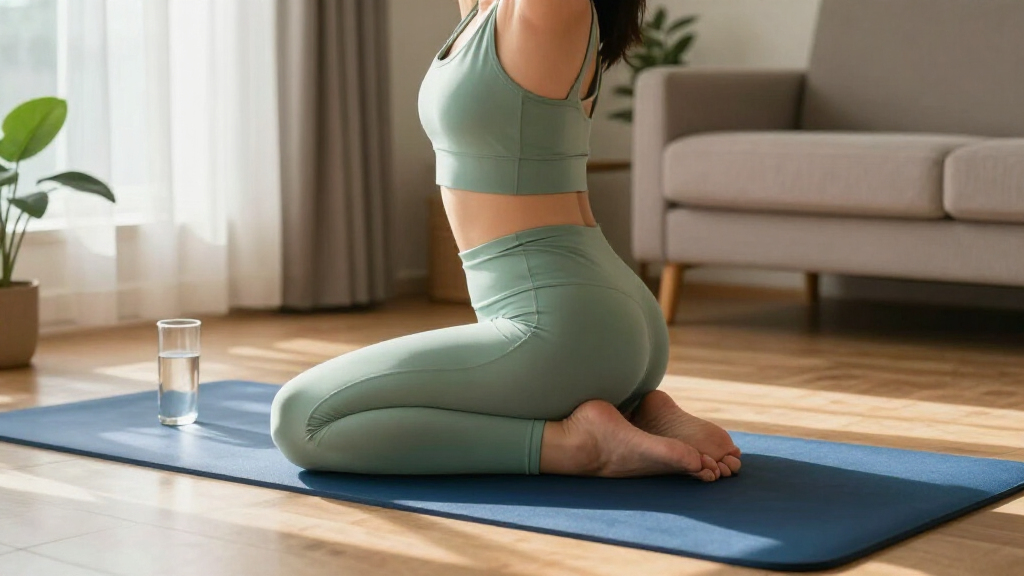
The routine includes Waterfall pose, with the legs raised against a wall; Child’s pose; a relaxed standing forward fold, called a ragdoll variation; and a seated spinal twist. Fit&Well says Yogalina teacher Misha Clarke demonstrates the sequence in a video accompanying the report. The written instructions specify one hold of three to five breaths for Waterfall and Child’s pose, two holds of three to five breaths for the forward fold, and two rounds of two to three breaths per side for the twist.
Boyett describes the poses as targeting areas where people commonly feel tension, including the legs, hips, spine and shoulders. The directions emphasize soft knees where needed, relaxed shoulders and slow breathing. In the standing fold, practitioners are told to rise slowly; for the twist, they should rotate gently rather than force the movement.
The report presents the sequence as an option after a challenging workout, a run or prolonged desk work. Boyett says even a short period of mindful movement and breathing can change how someone feels. Those are her recommendations and descriptions, not reported results from a clinical study or a quantified assessment of the routine’s effects.
A Short Routine Focused on Recovery
The report’s central point is that recovery can include gentle movement, rather than only complete rest. For readers who want a low-equipment way to stretch after activity or sitting, the four poses offer a defined sequence with breath-count guidance and simple modifications, such as bending the knees.
That practical format may make the routine easier to try for people without yoga experience. But the story does not establish that the flow prevents injury, speeds recovery or produces a particular flexibility gain. Its value, as presented, is a teacher-designed set of movements and reminders to slow down and avoid forcing a stretch.
Products Worth Considering

Philips Sonicare ProtectiveClean 5300 Rechargeable Electric Toothbrush with 3 Brush Heads, Black

Philips Sonicare 7300 Rechargeable Electric Toothbrush with 3 Brush Heads, Black

Therabody Theragun PRO Plus 6-in-1 Deep Tissue Massage Gun, Black
As an affiliate, we earn on qualifying purchases.
The Four Poses in Sequence
Boyett tells Fit&Well that recovery deserves attention alongside exercise intensity and volume. She says she encourages her students to approach it with intention, and frames the sequence as a way to pause, stretch and reconnect with how the body feels. The flow is described as suitable for home use and requires no special equipment, although Waterfall uses a wall for support.
The poses proceed from resting with the legs elevated to a kneeling position, then a standing fold and a seated rotation. Boyett says the forward fold may ease tension along the back of the body, while she describes the twist as gentle rotation for the back and torso. These are the instructor’s explanations of the movements; Fit&Well does not provide independent measurements of their effects.
Limits of the Reported Benefits
The Fit&Well report does not cite a clinical trial or provide evidence that this particular flow improves flexibility, reduces soreness or accelerates recovery. The benefits described are Boyett’s guidance and rationale, not measured outcomes. It also does not state a publication date in the supplied material.
The instructions are general and do not account for each reader’s mobility, injury history or medical circumstances. Boyett advises people with an injury or relevant medical condition to seek appropriate professional guidance before trying the sequence. The article does not specify alternatives for every pose or explain how to adapt the routine for particular conditions.
Trying the Flow With Care
Readers can follow the sequence as described in Fit&Well, using the accompanying demonstration and keeping each movement within a comfortable range. The directions call for three to five breaths in the first two poses, two rounds in the forward fold and gentle twists on both sides. There is no reported follow-up study or scheduled next development attached to the report.
Anyone who feels pain should not push through it, and people with an injury or relevant medical condition should consult an appropriate professional before beginning. The source does not offer a medical assessment or claim that the flow is suitable for everyone.
Key Questions
Who designed this yoga flow?
Alina Boyett, founder of UK-based Yogalina Studios, created the sequence for Fit&Well. The report says Yogalina teacher Misha Clarke demonstrates it in an accompanying video.
What poses are included?
The flow includes Waterfall pose with the legs against a wall, Child’s pose, a ragdoll-style forward fold and a seated spinal twist.
Does the routine require equipment or prior yoga experience?
Fit&Well describes it as requiring no equipment or previous yoga experience. Waterfall pose uses a wall, and the instructions allow a gentle knee bend if needed.
What safety guidance does Boyett give?
Boyett advises moving slowly, staying within a comfortable range and not forcing stretches or pushing through pain. She says people with an injury or relevant medical condition should seek appropriate professional guidance before trying the flow.
Source: fitandwell.com