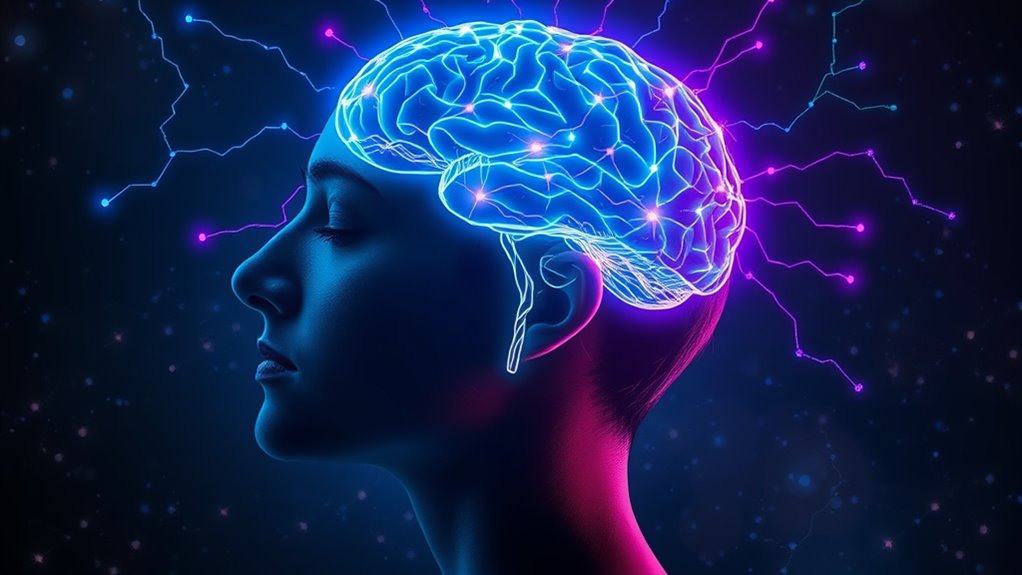

During lucid dreaming, your brain shifts into a heightened state of self-awareness by increasing activity in regions like the prefrontal cortex, which is normally subdued during REM sleep. This boost in neural activation helps you recognize you’re dreaming and sometimes maintain control. Brain chemistry involving neurotransmitters like acetylcholine also plays a role in creating vivid, conscious dreams. If you keep exploring, you’ll discover more about how your brain makes lucid dreaming possible.
Key Takeaways
- During lucid dreaming, increased activation occurs in the prefrontal cortex, enabling awareness and self-recognition within REM sleep.
- REM sleep features high brain activity similar to wakefulness, with neural pathways involving acetylcholine supporting vivid dreams.
- Recognizing the dream as a mental construct involves a hybrid brain state with heightened neural activation across awareness regions.
- Techniques like reality checks and meditation can stimulate brain areas, promoting lucidity by enhancing neural activity during sleep.
- Variability in dream vividness relates to fluctuations in neural activation levels, influencing the likelihood of experiencing a lucid dream.
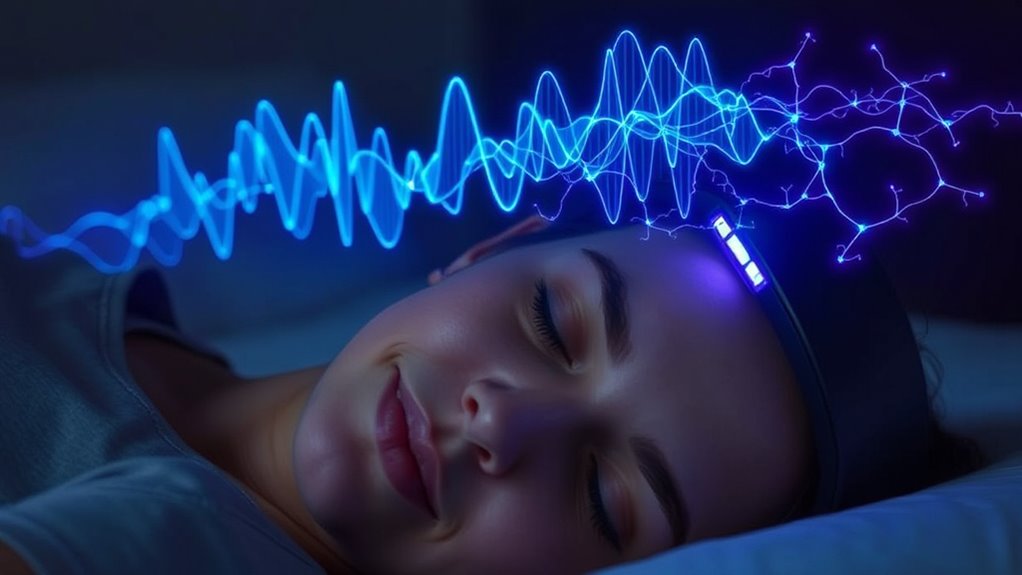
Lucid dreaming occurs when you become aware that you’re dreaming while still in the dream state, allowing you to actively participate and sometimes control the dream’s events. This remarkable awareness ties directly to specific changes happening in your brain during sleep. When you’re in REM (Rapid Eye Movement) sleep, your brain is highly active, almost as much as when you’re awake. During this phase, neural activation ramps up, especially in areas like the prefrontal cortex, which is responsible for higher cognitive functions such as self-awareness and decision-making. Normally, during REM sleep, these regions are subdued, which is why dreams can feel surreal and disconnected from reality. But in lucid dreaming, neural activation in these areas increases, enabling you to recognize that you’re dreaming and to exert some control over the dream environment.
This heightened neural activity isn’t accidental; it’s a critical part of the process that makes lucidity possible. When your brain shifts into REM sleep, a complex interplay of neurotransmitters, such as acetylcholine, stimulates neural pathways associated with vivid dreaming. In lucid dreams, this stimulation appears to be more widespread or balanced, especially in the prefrontal cortex, which isn’t as active during typical REM sleep. This increased activity grants you a level of conscious awareness within the dream, bridging the gap between your sleeping mind and waking consciousness. Fundamentally, your brain’s neural activation pattern during lucid dreams resembles a hybrid state—part sleep, part wakefulness—so you can recognize the dream as a mental construct while still immersed in it.
The process involves a delicate balance: too little neural activation, and you might remain in a typical, non-lucid dream; too much, and you risk waking up. Researchers believe that techniques like reality checks and certain meditation practices may help enhance neural activation at the right moment, increasing your chances of achieving lucidity. These methods may stimulate the prefrontal cortex or other regions involved in self-awareness, effectively “training” your brain to recognize the dream state. As you continue exploring lucid dreaming, understanding how neural activation operates during REM sleep helps you appreciate why some nights are more vivid or lucid than others. It’s your brain’s incredible ability to toggle between different levels of activity that makes this phenomenon possible, allowing you to consciously experience your dreams with awareness and sometimes even influence their course. Additionally, recent studies suggest that brain plasticity may play a role in enhancing lucid dreaming abilities over time.

The Lucid Dreaming Workbook: A Step-by-Step Guide to Mastering Your Dream Life
As an affiliate, we earn on qualifying purchases.
As an affiliate, we earn on qualifying purchases.
Frequently Asked Questions
Can Anyone Learn to Lucid Dream Easily?
You can learn to lucid dream, but it varies for everyone. Some may find it easier with practice, using techniques like reality checks and dream control exercises. Sleep paralysis can sometimes occur during this process, but it’s not necessary for lucid dreaming. Consistent effort increases your chances, and over time, you’ll improve your ability to recognize when you’re dreaming, helping you to control and enjoy your dreams more fully.
How Long Do Lucid Dreams Typically Last?
Ever wonder how long a lucid dream lasts? Typically, they span about 10 to 15 minutes, but with practice, you can extend dream duration by boosting memory retention during REM sleep. Think of your mind as a camera; the sharper your memory, the clearer and longer your lucid dreams become. So, stay focused and improve your recall skills to enjoy those vivid, extended nighttime adventures.
Are There Health Risks Associated With Lucid Dreaming?
Lucid dreaming generally isn’t harmful, but it can affect your sleep quality and dream frequency if practiced excessively. You might experience more awakenings or fragmented sleep, which could lead to fatigue. While rare, some people report anxiety or confusion after frequent lucid dreams. To stay safe, make certain your sleep remains restful and avoid overdoing it, maintaining a healthy balance between dream exploration and restorative sleep.
What Are the Best Techniques to Induce Lucid Dreams?
You can effectively induce lucid dreams through reality testing and mnemonic induction. Reality testing involves regularly questioning if you’re dreaming, which trains your brain to recognize dream signs. Mnemonic induction uses affirmations like “I will realize I’m dreaming” before sleep. Combining these techniques increases your chances of becoming lucid, helping you control your dreams. Remember, consistency is key, so practice nightly to strengthen your ability to recognize when you’re dreaming.
Can Lucid Dreaming Improve Mental Health or Creativity?
Lucid dreaming can boost your mental health and creativity by enhancing dream control and emotional regulation. When you become aware in your dreams, you can address fears or unresolved feelings, reducing stress. This awareness also fosters creative problem-solving and fresh ideas, as your mind explores new scenarios consciously. Regular lucid dreaming practice helps you harness these benefits, making it a valuable tool for emotional growth and inspiration.

Lucid Dreaming Journal: The Ultimate Dream Diary
As an affiliate, we earn on qualifying purchases.
As an affiliate, we earn on qualifying purchases.
Conclusion
So, here you are, mastering the art of controlling your dreams—only to realize that your brain’s still the real magician, pulling the strings behind the scenes. Ironically, while you think you’re in charge, it’s your subconscious running the show. Maybe the real dream isn’t about the control, but about surrendering to the fascinating chaos inside your mind. After all, in the world of lucid dreaming, you’re both the director and the unwitting star.

Deep Alpha: Brainwave Entrainment Music for Meditation and Healing
As an affiliate, we earn on qualifying purchases.
As an affiliate, we earn on qualifying purchases.

Dream Yoga: Illuminating Your Life Through Lucid Dreaming and the Tibetan Yogas of Sleep
As an affiliate, we earn on qualifying purchases.
As an affiliate, we earn on qualifying purchases.