

TL;DR
A study of 116 adults found that slow brain waves during deep sleep became flatter and lower in amplitude across groups ranging from cognitively unimpaired adults without amyloid abnormalities to people with early Alzheimer’s disease. Some measures of slow-wave power also differed in cognitively unimpaired participants with abnormal amyloid biomarkers, but the study does not show that sleep-wave changes can diagnose Alzheimer’s or predict an individual’s symptoms.
A study of 116 adults found that the shape and strength of brain waves during deep sleep differed across groups defined by Alzheimer’s-related biomarkers and symptoms, with some changes present among people who had no cognitive impairment. Published in Alzheimer’s Research & Therapy, the findings point to sleep-wave features as possible research markers of early disease-related changes, not as a proven diagnostic test.

Get health and wellness essentials delivered free with Prime
- Fast, free delivery on millions of items
- Prime Video, Amazon Music and more included
- Member-only deals all year
Participants spent one night undergoing polysomnography at Hospital Clínic de Barcelona. Researchers compared 30 cognitively unimpaired adults without abnormal amyloid biomarkers, 45 cognitively unimpaired adults with abnormal amyloid biomarkers, and 41 people with biomarker-confirmed mild cognitive impairment or mild dementia due to Alzheimer’s. About 57% were women; participants with severe sleep apnea were excluded.
The clearest pattern was a gradual change in slow-wave shape. Average wave slope decreased from about 370 microvolts per second in the amyloid-negative group to 342 in the amyloid-positive group and 300 in the early Alzheimer’s group. The report also describes waves becoming flatter and lower in amplitude across the groups. These are group averages from a small study, not thresholds established for evaluating individuals.
Researchers also found lower slow-wave power in the amyloid-positive group on some measures, and further reductions in the early Alzheimer’s group. In early Alzheimer’s, slow-wave power was about 15% to 21% lower than in the amyloid-negative group, depending on frequency band. The study tracked cognition in cognitively healthy adults across two to four visits over roughly six and a half years, but the reported findings do not establish that the sleep measures cause cognitive decline.
Sleep Waves May Add Early Clues
The results add to research examining whether sleep measures could help identify brain changes before memory problems are apparent. A signal detectable during a night of sleep could, in principle, offer a non-invasive way to study changes alongside established Alzheimer’s biomarkers. But this study compared selected groups; it did not test a clinical screening program or show that a sleep recording can tell whether a particular person will develop Alzheimer’s.
The distinction between potential research biomarker and validated diagnostic tool matters. The study involved just 116 adults, used one night of sleep monitoring, and included groups with differing Alzheimer’s risk profiles. Its findings warrant further testing before they can guide clinical decisions or be used to predict an individual’s cognitive future.
Products Worth Considering

LEVOIT Vital 200S-P Smart Air Purifier for Large Rooms up to 1875 ft², Quiet 27 dB Operation, AHAM Verifide, HEPA Sleep Mode, White

Levoit Core 400S-P Smart Air Purifier for Large Rooms
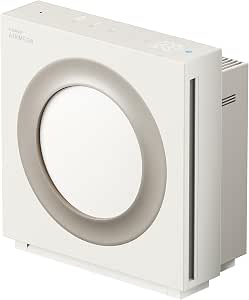
Coway Airmega Mighty2 Air Purifier, AP-1512N
As an affiliate, we earn on qualifying purchases.
How Researchers Compared Sleep
Slow-wave sleep is the deepest stage of non-REM sleep. It is associated with memory consolidation, and prior research has linked sleep disruption with Alzheimer’s-related brain changes. The study’s authors also discuss the proposed role of slow-wave sleep in the brain’s clearance of proteins including amyloid-beta and tau; the current study did not directly measure that clearance.
Researchers assessed both broad sleep patterns—such as time awake after falling asleep, sleep efficiency and time to REM sleep—and finer details of individual slow waves, including their power, slope, amplitude and duration. Broad sleep disruption was most apparent in the early Alzheimer’s group: participants spent about 108 minutes awake after sleep onset, compared with roughly 61 to 64 minutes in the cognitively unimpaired groups. Their sleep efficiency was 69%, versus 79% to 83%, and they took about 157 minutes to enter REM sleep, compared with 95 to 105 minutes.
The two cognitively unimpaired groups did not differ significantly in those broad sleep measures. The authors adjusted group comparisons for age and sex. APOE-ε4, a genetic risk variant associated with Alzheimer’s, was more common in the amyloid-positive group; the report says the cohort was enriched for Alzheimer’s risk factors.
“Slow-wave shape changes occur over the Alzheimer’s disease continuum and may represent non-invasive biomarkers for preclinical Alzheimer’s disease.”
— The study authors
Limits of the Sleep Findings
The study cannot establish whether the brain-wave differences precede Alzheimer’s symptoms in the same individuals, predict future decline, or result from disease-related changes. Its one-night recordings also leave open how stable the measures are from night to night. Although the researchers examined cognitive trajectories over several years, the findings presented do not show how accurately wave features predict an individual’s later outcomes.
Some results were sensitive to sleep duration. When researchers limited an analysis to participants who had slept at least six hours, the difference in slow-wave power between the two cognitively unimpaired groups was no longer statistically significant. The early Alzheimer’s group still had significantly lower delta and overall slow-wave activity power than the amyloid-negative group. The study also did not establish whether findings differ reliably by sex; sex differences were part of the research question, but the supplied results do not detail specific sex-based outcomes.
Replication Before Clinical Use
Further studies will need to test these sleep-wave measures in larger and more diverse groups, with repeated sleep recordings and longer follow-up. Researchers would also need to establish whether the measures add useful information beyond existing assessments and biomarkers, and whether observed differences hold across populations with different sleep patterns and Alzheimer’s risk.
For now, the findings are a research result rather than a change to Alzheimer’s diagnosis or care. The source report does not identify a planned next study or a timeline for clinical validation.
Key Questions
What did the study find?
It found that slow waves during deep sleep became flatter and lower in amplitude across groups with no abnormal amyloid biomarkers, abnormal amyloid biomarkers but no cognitive impairment, and early Alzheimer’s disease. Some slow-wave power measures were also lower in the amyloid-positive group.
Does this mean a sleep test can diagnose Alzheimer’s?
No. The study proposes sleep-wave features as possible research markers but does not validate them as a diagnostic test or show that they can predict Alzheimer’s in an individual.
How many people took part?
The study included 116 adults: 30 without cognitive impairment and without abnormal amyloid biomarkers, 45 without cognitive impairment but with abnormal amyloid biomarkers, and 41 with biomarker-confirmed mild cognitive impairment or mild dementia due to Alzheimer’s.
Did the study show that sleep changes cause Alzheimer’s?
No. The findings show associations between sleep-wave features and the study groups. They do not establish whether sleep changes contribute to Alzheimer’s-related decline, result from it, or predict future symptoms.
Source: news-medical.net