
TL;DR
Fit&Well reports that physical therapist Dr. Marivi Lao recommends three stretches—figure four, kneeling hip flexor and supine hip twist—for people seeking comfortable hip mobility. She suggests starting with one to three repetitions, holding each for 20 to 30 seconds per side, two to four times weekly, and stopping or adjusting if a stretch causes pain.
Physical therapist Dr. Marivi Lao recommends three stretches—a figure four, a kneeling hip flexor stretch and a supine hip twist—as a starting routine for people seeking more comfortable hip mobility. In a report by Fit&Well, Lao says to begin with one to three repetitions and hold each stretch for about 20 to 30 seconds per side, two to four times a week.

Get health and wellness essentials delivered free with Prime
- Fast, free delivery on millions of items
- Prime Video, Amazon Music and more included
- Member-only deals all year
Lao, who works with Spear Physical Therapy, says prolonged sitting leaves the hips bent for extended periods and that some people feel stiffness or tightness when they stand. She recommends getting up and moving regularly alongside targeted stretching. Her routine is guidance, not a claim that the stretches will resolve every cause of hip discomfort.
For the figure four, lie on your back with knees bent, cross one ankle above the opposite knee, and draw the uncrossed thigh gently toward your chest. The stretch should be felt mainly in the glute and outer hip. Lao advises keeping the crossed foot flexed and relaxing the shoulders and pelvis. If the position causes knee discomfort or a pinching feeling in the hip, she says to ease off and adjust. A bed can be used if getting to the floor is difficult.
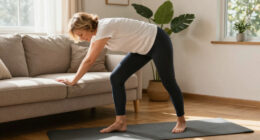
For the kneeling hip flexor stretch, place one foot forward with the knee bent, slightly tilt the front of the pelvis upward and move the torso forward until the front of the opposite hip stretches. Squeezing the kneeling-side glute can increase the stretch. Lao cautions against arching the lower back or pushing the hips forward to force more range; she says that can shift the movement into the back rather than the hip. A standing lunge variation is an alternative.
A Gentle Routine for Daily Movement
The advice gives readers a specific, modest routine rather than a target for extreme flexibility. Lao defines mobility as having enough comfortable range of motion to get through daily activities without feeling restricted, and says stretching should not become a competition. That framing matters because people have different ranges and may respond differently to the same position.
She recommends pairing the stretches with hip-strengthening exercises, such as resistance-band marches, rather than treating stretching as the only component of a mobility routine. The report does not provide research comparing these three movements with other exercises, or establish that they prevent injuries or treat a medical condition. Readers should understand the suggestions as practical exercise guidance attributed to a physical therapist, not a guaranteed outcome.
Products Worth Considering

Garmin Forerunner 970 GPS Running and Triathlon Smartwatch, 47 mm, Carbon Gray DLC Titanium with Black/Whitestone Band

Philips Sonicare DiamondClean 9300 Electric Toothbrush, 2 Brush Heads, Black

Blueair 2-in-1 Air Purifier and Humidifier for Rooms up to 1,726 sq. ft.
As an affiliate, we earn on qualifying purchases.
How Lao Says to Stretch
Lao’s starting frequency is two to four sessions per week, with one to three repetitions of each movement and a 20-to-30-second hold per side. She says people who enjoy stretching and find it comfortable can incorporate the exercises into a daily routine. The source does not specify a single required schedule or say that daily practice is necessary.
Across the routine, Lao recommends feeling a gentle-to-moderate pull, not pain or strain. Holding the breath, tensing the whole body or struggling to move farther can be signs to back off. In the supine hip twist, the knees move slowly from side to side while the upper body stays relaxed; Lao says the goal is to explore rotation, not force the knees to the floor. Some shoulder movement may occur depending on a person’s range.
“A good starting point is doing one to three repetitions of each stretch, holding for about 20-30 seconds per side, two to four times per week.”
— Dr. Marivi Lao, physical therapist with Spear Physical Therapy, as quoted by Fit&Well
Limits of the Stretching Advice
The supplied report does not state when the article was published, cite studies evaluating this exact three-stretch sequence, or quantify how much mobility a person might gain. It also does not establish that sitting is the cause of an individual’s symptoms. Results and comfortable range vary, and the source does not give personalized instructions for people with injuries, ongoing pain or other health conditions.
Lao’s guidance is to avoid forcing a position and to adjust if there is pain, knee discomfort or pinching. The report does not set out a diagnostic process or specify when a reader should seek clinical care. Anyone uncertain about whether an exercise is suitable for them can consult a qualified health professional.
How to Start and Adjust
The next step described in the report is to try the movements gently, beginning with one to three repetitions and the recommended hold time, while staying within a comfortable range. People can use a bed for the floor-based stretches if getting down to the floor is difficult, or choose the standing lunge alternative for the hip flexor stretch. The frequency can be adjusted to what feels comfortable; Lao says daily use is an option for those who enjoy it, not a requirement.
During each movement, readers should breathe normally and avoid forcing a deeper position. If discomfort or pinching occurs, the report advises backing off or changing position. Lao also suggests adding targeted strengthening, including resistance-band marches. The source provides no follow-up schedule or promised results, so any changes in symptoms or mobility remain individual.
Key Questions
Which three stretches does Dr. Lao recommend?
She recommends the figure four, the kneeling hip flexor stretch and the supine hip twist.
How often should someone do the stretches?
Lao’s suggested starting point is one to three repetitions of each stretch, held for about 20 to 30 seconds per side, two to four times a week. She says daily practice is also an option if a person enjoys it and the stretches feel good.
Should the stretches feel painful?
No. Lao says to aim for a gentle-to-moderate pulling sensation, not pain. She advises easing off if someone is holding their breath, tensing their body, forcing the position or feeling a pinch.
Can the exercises be done without getting on the floor?
The report says the figure four and supine hip twist can be done on a bed if getting down to the floor is difficult. Lao also notes that a standing lunge version can replace the kneeling hip flexor stretch.
Do these stretches guarantee better hip mobility?
No. The report presents Lao’s exercise recommendations but does not provide evidence that the sequence guarantees improvement or treats a medical condition. Mobility varies by person, and Lao recommends combining stretching with suitable hip-strengthening exercises.
Source: rss