
TL;DR

Get health and wellness essentials delivered free with Prime
- Fast, free delivery on millions of items
- Prime Video, Amazon Music and more included
- Member-only deals all year
Jill Brown, a 59-year-old trainer and Pilates instructor, told Fit&Well that she avoids heavy lifting because of injuries and uses lighter resistance with more repetitions. She recommends a 30-minute, six-move resistance-band workout for beginners, starting at 6–8 reps per exercise and adding repetitions gradually while maintaining good form.
Jill Brown, a 59-year-old health and wellness coach, personal trainer and Pilates instructor, has shared a 30-minute resistance-band routine for beginners, saying injuries mean she no longer lifts heavy weights. In an interview with Fit&Well, Brown recommended starting with 6–8 repetitions of each exercise and increasing the total gradually, using good form as the guide.
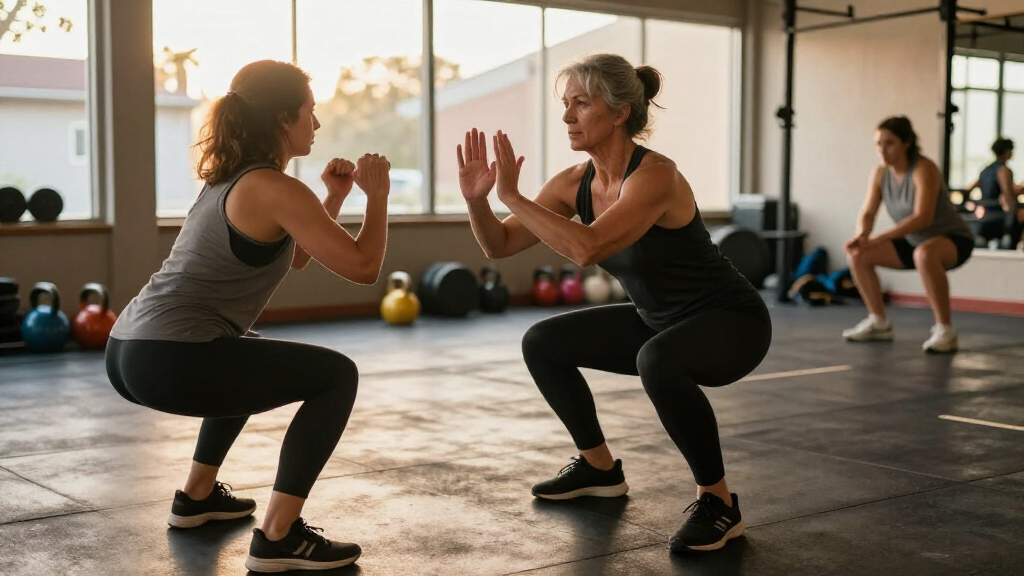
The workout consists of six movements: squats, lunges, a bent-over row with a band, a banded lat pull, a child’s-pose-to-kneeling push-up, and a banded floor press. Brown’s routine calls for 2–3 sets of 6–8 repetitions for each exercise; the lunges are counted on each side. It uses both a long-loop and a short-loop resistance band.
Brown told Fit&Well she avoids heavy lifting because of injuries. She said she uses higher repetitions with lighter resistance, and described 20 reps as her personal preference. That is not the starting target she gives beginners: she advises them to begin at six to eight repetitions, or at a number they can complete with good form, and build up over time.
Her progression advice is to record what is manageable, then try to do a little more the following week. Brown gave a plank as an example: someone who can hold one for 20 seconds could repeat that duration for a week, then aim for 25 seconds and later 30. The report presents this as her coaching approach, not as a guarantee of a particular strength or fitness result.
A Lower-Equipment Start to Strength Work
Brown’s routine offers a home-based option for people starting strength training or who do not have gym access or heavy equipment. Resistance bands can be used for both lower- and upper-body movements, while the suggested starting range gives beginners a defined, modest target rather than asking them to copy Brown’s 20-repetition preference.
The report also addresses a common barrier to exercise: not feeling ready for heavy weights. Brown’s account may help readers see that her own program is shaped by injury concerns, but it should not be read as proof that bands or high repetitions are appropriate for every person. The source does not describe Brown’s injuries or establish what training method is best for a particular reader.
Products Worth Considering

LEVOIT Air Purifier for Home, Pets, Bedroom, Smart WiFi

Levoit Vital 100S-P Air Purifier for Home and Pets

Coway Airmega AP-1512HHS Smart HEPA Air Purifier, Black
As an affiliate, we earn on qualifying purchases.
Why Brown Uses Lighter Resistance
Fit&Well frames the workout around the idea that strength exercise can become more challenging through factors other than heavier loads. Brown said she increases repetitions when using lighter resistance. The report does not provide research citations alongside her statement that muscle can grow with light to moderate weights, so that point remains Brown’s account of the evidence, rather than a finding independently assessed in the article.
Her plan is designed for beginners and includes familiar movement patterns: squatting and lunging, pulling movements for the back, a modified push-up, and a floor press. The instructions describe using controlled movement and maintaining form. For the banded row, for example, the band is placed under the feet and pulled toward the lower ribs; for the floor press, it is held beneath the upper back as the arms extend and lower.
““I don’t lift heavy because of injuries.””
— Jill Brown, speaking to Fit&Well
Limits of the Published Guidance
The source does not state when the report was published, provide details about Brown’s injuries, or specify how she determines whether a particular movement is suitable for an individual. It also does not report that the routine has been tested in a study, nor does it document outcomes for people who follow it. The claim that Brown is stronger than ever appears in the report’s headline; the supplied material does not give measurements or a timeline to independently assess that description.
Readers with injuries, pain, or other health concerns may need individualized guidance. The article does not give modifications for every movement or explain how to select band tension. Its suggested repetitions and sets are presented as a beginner workout, not an individualized training or medical plan.
Building Repetitions Over Time
Brown’s next step for beginners is to try the movements at a manageable level, note how many repetitions they can complete with good form, and increase the total gradually from week to week. The workout itself lists 2–3 sets of 6–8 reps, while her broader advice is to start where ability allows rather than force a prescribed number.
The source does not announce a follow-up program or a schedule for further reporting. Anyone considering the routine can review the movement instructions and choose whether to seek qualified professional advice, particularly if an injury or health condition affects exercise choices.
Key Questions
Who is Jill Brown?
Brown is 59 and is described by Fit&Well as a board-certified health and wellness coach, personal trainer and Pilates instructor. She told the publication that injuries are why she no longer lifts heavy weights.
What exercises are in Brown’s resistance-band workout?
The routine includes a squat, lunge, bent-over row, lat pull, child’s-pose-to-kneeling push-up and floor press. It calls for both a long-loop and short-loop resistance band.
How many repetitions should a beginner start with?
Brown recommends starting with 6–8 repetitions per exercise and working up gradually. She also says to begin at a number that can be completed with good form; her personal preference of 20 reps is not the beginner starting target.
Does the report show that this workout is suitable for everyone?
No. The report shares Brown’s routine and advice but does not establish that it is appropriate for every person or address every injury or health condition. People with health concerns about exercise can consult a qualified professional for individualized guidance.
Source: rss