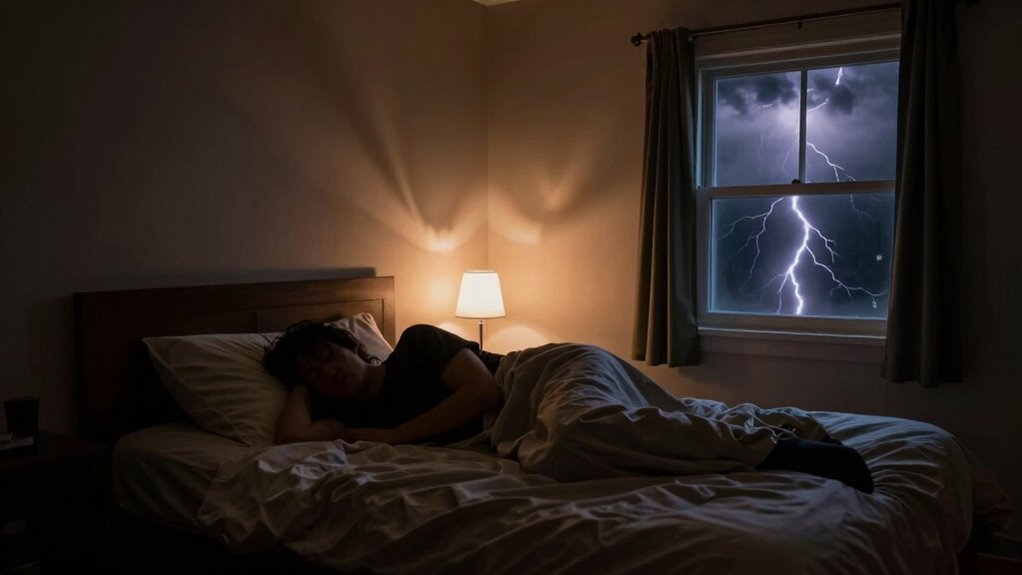

Violent dreams usually reflect your emotional state or sleep habits, not an immediate danger. They can be triggered by stress, irregular schedules, or recent hardships, and often show how your mind processes unresolved feelings. While occasional violent dreams are common, frequent ones that disrupt your sleep might signal underlying issues like anxiety or trauma. If you want to understand what your dreams might mean and find ways to reduce them, there’s more to discover below.
Key Takeaways
- Occasional violent dreams are common and usually not a cause for concern.
- Persistent or intense nightmares may indicate underlying stress or mental health issues.
- Violent dreams often reflect emotional processing rather than real danger.
- Improving sleep hygiene and managing stress can reduce disturbing dreams.
- Seek professional help if violent dreams interfere with daily functioning or sleep quality.

Have you ever woken up from a violent dream and wondered if it’s a sign of something to worry about? It’s a common experience, and it can leave you feeling unsettled long after you’ve opened your eyes. Violent dreams, or nightmares, often disrupt sleep patterns, causing restless nights and feelings of anxiety. But before you panic, it’s helpful to understand what these dreams might mean and whether they truly signal a deeper problem.
Your sleep patterns play a vital role in the content of your dreams. When your sleep cycle is disrupted—due to stress, illness, or irregular schedules—your brain may process unresolved emotions or fears through vivid, sometimes violent, imagery. These dreams are often the mind’s way of working through stressors or traumatic experiences, even if you’re not consciously aware of them. So, a violent dream doesn’t necessarily indicate a looming danger; instead, it can reflect your brain’s attempt to cope with underlying issues. Recognizing the importance of healthy sleep patterns can help you address the root causes of these dreams more effectively.
Disrupted sleep can lead to vivid dreams that reflect your brain’s way of processing stress and emotions.
Dream symbolism can also shed light on what your subconscious is trying to communicate. For example, violence in dreams might symbolize conflict, frustration, or feelings of helplessness rather than actual physical threats. If you’ve recently faced stressful situations or felt overwhelmed, your dreams might serve as a mirror of those feelings. Recognizing these symbols can help you interpret what your mind is trying to process rather than jumping to conclusions about your health or safety. Understanding the meaning of dream symbols can help you gain clarity about your emotional state.
It’s important to remember that occasional violent dreams are normal and don’t automatically point to mental health concerns. Many factors—like fatigue, anxiety, or watching intense movies—can trigger vivid, unsettling dreams. However, if these dreams happen frequently and interfere with your sleep or daily functioning, it might be worth exploring underlying causes. Sometimes, persistent nightmares are linked to conditions like post-traumatic stress disorder or depression, which may benefit from professional attention. Understanding the causes of nightmares can help you approach solutions more effectively.
In most cases, violent dreams are temporary and are more reflective of your current mental and emotional state rather than an indication of a serious issue. Improving your sleep hygiene—such as maintaining a consistent sleep schedule, reducing screen time before bed, and managing stress—can help diminish their frequency. Remember, your dreams are complex symbols of your inner world, and understanding them requires looking at your overall sleep patterns and emotional health. So, while violent dreams can be startling, they’re often just a sign that your mind is working through something rather than a cause for alarm. Additionally, understanding your sleep patterns can provide valuable insight into the reasons behind these dreams and how to address them effectively. Taking care of your mental health and creating a calming bedtime routine can also make a significant difference in reducing distressing dreams.

UpNature Dream Sleep Essential Oil Roll On – Natural Sleeping Blend with Lavender, Chamomile Aromatherapy Oils
Natural sleep support – Dream roll on is a soothing essential oil blend made for anyone looking for…
As an affiliate, we earn on qualifying purchases.
As an affiliate, we earn on qualifying purchases.
Frequently Asked Questions
Can Violent Dreams Predict Future Violent Behavior?
Violent dreams don’t necessarily predict future violent behavior. They often reflect dream symbolism of your subconscious fears or unresolved issues. While some studies suggest a link between intense dreams and emotional stress, they don’t confirm a direct cause-and-effect relationship with violence. Instead, these dreams are signals from your mind, urging you to address underlying worries or emotions. Focus on understanding what your dreams reveal about your inner feelings, not on predicting actions.
Do Violent Dreams Indicate Underlying Mental Health Issues?
Violent dreams can sometimes be a mirror reflecting underlying mental health issues, much like nightmare symbolism revealing buried fears. You might not realize it, but dream interpretation can uncover emotional distress or unresolved trauma. These vivid, unsettling images aren’t just random—they can signal the need to explore your mental well-being. So, yes, violent dreams could point to deeper issues, prompting you to seek support or better understand your emotional state.
Are Violent Dreams More Common in Certain Age Groups?
Violent dreams are more common in certain age groups, especially in children and older adults. Nightmare triggers like stress, trauma, or sleep disorders often influence these dreams, and dream symbolism can reveal underlying fears or unresolved conflicts. As you age, changes in brain chemistry and life circumstances can make violent dreams more frequent. Recognizing these patterns helps you understand the underlying causes and manage your sleep better.
How Can I Stop Having Violent Dreams?
Think of your mind as a garden; you can’t control every weed, but you can tend to it. To stop violent dreams, start by practicing good sleep hygiene, like maintaining a regular sleep schedule and avoiding screens before bed. Additionally, keep a dream journal to track patterns and triggers. Address stress or trauma with relaxation techniques or seek therapy if needed. These steps help cultivate peaceful, restorative sleep.
Do Violent Dreams Affect My Sleep Quality?
Yes, violent dreams can affect your sleep quality by causing frequent awakenings or lingering distress. To cope, try nightmare coping strategies like deep breathing or relaxation techniques before bed. Dream journaling can help you identify patterns or triggers, making it easier to manage or reduce these dreams over time. Addressing underlying stress or anxiety can also improve your overall sleep quality, helping you wake up feeling more refreshed.

ZzzQuil PURE Zzzs De-Stress 2mg Melatonin Gummies, , Sleep Aids for Adults, Ashwagandha for Stress Support, 60 Gummies
HELPS CALM THE MIND & BODY: These melatonin gummies are mindfully formulated with Ashwagandha, an adaptogen, to help…
As an affiliate, we earn on qualifying purchases.
As an affiliate, we earn on qualifying purchases.
Conclusion
So, next time you wake up from a violent dream, don’t panic. Most dreams, even the intense ones, are just your mind processing daily stresses or memories. Surprisingly, studies show that around 80% of people experience violent dreams at some point, yet they rarely indicate real danger. Instead of worrying, try to view these dreams as a normal part of your subconscious. Remember, understanding them can help you feel more in control of your emotions and stress.

Jay Franco Disney Nightmare Before Christmas Jack 3D Snuggle Plush Pillow – Super Soft Skeleton Pillow – Measures 15 Inches
COLORFUL & FUN DESIGN – Pillow measures 15 inches and features Jack Skellngton in 3D design on the…
As an affiliate, we earn on qualifying purchases.
As an affiliate, we earn on qualifying purchases.

Dreamer's Journal: An Illustrated Guide to the Subconscious (The Illuminated Art Series)
As an affiliate, we earn on qualifying purchases.
As an affiliate, we earn on qualifying purchases.