
TL;DR

Get health and wellness essentials delivered free with Prime
- Fast, free delivery on millions of items
- Prime Video, Amazon Music and more included
- Member-only deals all year
A Sixty and Me report argues that retirees’ well-being is shaped less by the size of their savings than by social ties, purpose, physical activity, learning and adapting to health changes. The article draws on research and public-health guidance, but it does not present a new study comparing retirees’ happiness or establish that these habits cause it.
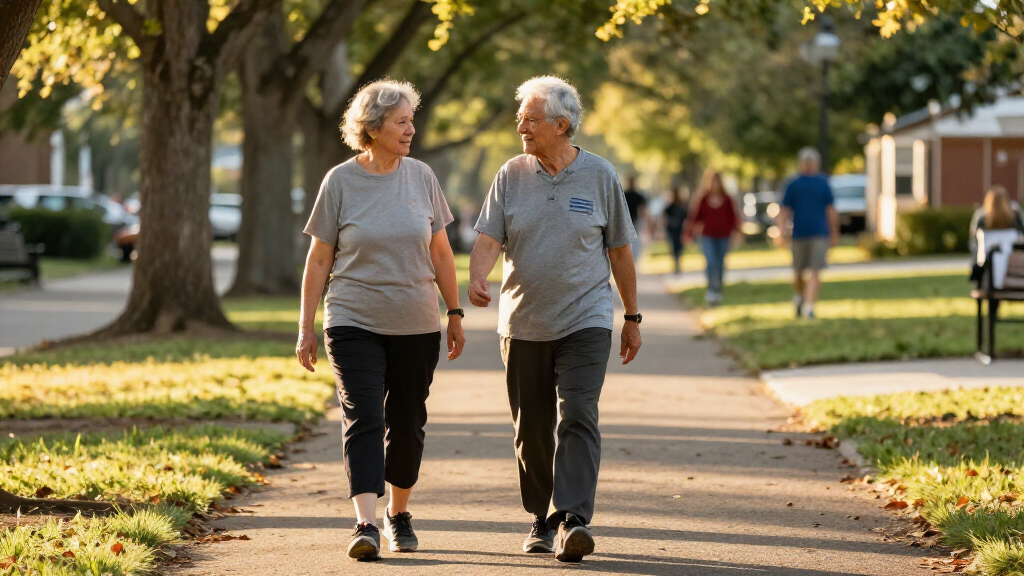
A Sixty and Me report says retirees who flourish often share habits that do not depend on having a large nest egg: maintaining relationships, pursuing meaningful activities, staying active, continuing to learn and adapting when health or mobility changes. The article draws on existing research and guidance, rather than reporting a new study that directly compares retirees’ happiness or proves these habits cause it.
The report’s central point is that retirement well-being involves more than finances. Its author describes retirement as potentially lasting 25 to 30 years and says the people they encounter through work with older adults tend to do better when they keep social connections and activities in their lives. That observation is the author’s account, not a measured finding from a study of the author’s clients.
For support on relationships, the article cites the Harvard Study of Adult Development, which began in 1938 and has followed men and, later, their families. Its directors have identified good relationships as a major contributor to happiness and health in aging. The report also refers to a 2019 study of nearly 7,000 adults over 50: participants with the weakest reported sense of purpose were more than twice as likely to die during the study period as those with the strongest. That association does not establish that purpose alone determines longevity.
The article recommends practical ways to put those themes into daily life: schedule regular time with friends and relatives, volunteer or mentor, and choose activities that create a reason to get up. It also cites federal guidance calling for older adults to get about 150 minutes of moderate activity a week, strength exercises at least twice weekly and balance exercises. Classes, hobbies and community programs can combine learning with chances to meet people.
Daily Habits Shape Retirement Life
The report’s recommendations matter because retirement can remove routines and social contact that were once built into work. Regular plans with other people and activities that give someone a role may help replace some of that structure. The cited evidence supports links between relationships, purpose and health outcomes, but readers should not interpret it as proof that following a checklist guarantees happiness or longer life.
The practical emphasis is on preserving independence and participation, not on meeting a single ideal of retirement. Strength and balance work can support everyday tasks such as standing from a chair or climbing stairs. Adjusting an activity or using a mobility aid may also let someone continue an outing when walking becomes harder. The report presents such changes as ways to stay involved, rather than signs that a person has failed.
Its suggestions also include steps at home, such as improving lighting and installing grab bars. The Centers for Disease Control and Prevention says about one in four U.S. adults aged 65 and older reports a fall each year. That statistic describes reported falls in that age group; it does not mean a particular person will fall. Home changes and activity choices should fit individual needs, and anyone making health or mobility decisions can consult a qualified professional.
Products Worth Considering

Blueair Blue Pure 211i Max Air Purifier for Large Rooms

Withings Sleep Under-Mattress Sleep Tracking Pad

Hyperice Hypervolt 3 Percussion Massage Gun with Heated Head and Carry Case
As an affiliate, we earn on qualifying purchases.
Evidence Behind the Recommendations
The report combines findings from several sources rather than presenting one new investigation. The Harvard study’s long-running observations concern relationships and health across decades. The 2019 purpose study followed nearly 7,000 adults over 50 and reported a difference in mortality risk between people with the weakest and strongest sense of purpose during its study period. The source material does not give the study’s full methods, follow-up duration or details needed to assess how other factors may have influenced that association.
The activity recommendation is attributed to federal guidelines for older adults. The fall statistic is attributed to the CDC, and the discussion of loneliness refers to the U.S. surgeon general’s 2023 advisory, which linked social isolation with higher risks of heart disease, stroke and dementia. These references provide context for the article’s advice; they do not show that every retiree will experience the same outcomes or that the recommendations are a substitute for individualized care.
The author also emphasizes adapting rather than stopping an activity altogether: swimming instead of tennis when a knee hurts, taking a cane on a trail, or using a wheelchair for long distances. Those examples are practical suggestions from the report, not findings from a controlled trial comparing mobility equipment or retirement satisfaction.
“The clearest lesson is that good relationships keep us happier and healthier as we age.”
— Directors of the Harvard Study of Adult Development, as cited by Sixty and Me
Limits of the Retirement Evidence
The source is an advice-oriented report, not a new survey or trial measuring which retirees are happiest. It does not define how “happiest” is measured, compare people by income or savings, or establish that the listed habits caused better outcomes. The research it cites concerns different measures, including relationship satisfaction, purpose and mortality risk, so those findings should not be treated as interchangeable measures of happiness.
The source material also does not provide a publication date or full citations for every study. It is unclear how the cited findings account for factors such as income, disability, access to community programs or existing health conditions. The advice is broad, and a suitable level of exercise, home modification or mobility support will vary from person to person.
Putting the Advice Into Practice
The report does not announce a formal follow-up study or a forthcoming policy change. Its suggested next steps are small and personal: schedule contact with someone, choose a regular activity, try a class or volunteer role, and include strength and balance work in a suitable exercise routine. It also recommends planning home safety changes before a fall or other urgent need arises.
Whether these steps improve an individual’s well-being will depend on their circumstances, preferences and health. The article’s broader message is to plan retirement deliberately and adjust activities when needs change. People considering a new exercise routine, mobility aid or home-safety change can discuss options with an appropriate health or rehabilitation professional.
Key Questions
What habits does the report associate with happier retirement?
It highlights close relationships, a sense of purpose, regular movement, continued learning and adapting to changes in health or mobility. These are recommendations and reported associations, not a guaranteed formula for happiness.
Does the article show that money does not matter in retirement?
No. It argues that well-being is not determined only by the size of a nest egg. The source does not compare retirement satisfaction across income or wealth levels, and it does not establish that finances are unimportant.
What activity guidance does the report cite?
The article cites federal guidance of about 150 minutes of moderate activity weekly for older adults, plus strength work at least two days a week and balance exercises. Individual needs vary; readers can consult a qualified professional about suitable activity.
Does the cited purpose study prove that having a purpose prevents death?
No. The report says a 2019 study of nearly 7,000 adults over 50 found that people with the weakest sense of purpose were more than twice as likely to die during the study period as those with the strongest. That is an association, not proof that purpose alone caused the difference.
Source: sixtyandme.com