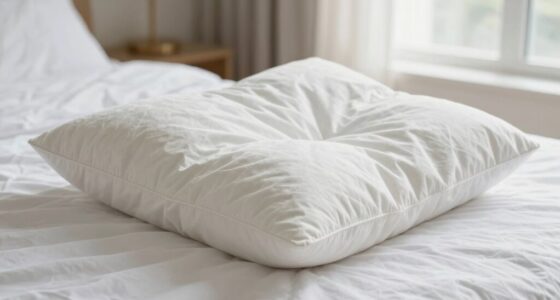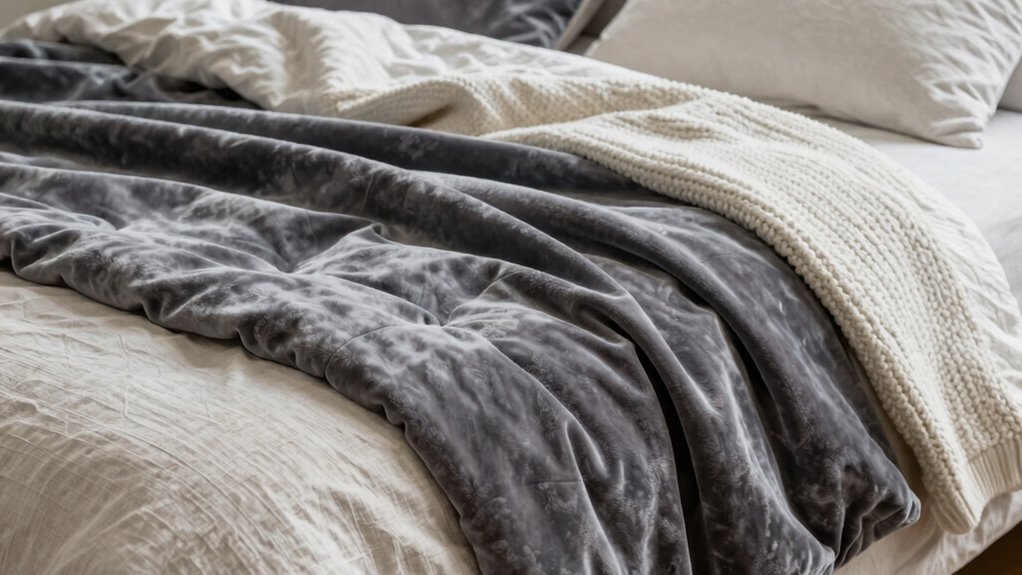

Your sleep comfort is more affected by the texture of your bedding than its color. Soft, smooth fabrics promote relaxation, warmth, and better rest, while rough or coarse textures can cause irritation and hinder falling asleep. Texture directly influences how cozy and cool you feel, impacting your overall sleep quality. Focusing on tactile sensation and breathability can make a big difference. Keep exploring to discover simple ways to improve your sleep environment through texture choices.
Key Takeaways
- Tactile sensations from bedding textures directly influence relaxation and ease of falling asleep.
- Soft, smooth textures promote comfort, while rough fabrics can cause irritation and disrupt sleep.
- Texture interacts with skin to regulate temperature and moisture, affecting overall sleep quality.
- Color impacts mood but has less effect on sleep comfort than the physical feel of textures.
- Choosing bedding with breathable, pleasant textures enhances sleep environment more effectively than color alone.

While color often influences how we feel about a space, recent studies show that texture has a more direct impact on sleep comfort. When you’re preparing for a good night’s rest, the textures of your bedding and sleep environment matter more than you might realize. The tactile sensation of your sheets, pillows, and blankets can either promote relaxation or cause discomfort, directly affecting how quickly you fall asleep and the quality of your rest. It’s not just about how your bed looks but how it feels against your skin that influences your sleep experience.
Texture impacts sleep comfort more than color, influencing relaxation, warmth, and overall rest quality.
One key aspect to contemplate is fiber breathability. Natural fibers like cotton, linen, and bamboo are known for their superior breathability, allowing air to circulate and moisture to escape. This helps regulate your body temperature throughout the night, reducing sweat and discomfort that can wake you up. When your bedding has good fiber breathability, you’re less likely to toss and turn due to overheating, leading to deeper, more restorative sleep. Conversely, synthetic fibers tend to trap heat and moisture, creating an uncomfortable sleeping environment that disrupts your rest. Additionally, choosing breathable fabrics can help prevent discomfort caused by overheating, which is a common sleep disruptor. Recognizing the importance of indoor air quality can also contribute to a healthier sleep environment. Proper ventilation and material breathability are essential components that work together to enhance sleep comfort. Improving sleep environment factors can further support restful sleep by reducing potential disturbances.
Tactile sensation plays an equally crucial role. The softness or roughness of your bedding influences how inviting your sleep space feels. Smooth, soft textures—think plush sheets or silky pillowcases—can enhance relaxation, making it easier for your mind and body to unwind. On the other hand, coarse or scratchy fabrics can cause irritation and distract you from falling asleep. The tactile sensation affects your overall comfort and can even influence your mood, making you more likely to associate your bed with relaxation or discomfort.
Ultimately, the way textures interact with your body is what makes a real difference. When your bedding feels pleasant to touch and allows your skin to breathe, it creates an environment that encourages restful sleep. You might notice that switching to bedding with better fiber breathability and a softer tactile sensation improves your sleep quality profoundly. It’s a simple change that can have far-reaching effects on how quickly you drift off and how refreshed you feel in the morning.
In the end, while colors may set the mood, it’s the textures you choose that truly influence your sleep comfort. By prioritizing fiber breathability and tactile sensation, you can create a sleep environment that promotes relaxation, temperature regulation, and overall well-being. Understanding the role of textures and their interaction with your skin can help you make better choices for a restful night. The next time you prepare your bed, pay attention to how the fabrics feel against your skin—because in the battle for better sleep, texture wins.
breathable cotton bed sheets
As an affiliate, we earn on qualifying purchases.
As an affiliate, we earn on qualifying purchases.
Frequently Asked Questions
How Does Texture Influence Sleep Quality Beyond Comfort?
Texture influences your sleep quality beyond comfort by promoting sensory adaptation and engaging your tactile senses. Textural innovation in bedding can help your body relax and shift into sleep more easily, reducing stress and restlessness. When you experience varied textures, your brain stays engaged in a calming way, encouraging deeper, more restorative sleep. So, paying attention to textures can enhance your overall sleep experience, not just how cozy your bed feels.
Are Certain Textures Better for Specific Sleep Disorders?
Yes, certain textures can help with specific sleep disorders. For example, smooth, soft fabrics with minimal fiber patterns reduce irritation for sensitive skin, aiding those with dermatitis or allergies. Durable fabrics maintain their texture over time, ensuring consistent comfort. Choosing textures like high-quality cotton or silk can promote better sleep, especially for individuals with sleep disorders that require a stable, soothing environment. Prioritizing fabric durability and fiber patterns makes a real difference.
Can Changing Textures Reduce Nighttime Awakenings?
Yes, changing textures can reduce nighttime awakenings by enhancing your sleep environment. When you incorporate soft, calming fabrics into your bedroom aesthetics, you create a more comfortable sleep environment that promotes relaxation. For example, replacing rough or noisy bedding with smooth, cozy materials helps your body feel secure and at ease, making it easier to stay asleep throughout the night. Texture plays a vital role in improving overall sleep quality.
Do Texture Preferences Vary Across Different Age Groups?
Yes, your texture preferences do vary across different age groups. As you age, your sensory preferences shift, influencing what fabrics and patterns feel most comfortable. Younger people might prefer soft, smooth textures, while older individuals often favor more textured or cozy fabrics that provide sensory comfort. Recognizing these changes helps you choose bedding and sleepwear that enhance your sleep quality by catering to your evolving sensory needs.
How Long Does It Take to Notice Sleep Improvements From Texture Changes?
You can notice sleep improvements within a few nights to a week after changing textures, especially if you choose durable materials that maintain their feel over time. When selecting textures, prioritize material sustainability, which often means better quality and comfort. Keep in mind, consistent use and patience help your body adapt, and over time, you’ll likely experience more restful sleep as your new textured bedding or mattress proves durable and comfortable.
silky pillowcases for sleep
As an affiliate, we earn on qualifying purchases.
As an affiliate, we earn on qualifying purchases.
Conclusion
Ultimately, understanding that texture trumps color when it comes to sleep comfort can transform your nightly routine. By switching to softer, smoother fabrics, you’ll foster a more restful, relaxed retreat. Remember, it’s not just about the hue but how it feels beneath your fingertips and against your skin. So, prioritize plush, pleasing textures to perfect your sleep space, proving that small sensory shifts can markedly soothe your sleep and strengthen your serenity.
soft natural fiber bedding
As an affiliate, we earn on qualifying purchases.
As an affiliate, we earn on qualifying purchases.
cooling textured blankets
As an affiliate, we earn on qualifying purchases.
As an affiliate, we earn on qualifying purchases.