
TL;DR

Get health and wellness essentials delivered free with Prime
- Fast, free delivery on millions of items
- Prime Video, Amazon Music and more included
- Member-only deals all year
A special issue of the Journal of Applied Gerontology brings together 12 studies on how disasters affect older adults in the United States, Puerto Rico and China. The research describes risks that can build before an emergency and persist through recovery, while pointing to care coordination, reliable information and caregiver support as areas for preparedness.
A special issue of the Journal of Applied Gerontology brings together 12 studies on how disasters affect older adults, finding that risks can arise from the interaction of chronic illness, mobility limits, disrupted care and repeated hazards. The research covers the United States, Puerto Rico and China and spans older people aging at home as well as residents of assisted living and nursing homes.
The issue, titled Complex Emergencies and the Effect on Older Populations, examines how vulnerability develops before, during and after emergencies. Its studies address hazards including hurricanes, floods, wildfires, extreme heat and air pollution, as well as the consequences of accumulating losses when disasters occur repeatedly or communities have little time to recover.
The report says disasters can interrupt health services beyond the areas hit hardest. Older adults who have lived through emergencies and manage chronic conditions may still lack plans for continuing care, including obtaining medication, powering medical equipment and staying in contact with health care providers. The studies also examine how earlier-life adversity and environmental exposures can shape outcomes later on.
The issue identifies potential sources of support, including resilience, confidence in one’s ability to act, caregiving relationships and access to reliable information. Its editors and contributors call for incorporating preparedness into routine clinical care, improving staffing and readiness at long-term care facilities, matching regulations to facility risks, and expanding community programs, especially in rural areas.
Care Plans Must Reach Beyond Evacuation
The findings broaden disaster planning beyond warnings and evacuation routes. An emergency can interrupt the everyday systems that allow someone to manage a chronic condition: medication supplies, powered equipment, appointments, home care and communication with clinicians. If those supports fail, risks may continue outside the immediate disaster zone and after the hazard has passed.
The issue also treats social and psychological needs as part of preparedness. Disrupted routines, separation from caregivers and loss of familiar relationships can affect older adults and the people who support them. The editors argue that mental health, caregiver support and trauma-informed care belong in planning for both the emergency and recovery. These are recommendations drawn from the research collection, not a report that a specific policy has already been adopted.
For families, providers and emergency planners, the practical implication is that a plan needs to reflect an individual’s care arrangements and circumstances, not just age. The special issue points to shared responsibility across health care, emergency management and long-term care, while emphasizing that motivation alone cannot make up for missing information or services.
As an affiliate, we earn on qualifying purchases.
What the 12 Studies Cover
The special issue gathers research across several locations and care settings rather than focusing on a single storm or emergency. That scope lets its contributors examine how hazards and support systems interact for older adults living independently, receiving care at home, or residing in assisted living and nursing homes.
The report frames current emergencies as increasingly complex: hazards may be severe, recur, overlap, or arrive before a community has recovered. It also notes that past exposure does not necessarily mean someone is prepared for a future event. Older people who routinely manage illness may still face gaps in plans for medications, equipment and provider contact.
Several editors connect the evidence to changes in preparedness practice. Lindsay Peterson of the University of South Florida’s School of Aging Studies emphasizes timely, relevant information and support from organizations involved in response and recovery. Lisa M. Brown of Palo Alto University highlights the need to account for caregiving and psychological effects, while David M. Dosa of UMass Chan Medical School says research can help communities prepare.
““Motivation alone is not enough.””
— Lindsay Peterson, special issue editor and researcher at the University of South Florida School of Aging Studies
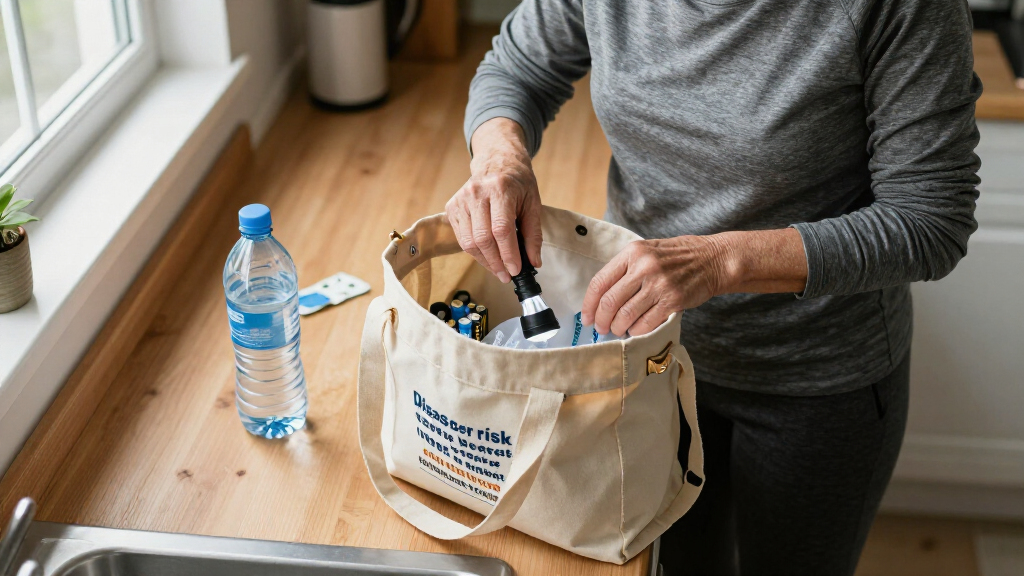
emergency preparedness kit for older adults
As an affiliate, we earn on qualifying purchases.
As an affiliate, we earn on qualifying purchases.
Limits of the Evidence
The source report summarizes the special issue but does not provide detailed methods, sample sizes or results for each of its 12 studies. It therefore does not allow readers to compare the size of particular risks or establish how common specific preparedness gaps are across older adults.
The summary also does not specify which interventions have been tested successfully, how much they cost, or whether the recommendations have been adopted by health systems, care facilities or governments. The research spans multiple hazards and settings, so findings may not apply in the same way to every person or community. Further detail on individual studies is needed to assess their methods and limits.
As an affiliate, we earn on qualifying purchases.
Preparedness Across Care Systems
The special issue’s authors call for disaster planning to become part of routine clinical care and for stronger preparation in assisted living and nursing homes. They also recommend regulations that reflect differences in facilities’ risks and expanded community-based support, with particular attention to rural areas.
The report does not announce a specific implementation timetable or policy change. Further progress depends on health care providers, emergency managers, care facilities and community organizations translating the findings into plans that address medication access, equipment, communication and caregiving. Detailed study results and any subsequent policy or program changes will clarify which approaches work best for different older adults and settings.
disaster preparedness supplies for seniors
As an affiliate, we earn on qualifying purchases.
As an affiliate, we earn on qualifying purchases.
Key Questions
What is the new development?
The Journal of Applied Gerontology has published a special issue containing 12 studies on disasters and older populations. The studies examine risks, support and recovery across several hazards, locations and care settings.
Which disasters are covered?
The report describes research on hurricanes, floods, wildfires, extreme heat and air pollution. It also discusses repeated or overlapping emergencies and the effects of disasters that occur before communities have fully recovered.
What kinds of care can be disrupted?
Disruptions can affect access to medications, medical equipment and health care providers, as well as home care and other support. The report says these interruptions can affect people beyond the area most directly hit.
What do the editors recommend?
The issue calls for preparedness in routine clinical care, stronger readiness and staffing in long-term care facilities, regulations suited to facility risks, and more community programs, particularly in rural areas. It also highlights reliable information, caregiver support and mental health.
Source: rss
Fall Picks
fall essentials
As an affiliate, we earn on qualifying purchases.