If you mainly want to remove airborne particles like dust, pollen, or pet dander, a HEPA filter is your best choice since it physically traps these tiny particles. If odors, smoke, or gases are your concern, a carbon filter works best because it absorbs these chemicals. For an all-encompassing approach, combining both filters offers the most thorough purification. Keep in mind, proper maintenance ensures these filters work effectively—discover more to choose what’s right for your bedroom.

Get health and wellness essentials delivered free with Prime
- Fast, free delivery on millions of items
- Prime Video, Amazon Music and more included
- Member-only deals all year
Key Takeaways
- HEPA filters are best for capturing airborne particles like dust, pollen, and allergens, improving allergy and asthma symptoms.
- Carbon filters effectively remove odors, gases, and VOCs, making the air smell fresher and less chemically contaminated.
- Combining HEPA and carbon filters offers comprehensive purification for both particles and gaseous pollutants.
- Regular maintenance and timely filter replacements are essential to ensure optimal filtration performance.
- Choose filters based on specific bedroom needs, such as allergies or odor control, for healthier air quality.
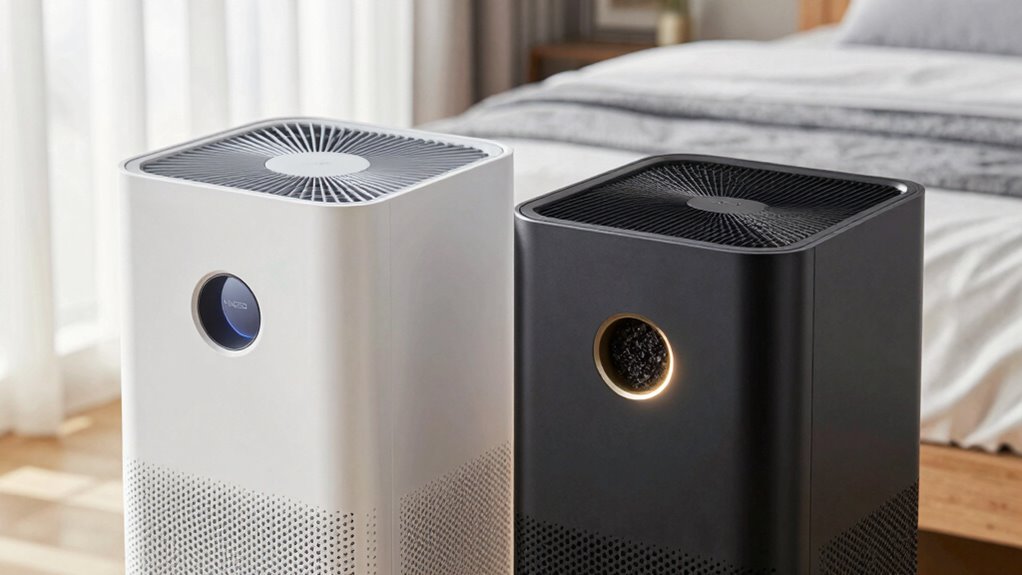
When choosing an air purifier, understanding the differences between HEPA and carbon filters is vital because each type targets specific pollutants. Knowing what each filter does helps you select the right device for your bedroom, guaranteeing you breathe cleaner air every night. HEPA filters excel at capturing tiny particles like dust, pollen, pet dander, and smoke. They work by trapping particles as air passes through, creating a barrier that prevents these allergens from circulating in your space. If allergies or asthma are concerns, a HEPA filter can considerably reduce symptoms and improve your sleep quality. However, because HEPA filters physically trap particles, they require regular filter maintenance—typically replacing or cleaning the filter every few months—to keep the air purifier functioning effectively. Neglecting filter maintenance can decrease its efficiency, allowing pollutants to bypass the filter and circulate freely.
On the other hand, carbon filters are specially designed to absorb gases, odors, and volatile organic compounds (VOCs). If your bedroom has lingering smells from pets, cooking, or cigarette smoke, a carbon filter is what you need. These filters work through a process called adsorption, where gases stick to the surface of activated carbon. Unlike HEPA filters, carbon filters don’t trap particles but focus on chemical pollutants, making them ideal for improving air freshness and removing airborne chemicals. You might find that using a carbon filter in combination with a HEPA filter offers thorough air purification, tackling both particles and gases. Just like HEPA filters, carbon filters also require periodic replacement to maintain their effectiveness, especially if you notice persistent odors or chemical smells. Additionally, understanding the difference between these filters can help you optimize your air quality more effectively based on your specific needs. Regular filter maintenance is crucial to prevent the buildup of pollutants and ensure your purifier continues to operate efficiently. Furthermore, some advanced air purifiers incorporate multi-stage filtration systems, combining both HEPA and carbon filters to maximize efficiency and cover a broader range of pollutants. Regularly monitoring the air quality and filter condition can help ensure your device continues to perform optimally. Understanding how these filters work can also help you better identify when it’s time for filter replacement to keep the system running smoothly. Remember, regardless of the filter type, regular filter maintenance is vital. It guarantees your air purifier operates at peak performance, extends the lifespan of your device, and provides consistently clean air. When you stay on top of filter replacements and keep your purifier clean, you’ll enjoy a healthier, more comfortable bedroom environment. Ultimately, understanding these differences helps you make an informed choice so you can breathe easier and sleep better each night.
As an affiliate, we earn on qualifying purchases.
Frequently Asked Questions
How Long Do HEPA and Carbon Filters Typically Last?
HEPA filters usually last about 6 to 12 months, depending on usage and filter maintenance, while carbon filters tend to last 3 to 6 months. Regularly replacing these filters is crucial for maintaining peak air quality improvement. Keep an eye on filter indicators or check for reduced airflow, as timely replacements ensure your bedroom stays fresh and healthy. Proper maintenance maximizes filter lifespan and air quality benefits.
Are HEPA or Carbon Filters More Energy-Efficient?
Think of filters like energy-efficient cars—they both consume power, but some are more mindful than others. HEPA filters tend to use more energy due to their dense filtering, while carbon filters generally have lower energy consumption. When considering filter maintenance and energy efficiency, carbon filters usually win out, helping you save on electricity bills. You’ll want to balance air quality needs with energy use, especially if you run your purifier constantly.
Can I Use Both Filters Together Effectively?
Yes, you can use both filters together effectively. Combining HEPA and carbon filters enhances air purification, tackling allergens and odors simultaneously. Just remember to perform regular filter maintenance to keep your system running efficiently. Using both filters is a smart air purification method, especially if you want cleaner, fresher air in your bedroom. Make sure your device supports dual filtering and follow the manufacturer’s instructions for peak performance.
Do Filters Remove All Types of Airborne Allergens?
Filters improve your air quality, but no single filter type removes all airborne allergens completely. HEPA filters excel at capturing pollen, pet dander, and dust mites, while carbon filters absorb odors and VOCs. To maximize allergen removal, consider using a combination of filter types. However, even with the best filters, some allergens like mold spores or airborne viruses may still linger, so regular cleaning and good ventilation are essential.
How Often Should I Replace My Bedroom Filters?
Think of your filters like a car’s oil—if you neglect them, performance drops. You should replace HEPA filters every 6 to 12 months and carbon filters every 3 to 6 months. Regular filter maintenance tips include checking for visible dirt and replacing them promptly to maximize air quality benefits. This way, you keep your bedroom air fresh, healthy, and free from pollutants.
As an affiliate, we earn on qualifying purchases.
Conclusion
In the end, choosing between HEPA and carbon filters depends on your specific needs. If dust, pollen, or pet dander are your main concerns, a HEPA filter will do the trick. But if odors and chemicals bother you more, a carbon filter is your best bet. Remember, it’s all about finding the right fit for your space. Don’t put all your eggs in one basket—sometimes, combining both filters can give you the clean, fresh air you crave.
HEPA and carbon filter air purifier combo
As an affiliate, we earn on qualifying purchases.
As an affiliate, we earn on qualifying purchases.
air purifier with replaceable filters
As an affiliate, we earn on qualifying purchases.
As an affiliate, we earn on qualifying purchases.
Columbus Day / Indigenous Peoples' Day Picks
long weekend sales
As an affiliate, we earn on qualifying purchases.