Islamic dream symbols carry deep spiritual meanings rooted in tradition, offering guidance and insights from Allah. Symbols like water represent purity and divine mercy, while fire can signal temptation or divine punishment. Seeing mosques or praying indicates devotion and spiritual growth, while neglecting prayers highlights areas needing improvement. The context and your intentions matter, helping you interpret messages more accurately. By exploring these symbols further, you’ll uncover how dreams serve as divine messages guiding your faith and life.
Key Takeaways
- Dream symbols in Islam are messages from Allah reflecting spiritual states or divine guidance.
- Water signifies purity, renewal, and divine mercy, often indicating spiritual cleansing.
- Fire may symbolize anger, temptation, or divine punishment, urging repentance and forgiveness.
- Seeing a mosque in dreams reflects devotion, faith, and a call to strengthen spiritual practices.
- Context and actions in dreams influence their meanings, emphasizing reflection and alignment with Islamic principles.
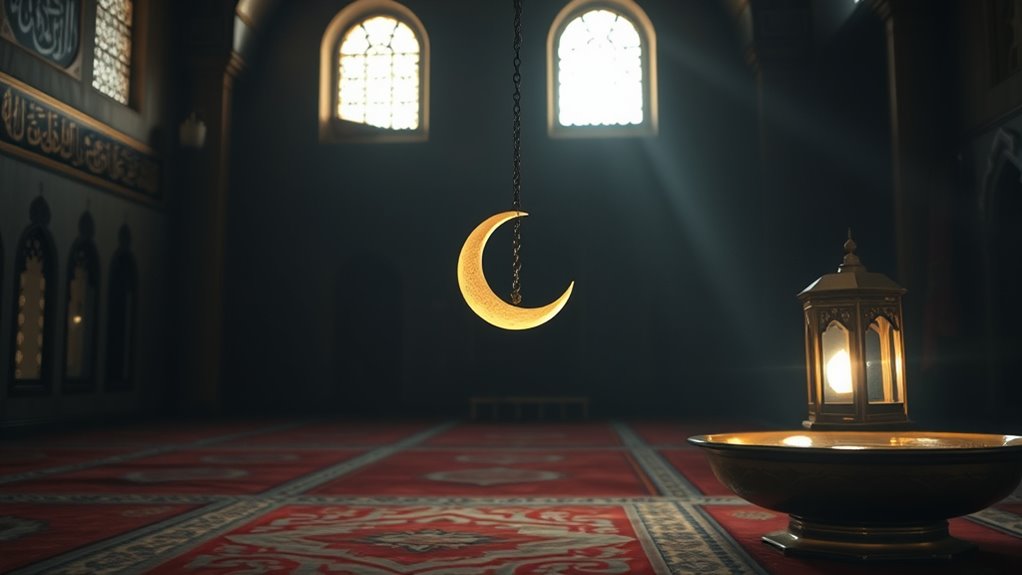
Islamic dream symbols hold deep spiritual significance and are often seen as messages from Allah or reflections of your inner thoughts. When you experience a dream, it’s essential to understand that these symbols aren’t random; they carry layers of meaning rooted in Islamic tradition and spiritual symbolism. Dream interpretation in Islam isn’t just about deciphering images but also about recognizing divine guidance that can influence your waking life. These symbols serve as a bridge between the spiritual and material worlds, offering insights into your faith, moral compass, and future.
In Islamic culture, certain symbols are consistently linked to specific meanings. For example, seeing water in a dream often symbolizes purity, renewal, and divine mercy. It’s considered a positive omen, suggesting spiritual cleansing or Allah’s blessings. Conversely, dreaming of fire might symbolize anger, temptation, or divine punishment, urging you to seek forgiveness and self-control. Recognizing these symbols allows you to interpret your dreams more accurately, aligning your understanding with traditional Islamic teachings. This process enhances your spiritual awareness and helps you navigate life’s challenges with faith.
Spiritual symbolism in Islamic dreams also emphasizes the importance of intention and context. A dream of a mosque, for instance, could reflect your devotion, a call to prayer, or a reminder to strengthen your faith. If you see yourself praying or performing good deeds in a dream, it indicates spiritual growth and divine approval. On the other hand, dreaming of neglecting prayers or sinful behavior might serve as a wake-up call, prompting you to realign your actions with Islamic principles. By paying attention to these symbols, you cultivate a deeper connection to your faith and gain clarity about your spiritual journey.
Understanding these symbols requires humility and reflection. Islam teaches that dreams can be influenced by various factors—your thoughts, actions, or even external environments—yet they also hold divine messages. When you interpret your dreams through the lens of spiritual symbolism, you’re not only seeking insight but also reaffirming your trust in Allah’s wisdom. Keep in mind that not every dream will have a clear meaning, but persistent reflection and prayer can help you *unveil* their messages over time. Additionally, sound healing science suggests that incorporating mindfulness and spiritual practices can enhance your connection to divine messages, enriching your understanding of your dreams. In this way, dream interpretation becomes a practice of faith, guiding you toward greater spiritual understanding and a closer relationship with Allah.

Interpretation of Dreams
As an affiliate, we earn on qualifying purchases.
As an affiliate, we earn on qualifying purchases.
Frequently Asked Questions
How Do Islamic Dream Symbols Differ From Other Cultural Dream Interpretations?
Islamic dream symbols differ from other cultural interpretations because they heavily rely on religious symbolism rooted in the Quran and Hadith, giving them a spiritual significance. You’ll notice that Islamic dreams are understood within a specific religious and cultural context, emphasizing divine messages and moral lessons. Unlike other cultures that may focus on personal or psychological meanings, Islamic interpretations prioritize spiritual understanding and the connection to faith.
Can Personal Life Circumstances Alter the Meaning of Islamic Dream Symbols?
Think of your personal life as a unique garden where each plant’s growth depends on its surroundings. Your personal context and cultural influences shape how dream symbols resonate with you, sometimes transforming their traditional meanings. These factors act like sunlight and water, nurturing or altering your interpretation. So yes, your circumstances can influence the symbolism, making your dream messages more personalized and meaningful beyond standard Islamic interpretations.
Are There Specific Rituals to Interpret Islamic Dream Symbols Accurately?
Yes, there are specific dream interpretation rituals you can follow to interpret Islamic dream symbols accurately. These rituals often involve reciting specific prayers, performing ablutions, and maintaining Islamic purity before sleep. They also emphasize consistency in your dreams, known as Islamic dream consistency, which helps you better understand the symbols’ true meanings. By adhering to these rituals, you can gain clearer insights and guarantee your interpretations align with Islamic traditions.
How Reliable Are Islamic Dream Symbols as Spiritual Guidance?
While Islamic dream symbols can offer spiritual insight, their reliability varies due to subjectivity in interpretation and modern scientific perspectives. You might find value in these symbols as personal guidance, yet remember that cultural and individual differences influence their meanings. Don’t rely solely on them; instead, balance traditional understanding with contemporary insights, allowing your intuition and rational thought to shape your spiritual journey.
Do Islamic Dream Symbols Have Universal Meanings Across Different Muslim Communities?
You’ll find that Islamic dream symbols don’t have universal meanings across Muslim communities. While some symbols show cross-cultural consistency, regional variations often influence their interpretations. For example, a symbol’s significance might differ depending on local traditions and cultural contexts. So, it’s essential to take into account regional differences when interpreting dreams, rather than relying solely on a single, universal meaning. This approach helps you better understand your dreams within your specific community.

Ferreve 24 Pcs Eid Tasbih Prayer Beads 99 Tasbeeh for Muslim Worry Beads with Misbaha Islamic Allah for Men Women Islamic Religion Ramadan Gifts Festival Decoration
Package: each product includes 24 pcs Eid tasbih prayer beads, offering a sufficient quantity for personal use or…
As an affiliate, we earn on qualifying purchases.
As an affiliate, we earn on qualifying purchases.
Conclusion
In understanding these Islamic dream symbols, you’re opening secrets more powerful than the universe itself! Every dream becomes a mystical key, revealing truths so profound they could shake the heavens. With this knowledge, you hold the magic to transform your life, access hidden blessings, and navigate dreams like a divine prophet. So, embrace these symbols with awe—because what you hold in your hands isn’t just dream stuff, it’s the gateway to eternal wisdom!

Novabright 34 in Islamic Quran and Prayer Stand Holder Muslim Metal Prayer Quran Mat Rug Holder 3 Tier Stepped Modern Islamic Decorative Rug Organizer Eid Al-adha Gift Standing Towel Rack Bathroom
Metal Prayer Mat and Quran Stand: you will receive a beautifully handcrafted 34 inch metal prayer mat stand…
As an affiliate, we earn on qualifying purchases.
As an affiliate, we earn on qualifying purchases.
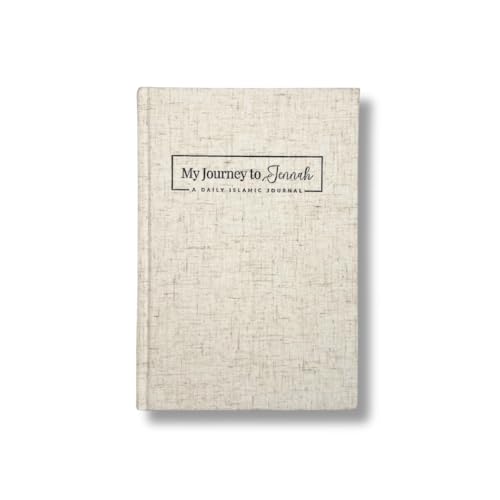
My Journey to Jennah: 5-Minute Guided Islamic Gratitude & Manifestation Journal – Undated Self-Care Book with Daily Dua, Dhikr, Quran Verses, 99 Names of Allah, and Hadith – Cultivate Positivity & Mindfulness | Muslim Gifts
Spiritual Growth in Just Minutes a Day – This Muslim journal helps you build a consistent habit of…
As an affiliate, we earn on qualifying purchases.
As an affiliate, we earn on qualifying purchases.