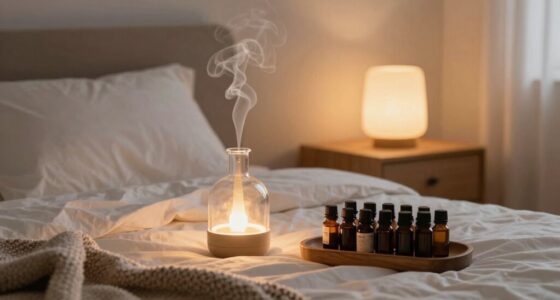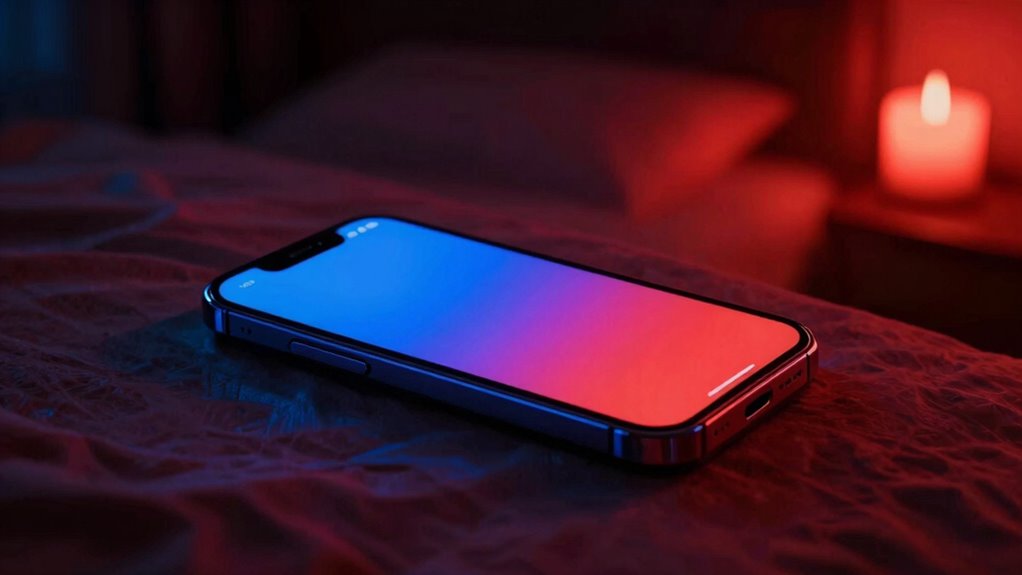
Red light is the clear winner before bed because it minimally disrupts your sleep cycle and supports your eye health. Unlike blue light, which suppresses melatonin and makes falling asleep harder, red light doesn’t interfere with your body’s internal clock. It helps you wind down and promotes better sleep quality. If you want to learn more about how to optimize your nighttime lighting habits, keep exploring the benefits of red light versus blue light.

Get health and wellness essentials delivered free with Prime
- Fast, free delivery on millions of items
- Prime Video, Amazon Music and more included
- Member-only deals all year
Key Takeaways
- Red light does not suppress melatonin, supporting better sleep quality before bed.
- Blue light inhibits melatonin production, making it harder to fall asleep.
- Using red light in the evening promotes relaxation without disrupting the sleep cycle.
- Blue light exposure in the evening increases sleep difficulties and reduces sleep quality over time.
- Red light is the clear winner for pre-bedtime lighting to maintain healthy sleep patterns.
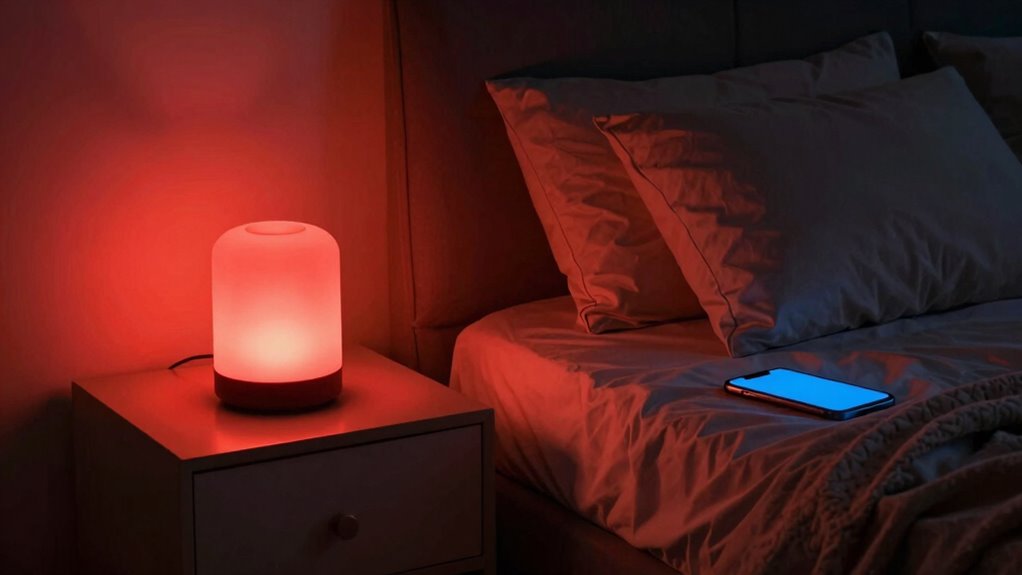
Before you settle in for a good night’s sleep, it’s important to think about how different types of light can affect your rest. The light you’re exposed to before bed, especially from screens or artificial sources, can significantly influence your sleep cycle and eye health. Among the various options, red and blue light stand out as the most impactful, but one clearly wins when it comes to promoting better sleep.
Blue light is notorious for disrupting your sleep cycle. This high-energy light suppresses melatonin production, the hormone responsible for signaling your body that it’s time to sleep. When melatonin levels drop, falling asleep becomes harder, and your sleep quality suffers. If you’ve ever stayed up late scrolling on your phone or watching TV, you’ve probably experienced difficulty drifting off afterward. Over time, exposure to blue light before bed can lead to chronic sleep issues, leaving you tired and less alert during the day. Digital eye strain caused by blue light can also lead to discomfort and long-term vision problems if not managed properly. Using proper lighting in the evenings can help mitigate some of these effects. Additionally, managing light exposure in the evening is crucial for maintaining your natural sleep patterns.
Blue light suppresses melatonin, making it harder to fall asleep and reducing sleep quality over time.
In contrast, red light has a much gentler effect on your body’s internal clock. It doesn’t interfere with melatonin production, allowing your sleep cycle to stay on track. When you opt for red light in the evening, you’re less likely to experience the alertness or insomnia associated with blue light exposure. This makes red light a better choice for winding down, whether you’re reading, relaxing, or using devices that emit less disruptive wavelengths. By maintaining a healthy sleep cycle, you wake up feeling more refreshed and ready for the day. Additionally, choosing appropriate lighting can further support your sleep hygiene and overall well-being. Proper air purifier maintenance can help reduce dust and allergens that may contribute to eye irritation, supporting overall eye health.
red light therapy lamp for sleep
As an affiliate, we earn on qualifying purchases.
As an affiliate, we earn on qualifying purchases.
Frequently Asked Questions
Can Red or Blue Light Improve Sleep Quality Long-Term?
Red light can improve your sleep quality long-term because it supports circadian alignment and reduces light sensitivity that disrupts melatonin production. Blue light, on the other hand, interferes with your circadian rhythm and can delay sleep onset. By choosing red light before bed, you help your body recognize it’s time to wind down, promoting better sleep patterns and overall health over time.
Are There Any Health Risks Associated With Exposure to Red or Blue Light at Night?
Yes, exposure to blue light at night can cause eye strain and circadian disruption, potentially affecting your sleep quality. Red light is generally safer, as it’s less likely to interfere with your internal clock. To protect your health, limit screen time before bed, especially blue light, and consider using red light or blue light filters. This helps reduce eye strain and supports a healthier sleep cycle.
How Does Light Wavelength Affect Melatonin Production Differently?
The wavelength impact on melatonin suppression is significant; blue light, with its shorter wavelength, more effectively hampers melatonin production, disrupting your sleep cycle. Conversely, red light‘s longer wavelength minimally influences melatonin, making it gentler for your nightly routine. By choosing softer, red hues before bed, you help preserve your body’s natural sleep signals, ensuring a more restful night and a smoother shift into peaceful dreams.
Which Light Type Is More Effective for Shift Workers or Late-Night Sleepers?
Red light is more effective for shift workers and late-night sleepers because it minimally disrupts circadian alignment. Using red light during night shifts or late hours helps you stay alert without suppressing melatonin production. Light therapy with red wavelengths can improve your sleep-wake cycle, ensuring better rest during the day. Avoid blue light, as it interferes with melatonin, making it harder to maintain a healthy circadian rhythm.
Can Using Red or Blue Light Influence Dreams or Sleep Cycles?
Yes, using red or blue light can influence your dreams and sleep cycles. Blue light exposure before bed tends to suppress melatonin, leading to disrupted sleep and potentially less vivid dreams, while red light has minimal impact, supporting better sleep cycle modulation. So, if you want more restful sleep and clearer dreams, opt for red light in the evening. Blue light may interfere with your natural sleep rhythm and dream quality.
blue light blocking glasses for night
As an affiliate, we earn on qualifying purchases.
As an affiliate, we earn on qualifying purchases.
Conclusion
When it comes to winding down, think of red light as your cozy, quiet cabin in the woods—gentle, calming, and perfect for sleep. Blue light, on the other hand, is like a bright, noisy city street that keeps your mind alert and awake. So, before bed, choose the soft glow of red light to lull your thoughts into a peaceful slumber — your best ticket to a restful night and refreshed morning.
As an affiliate, we earn on qualifying purchases.
sleep-friendly lighting for bedroom
As an affiliate, we earn on qualifying purchases.
As an affiliate, we earn on qualifying purchases.
Halloween Picks
halloween
As an affiliate, we earn on qualifying purchases.