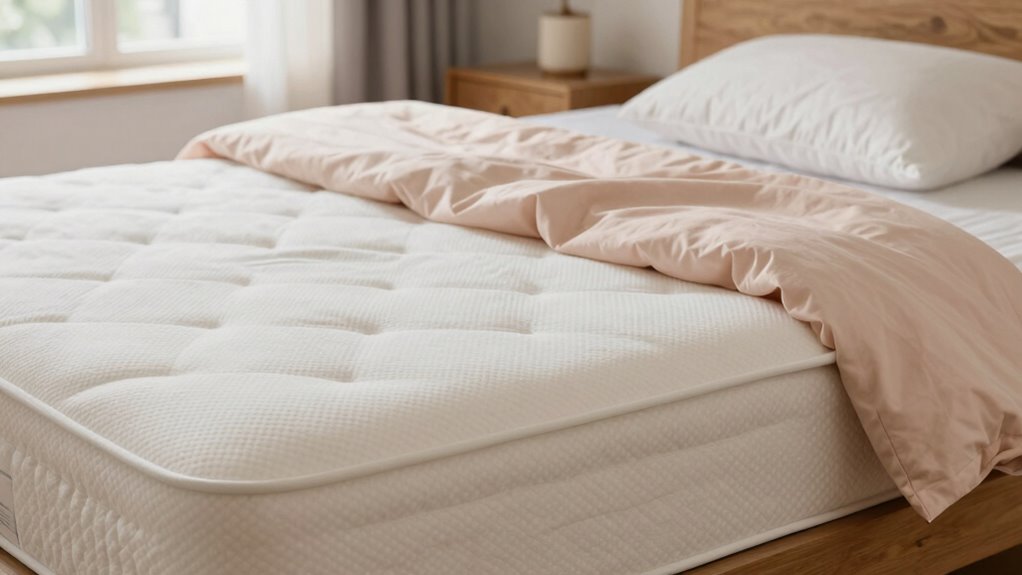

Most experts recommend replacing your mattress every 7 to 10 years to guarantee proper support, comfort, and hygiene. Over time, materials can wear out, leading to sagging, lumps, or dips that affect sleep quality. Signs like waking up sore, persistent odors, or visible stains indicate it’s time for a new mattress. Regularly checking your mattress helps you stay comfortable and healthy—stay with us to learn more about keeping your sleep perfect.

Get health and wellness essentials delivered free with Prime
- Fast, free delivery on millions of items
- Prime Video, Amazon Music and more included
- Member-only deals all year
Key Takeaways
- Replace every 7 to 10 years, or sooner if signs of wear or decreased comfort appear.
- Memory foam and latex mattresses typically last over 10 years, while innerspring may need replacement around 7 years.
- Look for signs like sagging, lumps, or increased discomfort and support loss to determine if replacement is needed.
- Replace if there are persistent stains, odors, or mold to maintain hygiene and health.
- Regularly inspect your mattress and listen to your body’s signals for optimal sleep quality.

Most experts recommend replacing your mattress every 7 to 10 years, but the exact timing depends on factors like wear, comfort, and hygiene. As you use your mattress over time, it naturally loses its ability to provide ideal sleep comfort. Worn-out mattress materials become less supportive, leading to discomfort and potential aches in the morning. Recognizing when your mattress no longer supports restful sleep is key to knowing when it’s time for a replacement.
Your mattress materials play a vital role in its lifespan. Memory foam, latex, innerspring, and hybrid mattresses all have different durability levels. Memory foam and latex tend to last longer, often exceeding the 10-year mark if well-maintained, because they resist sagging better than traditional innerspring models. In contrast, innerspring mattresses with less dense coil systems tend to wear out faster, losing their resilience and support after about 7 years. If your mattress contains these materials, pay close attention to how it feels over time. When you notice sagging, lumps, or a dip in the middle, it’s a clear sign that your mattress material has degraded and that your sleep comfort is compromised.
The significance of sleep comfort cannot be overstated. If you wake up feeling stiff, sore, or unrested despite adequate sleep duration, your mattress might be the culprit. Comfort isn’t just about feeling cozy; it’s about maintaining proper spinal alignment and reducing pressure points. Over time, even high-quality mattress materials lose their ability to contour to your body, making it harder to achieve restful sleep. If flipping or rotating your mattress doesn’t restore comfort, it’s probably time for a new one. Regularly monitoring mattress condition can help you catch these signs early.
Hygiene is another factor that influences how often you should replace your mattress. Mattresses can harbor dust mites, allergens, and bacteria, especially if you suffer from allergies or asthma. Even with regular cleaning, old mattresses tend to accumulate debris that can affect your health. If your mattress has stains, persistent odors, or shows signs of mold, replacing it becomes necessary for your well-being. Additionally, material degradation can accelerate the breakdown of your mattress, reducing its supportive qualities and lifespan.
Ultimately, paying attention to the signs of wear, changes in sleep comfort, and hygiene issues will guide you in deciding when to replace your mattress. While the lifespan of mattress materials varies, listening to your body and inspecting your mattress regularly ensure you get the restful, supportive sleep you need.
memory foam mattress 10 year warranty
As an affiliate, we earn on qualifying purchases.
As an affiliate, we earn on qualifying purchases.
Frequently Asked Questions
Can a Mattress Last Longer With a Mattress Protector?
Yes, a mattress protector can help extend your mattress lifespan. Protector benefits include preventing stains, reducing dust mites, and blocking allergens, which keep your mattress cleaner and more durable over time. By shielding your mattress from spills and wear, you minimize damage and maintain its support and comfort. While a protector isn’t a magic fix, it definitely plays a key role in preserving your mattress’s condition and prolonging its useful life.
How Do I Know if My Mattress Is Causing Allergies?
You can’t hide from the truth—if your mattress is causing allergies, you’ll notice it. Look for allergy triggers like sneezing, congestion, or itchy eyes after sleeping. Dust accumulation and mold often contribute. To confirm, check for visible dust or mold. An old mattress can harbor allergens, so consider replacing it if symptoms persist. Remember, a clean mattress and good airflow help reduce allergy triggers and keep your sleep healthy.
Does Mattress Age Vary by Material Type?
Yes, mattress age varies by material type due to differences in durability. For example, memory foam and latex tend to last longer, often 8-10 years, while innerspring mattresses might need replacing sooner, around 5-7 years. Age indicators like visible sagging, persistent discomfort, or increased allergies signal it’s time to replace your mattress, regardless of its material, to guarantee proper support and comfort.
Are There Signs of Mattress Mold or Mildew?
When it comes to mattress mold or mildew, you’re playing with fire if you ignore the signs. Look for musty odors, visible stains, or discoloration—these are red flags. Regular mattress cleaning helps spot early mold growth, and practicing mold prevention keeps issues at bay. If you notice mold, it’s time to replace or thoroughly clean your mattress to avoid health hazards. Stay vigilant to keep your sleep environment safe and fresh.
What’s the Best Way to Dispose of an Old Mattress?
You should consider mattress recycling or donation options when disposing of an old mattress. Start by checking local recycling programs, which often accept mattresses to reduce waste. If the mattress is still in good condition, donate it to shelters or charities. Make sure to clean and prepare it properly. Recycling helps the environment, while donating provides a useful resource for those in need. Always follow local guidelines for proper disposal.
latex mattress for long-lasting support
As an affiliate, we earn on qualifying purchases.
As an affiliate, we earn on qualifying purchases.
Conclusion
So, while it’s tempting to ignore that sagging or stained mattress, remember—your back and sleep quality might just be begging you to replace it sooner. Ironically, the very mattress you’re holding onto for sentimental reasons or convenience could be the culprit behind restless nights and aches. Sometimes, the best decision is the one you keep avoiding. So go ahead—upgrade that old mattress; your future, pain-free self will thank you for it.
innerspring mattress replacement
As an affiliate, we earn on qualifying purchases.
As an affiliate, we earn on qualifying purchases.
mattress with anti-allergy cover
As an affiliate, we earn on qualifying purchases.
As an affiliate, we earn on qualifying purchases.
Halloween Picks
halloween
As an affiliate, we earn on qualifying purchases.