
TL;DR

Get health and wellness essentials delivered free with Prime
- Fast, free delivery on millions of items
- Prime Video, Amazon Music and more included
- Member-only deals all year
A Sixty and Me report argues that stiffness after 60 is not always explained by age alone: long periods of sitting and limited movement may contribute. Its Pilates instructor recommends beginning with gentle movement, but the report is based on teaching experience, not clinical research, and stiffness can have other causes.
A Sixty and Me report says stiffness after 60 may reflect more than age, pointing to prolonged sitting and a narrow range of everyday movements as possible contributors. The account comes from a Pilates instructor who has taught women over 55 for more than 10 years; it describes her observations and class approach, not findings from a clinical study.
The instructor says the people who arrive feeling stiffest in her classes are often those who have spent more time sitting, such as after a long drive, reading or extra computer work. She reports that some of their stiffness eases after they start moving, though she does not say it disappears entirely. This is an observation from her teaching experience, not proof that sitting is the cause of stiffness for any particular person.
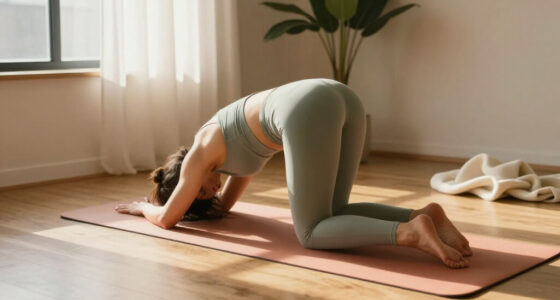
The report also points to the limited directions in which people commonly move during the day. Walking, reaching forward and bending are frequent examples, while reaching overhead or leaning sideways may happen less often. The instructor says this can leave people feeling less comfortable in movements they rarely use, including turning the neck, reaching above shoulder height, bending the spine and moving the hips.
In her classes, the instructor says she starts with slow, easy movement, then works on stability around joints before building strength. She says students often report feeling looser after a session and noticing more stiffness when they miss a week. The report does not provide measurements or clinical evidence to establish the size or duration of these effects.
How Daily Movement May Affect Stiffness
The report gives readers a reason to notice whether stiffness follows long stretches of sitting or particular routines, rather than assuming every change is an unavoidable result of getting older. If gentle movement makes someone feel more comfortable, that observation may help them identify a practical pattern in their day.
At the same time, the source does not establish that reduced movement explains stiffness in general. Stiffness can have different causes, and an instructor’s experience is not a substitute for an individual medical assessment. The report’s value is in presenting movement as one possible factor to pay attention to, not a diagnosis or guaranteed remedy.
gentle Pilates exercise equipment for seniors
As an affiliate, we earn on qualifying purchases.
As an affiliate, we earn on qualifying purchases.
The Instructor’s Suggested Sequence
The source is a first-person article by a Pilates instructor writing for Sixty and Me. She says she has taught women over 55 for more than 10 years and describes patterns she has noticed among her students. The article does not cite research, compare groups or report formal clinical outcomes, so its claims should be understood as practitioner observations.
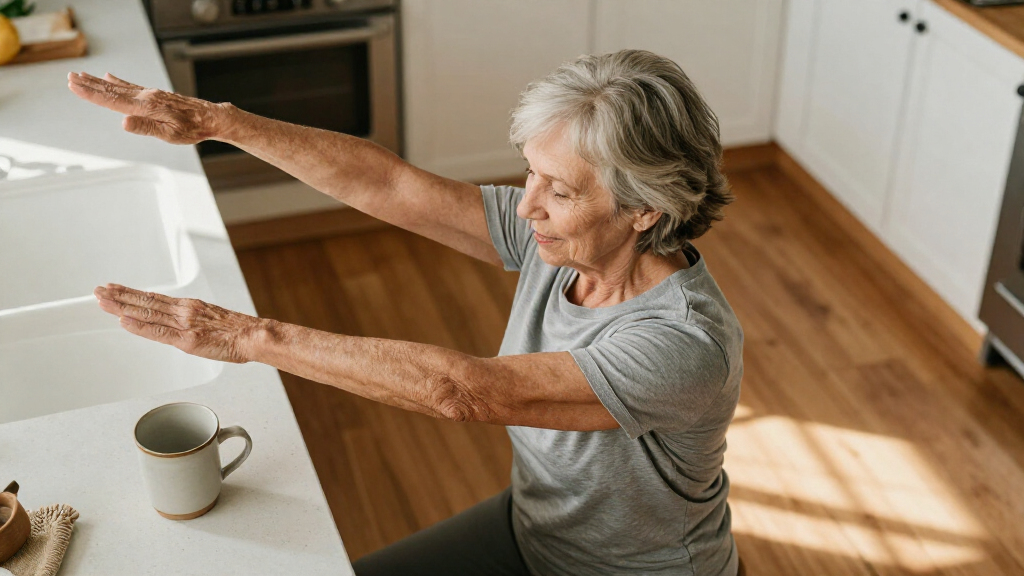
For readers who want to try a brief routine, the report describes four seated movements: slow neck turns, shoulder rolls, seated cat-cow movements and alternating knee lifts. It suggests moving slowly and staying within a comfortable range, rather than forcing a stretch or moving into pain. It also advises people with a specific injury or health condition to check with a doctor before starting something new.
“The women who walk in stiffest are usually the ones who’ve been sitting the most.”
— Pilates instructor writing for Sixty and Me
ergonomic sitting desk for elderly
As an affiliate, we earn on qualifying purchases.
As an affiliate, we earn on qualifying purchases.
What the Report Cannot Establish
The article does not identify the medical causes of stiffness in individual readers or quantify how much sitting contributes. It provides no clinical study, measurements or comparison group, and does not establish that the suggested exercises are suitable for everyone. The publication date is also not included in the supplied source material.
It remains unclear how often stiffness in the instructor’s students eased, how long any change lasted, or whether other factors accounted for it. The source itself cautions readers with an injury or health condition to consult a doctor before trying a new routine.
joint stability exercise tools for seniors
As an affiliate, we earn on qualifying purchases.
As an affiliate, we earn on qualifying purchases.
Notice Patterns Before Adding Movement
The report invites readers to notice where and when stiffness occurs, including whether it follows a long period of sitting. Those who choose to try the suggested chair movements are told to go slowly, stay in a comfortable range and avoid pushing into pain. The article does not describe a formal follow-up study or provide evidence about longer-term outcomes.
Anyone with a specific injury or health condition is advised by the source to check with a doctor before starting new exercises. The next useful step for readers is to treat the routine as general information, not a diagnosis, and seek individualized guidance when stiffness is persistent, concerning or linked to a health problem.
stretching bands for flexibility after 60
As an affiliate, we earn on qualifying purchases.
As an affiliate, we earn on qualifying purchases.
Key Questions
Does the report say stiffness after 60 is only caused by age?
No. The instructor argues that age is not the only possible factor, and points to sitting and limited movement as contributors she has observed. The article does not establish a cause for any individual’s stiffness.
What movements does the article suggest?
It lists slow neck turns, shoulder rolls, seated cat-cow movements and seated marching. The instructor recommends moving slowly and staying within a comfortable range, without pushing into pain.
Is the advice based on a clinical study?
The supplied article describes the instructor’s experience teaching Pilates and reports what she says she observes in class. It does not cite a clinical study or provide measured results.
What should someone with an injury or health condition do?
The source advises checking with a doctor before starting something new if you have a specific injury or health condition. The exercises are not presented as individualized medical advice.
Source: rss
Cold & flu season Picks
humidifiers
As an affiliate, we earn on qualifying purchases.